
Feature

Ucit hedge funds proceed with caution
A number of hedge fund managers have launched Ucits III-compliant funds in an attempt to attract stickier institutional money. But success is far from guaranteed, with one high-profile fund recently undergoing a restructuring after failing to attract…

Playing the gold card
Gold exchange-traded funds (ETFs) saw explosive growth in 2009, but this year has so far seen net outflows of investor capital. However, with inflation fears and sovereign risk high on investors’ agendas, ETF providers expect interest to pick up once…

Loan loss calculation conundrum
Replacing the incurred loss provisioning model remains high on the agenda of accountants, bankers and regulators. The challenge is to find a way to calculate expected loss that satisfies the diverse objectives of all three camps. Can a compromise be…

Sovereign CDS: Cat or canary?
Sovereign credit default swaps have become magnets for controversy amid worries about the condition of government finances. Does the market really reflect the probability of default and has too much attention been paid to it?

The Lehman flip clause flap
The decision of a US bankruptcy court to void contractual provisions that shield investors from the credit risk of swap counterparties in structured finance deals has put the legal systems of England and the US on a collision course. It also has…
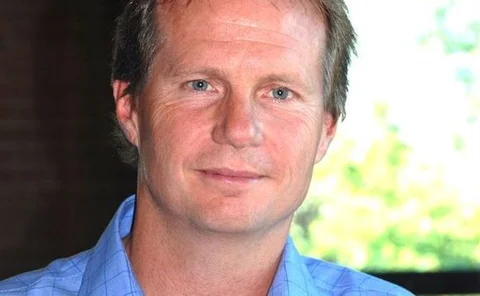
Exposing counterparty risk exposure
Banks have focused on improving counterparty credit risk management capabilities since the onset of the financial crisis. How are they changing systems to ensure accurate monitoring of exposures on a real-time basis?
Regulation consternation
Firm proposals for regulating South African hedge funds are due by mid-2010. But some managers question the need for more regulation.
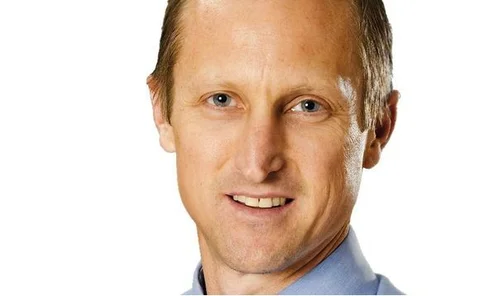
Uncertain liquidity ratios
Like their counterparts elsewhere, South African banks are bracing themselves for a round of changes to Basel II rules. But it is the implications for liquidity and not capital that most concern market participants.

Minor activity
Although South Africa is a major commodity producer, activity by local investors in commodities is minor compared with other markets. While there are efforts to stimulate greater interest, these are being hampered by foreign exchange controls.

Energy Risk's Software Survey and Rankings 2010
Over two-thirds of the respondents to Energy Risk’s 2010 Software Survey say they will be investing in new systems this year, despite the economic downturn. The survey also reveals which systems are preferred by industry participants. Lianna Brinded…

Iraq: the new hope for oil supply security?
As international oil companies wade into Iraq, forecasts for Iraqi production now stand as high as 10 million b/d within the decade. However political uncertainty and poor infrastructure leads analysts to caution against relying on Iraq as the next hope…

AIFM could boost alternative structured pay-off market
The European Union's Alternative Investment Fund Management Directive, the proposed new set of rules for European hedge funds and private equity industries, could adversely boost the structured products market. John Ferry reports

What next for hedge funds in energy?
Hedge funds, which fled the energy markets post-financial crisis, began returning steadily in the second half of 2009. However the influx stopped abruptly at the start of this year. Rachel Morison looks at what’s next for energy hedge funds in the short…

China’s CDM market: Will Shanghai say goodbye to CERs?
With China widely blamed for the failure of Copenhagen, some experts believe CDM investors could now shun the country in favour of India and Brazil, or that the EU may even take action again Chinese CDM certificates, creating a two-tier market. Lianna…
Indian CDM: does it have a future?
The CDM market in India has boomed since its 2007 inception, but its development has been dogged by both domestic and international regulatory uncertainty. Katie Holliday looks at the challenges faced by the Indian CDM market and asks whether it has a…
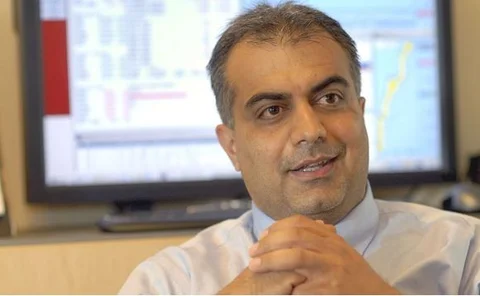
Q&A: Gunvor's Paymon Aliabadi
Privately owned energy trading company Gunvor is the third largest crude oil trader in the world after Glencore and Vitol. It has recently expanded into other energy markets. Paymon Aliabadi, managing director of Gunvor’s global energy group, talks to…

Strategic thinking
Banks and index providers have been quick to colonise the investment space vacated by stressed hedge funds after transparency became a byword for popularity. With both now offering proprietary dynamic strategies and promising alpha returns, will they end…

ETFs step into the spotlight
As concerns over counterparty risk continue to drive inflows into exchange-traded funds, Richard Jory asks some of the market’s leading practitioners to offer their thoughts on how an increasingly attractive investment market looks set to develop

Trading in the open
The development of the trading market for exchange-traded funds in Europe will depend on improvements in the reporting of off-exchange activity, though the wait for European legislation will be a long one. Further benefits would result from greater…

Now you PRDC them...
Power-reverse dual-currency notes have represented something of a Trojan horse for dealers. The hybrid structures have been popular for more than a decade among a wide range of Japanese investors, from regional banks to pension funds. But now the strain…

The increasing FX
FX-linked products are on the rise as yield hungry investors look to one of the few underlyings that has been feasible to structure into short term capital protected notes in recent times while hedging conditions improve for issuers. A transparent and…

Keeping it in the family
US family offices control possibly the largest concentration of private family wealth in the world, so it is no surprise that creators of structured products are eyeing this space. But with the ultra-rich resembling small institutional investors more…

Against the grain
Pension fund performance in 2008 was appalling, with funding levels plunging across the globe – but some schemes sidestepped a funding crisis by focusing on effective risk management.

QIS 5 - Making political capital
With the fifth quantitative impact study looming, Ceiops has released its final advice for Solvency II’s level two implementation measures to howls of indignation from the industry. The SCR standard formula’s calibration risks driving a wedge between…