Podcast: Kaminski and Ronn on negative oil and options pricing
The market is gravitating to the Bachelier model as an alternative to Black 76
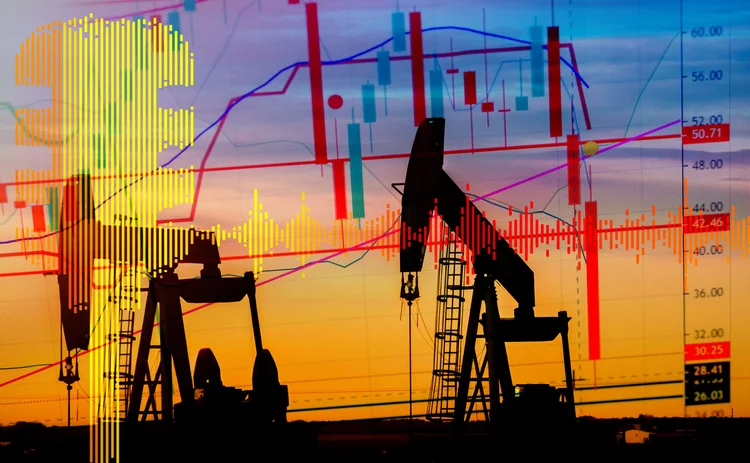
In this, the first episode of a new series of Energy Risk podcasts, we explore the impact of negative oil prices on the world of options trading.
Vincent Kaminski, a professor at Rice University's Jones Graduate School of Business, and Ehud Ronn, a professor of finance at the McCombs School of Business at the University of Texas at Austin, dialed in to discuss the increased interest in the Bachelier model for options pricing.
On April 20, West Texas Intermediate oil futures at the CME turned negative for the first time ever, plunging as low as -$40 per barrel. While options prices remained positive, many traders began considering alternatives to the log normal Black (1976) options pricing model.
Like the Black-Scholes (1973) model for options on stocks and indexes, Black 76 – which is used to price options on futures, such as oil – does not accept negative prices. The Bachelier model does.
Models based on the formula Louis Bachelier published in 1900 already have traction in some energy markets, being used in electricity and natural gas where negative prices are more common. On April 22 this year, its profile was raised further when the CME switched out of Black 76 to the Bachelier model for pricing and margining oil options.
Kaminski and Ronn give a primer on the theory and practice of using Bachelier models to price oil options.
Index
01:35 Who was Bachelier, when did he develop his model and what was it intended for originally?
03:15 What are the Bachelier model’s key features?
07:26 How does it differ from Black 76?
09:02 What are the implications of using Bachelier on pricing and hedging derivatives?
10:51 How does the risk management of a derivatives portfolio change?
12:35 Are there any implications on margining?
14:30 Is the model easy to implement? Are market players equipped for the change?
16:24 Is Bachelier here to stay or is this just a temporary spike in interest that will die away as the spectre of negative oil prices falls away?
Only users who have a paid subscription or are part of a corporate subscription are able to print or copy content.
To access these options, along with all other subscription benefits, please contact info@risk.net or view our subscription options here: http://subscriptions.risk.net/subscribe
You are currently unable to print this content. Please contact info@risk.net to find out more.
You are currently unable to copy this content. Please contact info@risk.net to find out more.
Copyright Infopro Digital Limited. All rights reserved.
As outlined in our terms and conditions, https://www.infopro-digital.com/terms-and-conditions/subscriptions/ (point 2.4), printing is limited to a single copy.
If you would like to purchase additional rights please email info@risk.net
Copyright Infopro Digital Limited. All rights reserved.
You may share this content using our article tools. As outlined in our terms and conditions, https://www.infopro-digital.com/terms-and-conditions/subscriptions/ (clause 2.4), an Authorised User may only make one copy of the materials for their own personal use. You must also comply with the restrictions in clause 2.5.
If you would like to purchase additional rights please email info@risk.net
More on Markets
Iran sell-off wipes out dispersion profits
Popular indexes down 5% in March, despite low realised correlation; some short bets see gains
YCC, carry trades and the changing role of the yen
Marcello Minenna argues that as the BoJ adjusts its policy regime, changes in carry positioning are increasing the instability of the correlation between exchange rates and yield differentials

From pink tickets to Python: Toby Baker on 40 years in FX
T Rowe Price’s departing FX head reflects on the pain points and keys to success for a modern buy-side trading desk

Franklin Templeton closes $5bn yen options book
Counterparty Radar: Asset manager’s bets on USD/JPY soured as yen weakened through Q4

Hedge funds retreat to sidelines in euro steepeners
Rate hike repricing and stop-losses have gutted positioning in once-dominant 10s30s bet

PBoC reserve ratio cut spurs short-term FX hedging
Removal of 20% forex risk rule drives exporters towards options and onshore forwards
Inflation shock upends Aussie dollar rates flatteners
Hedge funds’ front-end curve trades stopped out as Iran conflict drove RBA terminal rate pricing higher

Digital asset risk: ICR for tokenised fund infrastructure
The market context for TMFs, the drivers of TMF adoption, layers of the ICR architecture, stakeholder exposures and regulatory developments