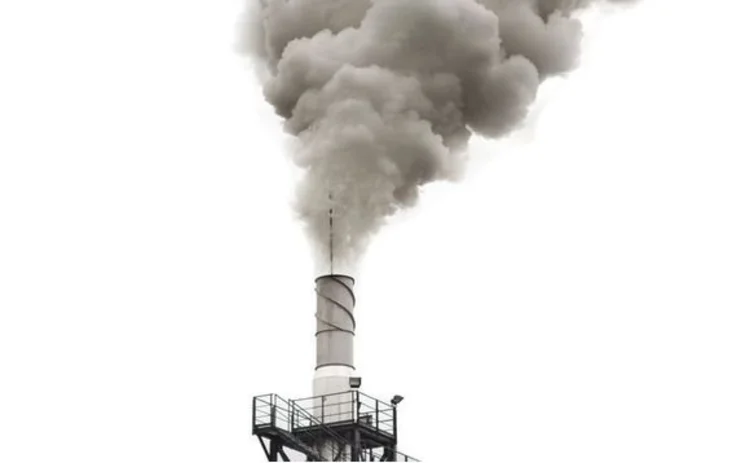
China's smoke signal
As the region with the largest sellers of carbon credits, Asia’s importance in the global landscape cannot be underestimated. What’s more, in September, China made promises of an as-yet-unspecified restriction of carbon levels – a big change in tack and something experts believe could be the first step to China having its own cap and trade system.
This development has the carbon community buzzing about its potential effects. There is speculation China could move from being a seller to a partial buyer of carbon credits, and expectations that the Chinese move may put sufficient pressure on the US to bring its own house into order. India has also made indications it will soften its stance that developed countries should bear the brunt of the costs in reducing emissions since their development caused the problem in the first place.
Meanwhile, in other parts of Asia, notably Australia, New Zealand, Korea and Japan, countries are rallying behind their own cap and trade schemes, while authorities in Singapore and Hong Kong are studying the best way to create exchanges trading financial products linked with the environment. Up until now, the only major cap and trade system has been in Europe, and the moves in Asia could signal genuine globalisation for the nascent asset class.
In September, China’s president Hu Jintao said the country would cut carbon dioxide emissions by “a notable margin” per unit of gross domestic product (GDP) in the 10 years to 2020, although his comments stopped short of giving a definite figure. The country has also committed to raising the share of non-fossil fuels used in China to 15% by 2020.
The announcement came ahead of December’s Copenhagen United Nations Climate Change conference, where leaders of the majority of the world’s countries will come together to discuss a successor to the Kyoto protocol – the rules that were introduced in 1997 and are due to expire in 2012. Under the protocol, 37 industrialised countries – called Annex I countries – made a commitment to a reduction of greenhouse gases, while all member countries gave general commitments. Annex I countries agreed to reduce their collective greenhouse gas emissions by 5.2% from the 1990 level. The US remains the only major non-compliant country.
Under the terms of the scheme, the industrialised Annex I countries are entitled to use several methods to balance their carbon accounts, including emissions trading and clean development mechanism projects (CDMs), whereby developed countries invest in reduction projects in developing countries, as a cheaper option than investing in reduction projects in their home country. To date, China has been the largest source of CDMs, making up 42% of the market, followed by India, which makes up 17%, while Asia accounts for 70% globally. CDMs produce carbon credits, which are then sourced to Europe, where they can be traded.
The vast majority of the trading on European exchanges is in forwards, although spot volumes are expected to increase along with the growth of the market. More complicated derivatives structures are considered a possibility as the markets become more sophisticated and as speculation increases, but the range is expected to remain small relative to assets such as equity. However, market participants predict carbon could become as significant an asset class as oil, with a fully fledged market worth $2–3 trillion by 2020.
“It is not periphery; it is right in the centre,” said Jorund Buen, director and senior partner of Point Carbon, speaking at the Sibos annual conference in Hong Kong in September. “It could be one of the largest commodities markets we have.”
China
Graham Cox, product manager for debt services at Deutsche Bank in London, says China’s announcement points to an “interesting dynamic” for the future. He reckons that if it leads to the ultimate set-up of a cap and trade scheme, China would start being a buyer of credits as its companies would have to remain below specific carbon thresholds.
The introduction of a full cap and trade scheme in China, which has already eclipsed the US as the world’s largest polluter by carbon dioxide emissions, would likely force up prices globally as supply is squeezed. This would result in an increase in the rate that CDMs are put together. “When people look at projects they look at the economics,” says Cox. “Projects that were marginal before, might not be so once the price is up.”
The near-term expectation, however, is not for dramatic change. “China will be on the seller side for a long time, for CDMs or another mechanism,” says Arne Eik, manager for trading analytics and research at Point Carbon in Oslo, in an interview. He adds he does not expect China and India to introduce caps on emissions until after 2016.
There are, however, intermediary stages that China would pass through on the way to a full cap and trade scheme and the importance of these is also a hot topic. Henry Derwent, president and chief executive of the International Emissions Trading Association in Geneva, says even a strong domestic commitment to improve domestic energy efficiency and carbon intensity could include measures that are translatable into projects that produce carbon reductions, which can then be sold on to the market. “It could be a stimulus to supply,” he says.
“On the other hand, it is not straightforward because [Hu] is talking about intensity and not an absolute reduction and, while intensity can be translated into an absolute reduction, it’s not definite,” Derwent says. In China’s case, intensity is relative to GDP, which is growing in the region of 8% annually in China – making China’s target an ever-widening goal mouth. The introduction of a domestic trading scheme in China could also pose challenges in terms of how such a scheme would be linked to the rest of the world.
One flipside of increased Chinese participation, however, could be the removal from circulation of some Chinese-originated CDMs, potentially starving European investors of a source for credits. Whether this could cause a global supply problem, given that China is the world’s largest provider, would “depend on the numbers” according to Derwent, referring to how much of the supply China decides to remove. Derwent, however, believes this situation is unlikely given the revenues brought into China from CDMs, with higher returns likely from sales to Europe over sales internally.
“We do not see any indication yet that that is what they would be prepared to do, because that would mean they are prepared to take a target that is very similar to those that developed countries take,” says Derwent. “It would be slightly surprising if they were to say ‘because of a policy we will no longer have the income stream and the technology transfer scheme’. It’s unlikely that they will just cut that off.”
China and the US
China’s stance has typically been to underline that it is a developing country, a difference that the US acknowledged when it signed, but did not ratify, the Kyoto protocol. But the conciliatory move by Hu will put pressure on the US to act. “[China is saying] ‘if you want us to do something, hey, we’re doing it, but you [the US] can’t even tell us whether you’ve got legislation that will achieve stuff’,” says Derwent.
Due to the current long-running debate in Congress over healthcare reform, discussions on climate change are being pushed back, and it is considered unlikely the US will make any decision before 2010. Some of the more cynical speakers at a Carbon Forum Asia event in Singapore on October 27, said they doubted that with the US mid-term elections due in November 2010 another controversial issue would be put before Congress before then, with meaningful legislative progress unlikely until 2011 – potentially a significant hindrance for US movement at Copenhagen.
The effect of US decisions on whether or not to take to caps will have an important kick-back effect in Asia too, not least in terms of potential demand. Philip Rosier, president of carbon distributor Orbeo in Paris, estimates the US cap and trade market would be two to three times the size of the European market, with the European market already making up 80% of international trade. Similar to moves made by China, this could increase the price of credits worldwide, and consequently the viability of projects such as CDMs. Rosier said his company believes US delays have already been priced into the carbon market, and so sees “only upside on the price”.
Exchanges in Asia
Many Asia-Pacific countries are ahead of the US and they are stepping up action to get their own exchanges and cap and trade schemes going. New Zealand has agreed a cap and trade scheme that is expected to be implemented in 2011. And this November a bill will go before the Australian parliament that is likely to result in a cap and trade scheme being implemented as early as 2012.
South Korea and Japan have put in place interim structures. Korea has established a green-growth strategy, which will introduce a limited amount of trading that leading politicians have said may eventually develop into a full scheme. Japan has run a limited voluntary scheme that does not allow credits to be sourced internationally. However, an experimental full version has been introduced that does allow international sourcing and takes in all Japanese sectors. This experimental trading platform is expected by some market participants to become fully active by 2013.
Asia’s involvement in exchanges is also viewed as a boost for the industry globally. “The more places there are in the world where carbon is a priced commodity, the more likely it is that there will be even more places where it is a priced commodity,” says Derwent, adding that at the early stages nationally fought targets are being established but that linkage will follow.
Over time, he predicts differences in prices in the various markets will lead people to move to dissolve the differences. And if there is enough demand inter-country, eventually the reasons for having separate systems would gradually melt away, he adds.
What comes next?
One possible alternative for CDMs being considered in the run-up to the Copenhagen congress is to introduce a sector model for developing countries too. Under this kind of model, emissions accounting is done for emissions from an entire sector, for example energy, with credits earned for resale by a country such as China that would come from falling below sectoral targets. This idea, although considered progress towards a unified international system, is likely to meet with some resistance in Asia, according to some.
“From an EU perspective, they say they’d like to see China move off from a supply-only role into something where there is a blend of demand and supply at least,” adds Derwent.
“The EU wants China to be more on the seller side on this type [sectors] rather than CDM. The reason is that if you set targets, you set them as a baseline for the whole sector. Then you already have a system for external credits in place when the market is ready for a cap and trade system,” says Point Carbon’s Eik. He adds the reason the EU wants China to establish a sectoral crediting mechanism is because it wants China to start reporting, monitoring and verifying emissions and emission reductions. Sector credits will be generated and sold if emissions in a sector go below an agreed baseline. Once the sectoral crediting is in place it is easier to establish sector targets, and later still, national targets.
He notes a sector model could help the global system sectors exert a downward pressure across the whole sector, that is, putting pressure to reduce emissions across whole sectors of Asian industry. Resistance to this model could come because pressure on emissions could impinge on economic growth. Whether it is established in Copenhagen or not, “long term [capping of emissions] is the way it has to go”, says Eik, however.
Questions have also been raised about the future for CDMs generally. “What is really interesting is what will happen after 2012,” says Eik. He adds that currently there is a reluctance to invest in CDM projects, partly because of the financial crisis and partly because the gap is narrowing on 2012 when Kyoto expires.
“We expect CDMs will continue to be useable until at least 2016, so in our view, there is room for investment,” he says, adding that “some positives from Copenhagen will increase investor confidence”.
One thing commentators appear to agree on is that the carbon markets need more involvement from financial institutions. And there is a hope that the policy results coming from the Copenhagen gathering will encourage their involvement. “We want financials involved. Financials cause efficiencies and… [eventually] reduce the price of compliance,” said Point Carbon’s Buen.
Other speakers at the Sibos conference noted that most of the infrastructure needed for participating in the carbon markets would already be in place at banks, with investors keen to have straight-through processing and more automated communication added – both of which are in development. As Anthony Collins, general manager for energy and the environment at the Australian Securities Exchange, said at Sibos: “Carbon investors just want the same as investors in other assets: they want to enjoy safe clearing and valuations.”
Only users who have a paid subscription or are part of a corporate subscription are able to print or copy content.
To access these options, along with all other subscription benefits, please contact info@risk.net or view our subscription options here: http://subscriptions.risk.net/subscribe
You are currently unable to print this content. Please contact info@risk.net to find out more.
You are currently unable to copy this content. Please contact info@risk.net to find out more.
Copyright Infopro Digital Limited. All rights reserved.
As outlined in our terms and conditions, https://www.infopro-digital.com/terms-and-conditions/subscriptions/ (point 2.4), printing is limited to a single copy.
If you would like to purchase additional rights please email info@risk.net
Copyright Infopro Digital Limited. All rights reserved.
You may share this content using our article tools. As outlined in our terms and conditions, https://www.infopro-digital.com/terms-and-conditions/subscriptions/ (clause 2.4), an Authorised User may only make one copy of the materials for their own personal use. You must also comply with the restrictions in clause 2.5.
If you would like to purchase additional rights please email info@risk.net
More on Energy
ETRM systems 2024: market update and vendor landscape
This Chartis report evaluates energy trading and risk management systems that provide front-to-back, asset class-specific and geography-specific coverage, and considers the full energy trade lifecycle

CTRM systems 2024: market update and vendor landscape
A Chartis report on commodity trading and risk management systems that considers its different applications and addresses the market and vendor dynamics to determine the long-term and structural impacts of the overarching market evolution on the…
Energy Risk Commodity Rankings 2024: markets buffeted by geopolitics and economic woes
Winners of the 2024 Commodity Rankings steeled clients to navigate competing forces
Chartis Energy50
The latest iteration of Chartis’ Energy50 ranking

Energy trade surveillance solutions 2023: market and vendor landscape
The market for energy trading surveillance solutions, though small, is expanding as specialist vendors emerge, catering to diverse geographies and market specifics. These vendors, which originate from various sectors, contribute further to the market’s…

Achieving net zero with carbon offsets: best practices and what to avoid
A survey by Risk.net and ION Commodities found that firms are wary of using carbon offsets in their net-zero strategies. While this is understandable, given the reputational risk of many offset projects, it is likely to be extremely difficult and more…

Chartis Energy50 2023
The latest iteration of Chartis' Energy50 2023 ranking and report considers the key issues in today’s energy space, and assesses the vendors operating within it
ION Commodities: spotlight on risk management trends
Energy Risk Software Rankings and awards winner’s interview: ION Commodities