Investing in the future

Hedge funds have always made charitable donations, albeit privately. A new breed, however, is trading openly to that end, applying investment principles to philanthropic activity

The charity auctioneer surveyed the crowded room as he sold the final prize - the chance to be lead sponsor at the clean-up of a local school of the winning bidder's choosing.

Three of the industry's true heavyweights were at around $1m each, when the auctioneer did the unpredicted - instead of allowing bidding to go further, he pointed in turn to each bidder. "Sold, and Sold, and Sold."

Three million dollars to a good cause, from hedge funds, just like that.

It doesn't make what the mainstream press defines as a 'good-news story' but this $3m pales into insignificance when compared to the hundreds of millions of pounds hedge funds donate to charities every year, either in their capacity as funds, or indirectly via the philanthropic activities of its managers. Recipients range from health-related and children-focused charities thanks to funds and investment banks, through to an unusual link between the fate of the remaining 25-strong Cayman Islands iguana population and philanthropically minded Cayman consultants Walkers, who have injected funds to help protect from extinction the small native iguana population, threatened by humans, animal predators and hurricanes. (For more on this last act of kindness and how you can help, go to www.hedgefundsreview.com.)

HONING IN ON GIVING

The Children's Investment Fund Foundation (CIFF) is a company that has taken a new approach to charity, pioneering a completely different relationship between the fund-management universe and the philanthropy practised by individuals in the industry.

The foundation is formally linked to hedge fund TCI Fund Management (TCIF), under the stewardship of Christopher Cooper-Hohn, and CIFF receives 33% of all management fees TCIF earns. In addition, when the TCI fund's returns exceed 11% net of fees, it receives another 0.5% of the fund's assets.

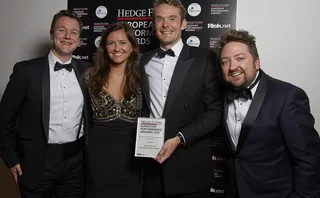
Make no mistake, TCIF is run very much as a hedge fund with performance in mind, helping it to win the Best Newcomer category in Hedge Funds Review's European Performance Awards in June.

The hedge fund and the foundation are separate entities. "We don't interfere with what the fund invests in, and they don't have their investors on our board. There is definitely a line in the sand where the merger ends," says Jamie Cooper-Hohn, president of CIFF.

TCIF has a single fund, as well as a fund-seeding operation that takes a cut of selected ventures that Christopher Cooper-Hohn feels show promise.

With the fund launching in December 2003 with approximately $500m and having grown to $4bn today, clearly, it has generated a significant volume of capital for the causes that it supports.

Its stated aim is: "To improve the lives of children living in poverty in developing countries through strategies that will have a lasting impact on their lives and on the community, and that will influence others."

Jamie Cooper-Hohn elaborates: "What we aim to do is give substantial multi-year grants for projects we think can make highly scaled, leveraged change."

To this end, it has been extremely active in targeting the HIV problem. "There is a lot of progress currently getting caring treatment to people with HIV in developing countries," she says. "Children have really been left behind, so one of the agreements we made with the Clinton Foundation when we started working with them was that they would take an active role in rectifying that. We have just made an announcement that they have negotiated to make the proper anti-retrovirals available for children at a price within striking distance for what we are now paying for the adult drugs. It's very exciting because it's the first time children will be able to be properly treated in the developing world, and half a million children died of Aids last year."

FOR THE KIDS

Selecting children-related charities is common, relative to the modest number of players working on similar projects, because it is seen as maximising the return on the investment.

The first step in the process is for CIFF to award a short-term grant to a prospective recipient. In this way, it is able to assess how the money it will award is likely to be spent. Depending on how this preliminary grant is spent, an applicant may be eligible for a more significant donation. Cooper-Hohn says recipients of the short-term grant are about 50% successful in satisfying the criteria to receive the full grant - currently it has approximately six projects receiving multi-year grants.

There are numerous well-known initiatives. Robin Hood, "the granddaddy of them all," according to Cooper-Hohn, is a New York-based initiative targeting local poverty. Ark Online, (Absolute Return for Kids) which counts both Man Group's Stanley Fink and Marshall Wace's Paul Marshall as trustees, raises money from the hedge fund community, for both UK and international initiatives, while SHINE, (Support and Help in Education) funds groups working to help children in disadvantaged areas in Greater London and Manchester.

ARK's goals are similar to CIFF's, "to transform the lives of children who are victims of abuse, disability, illness and poverty," but it follows a different approach.

"You run a charity using the best of what is applicable from your business life," says Paul Bernstein, managing director at Ark. "Instead of giving grants, you make an investment. If you make an investment in a normal environment, you spend a certain amount and expect a return on it, and you can measure that through the bottom line, or the performance of the fund.

"We don't have a profit to make in the traditional way. But you can see a measurable outcome from your investment that then allows you to determine what a good or bad performance is going to be. It means we are very focused on the output of how we spend people's money and what it is we are achieving with people's money."

Its latest initiative is a network of schools for children from poor backgrounds based on the US charter-school model. It will start with seven schools in London, costing around £2m each.

Ark has also hired Jay Altman, co-founder of a New Orleans-based charter school, to help recreate in deprived areas of the UK his success in educating American youth.

The schools will pursue a number of alternative techniques that have proven successful in the US to help motivate under-achieving youngsters. These include introducing longer lessons in some subjects, of up to three-and-a-half hours, to help with concentration.

There are already 10 London-based academy schools, the UK equivalent of the US charter-school system, as well as seven outside London. Up to £2m is raised from private investors who get a say in how the school is run. The government meets the rest of the costs, although academies reside outside the state-school system.

Ark has shown an interest in starting academies in Hammersmith, Westminster, Lambeth, Hackney and Southwark, as well as outside London.

CREAM OF THE CHARITABLE CROP

Both funds apply a rigourous selection process and share a determination to cherry-pick the best charities, just as a fund manager would select the best securities to maximise returns.

"Their business values, value for money and the vigour with which they look at programmes is very consistent and comfortable from our point of view," says Jamie Cooper-Hohn. "The big difference, and it's hard to say this when Robin Hood and Ark are so successful in doing this, but given the amount of work they have to put into fundraising compared to the structure Chris has set up with the management fee, ours is a much more efficient system. Anybody can figure out what half a per cent is versus asking people for an average of £500. How many people do you have to ask to get the same amount?"

Bernstein expresses admiration for CIFF's work but believes there is room for a number of different structures. "It's horses for courses," he says. "Both CIFF and ourselves offer people a way of knowing where the funds will go. If you give it through fees or after you've earned them, people are smart enough to know money is money."

CIFF hopes its influence is not limited to the direct relief its donations bring to people in the developing world, but that it will also influence others and open wallets that might otherwise have remained closed to such causes.

"The field of charitable giving does not have the reputation of rigour that the business world does, and probably rightly so. Those of us working on the foundation side, including those coming from primarily a development background, are all interested in applying very similar investment strategies as Chris is applying in the fund.

"Understanding the risks we're taking, understanding the product, we go through a very thorough process with the organisation of developing a business plan with concrete outcomes that we both understand going into it. The bottom line is we are more hands on and supportive if it doesn't work, but if we get a drought, we try to figure out how to pick up the pieces and how to re-establish the programme. That should progress in year two.

"I think our strategy has been very synergistic and very positive and I believe we are setting a model and raising the bar in the foundation world because of the influence of the hedge fund.

"Really applying some of these principles of good business and good investment is paying off quite well for us. Neither Chris nor I have ended up with egg on our faces yet, but we expect we will make mistakes. We will have a bad investment at some point or another, but, on the whole, we have good advisors, a good board and we go through a lot of vigour before the cheque is written. And it's paying off."

For all these organisations, tough decisions need to be taken in order to ensure the money is being used in the most efficient way possible. "I don't think ARK would be willing to give money to causes where the recipient might die, or not change," says one charitable fund manager.

"The reality is, like you would with a business investment, if we thought what we were giving wasn't working, if we had to, we would pull back," elaborates Bernstein. "Before we pull back, we spend a lot of time making sure it does work."

"There are a lot of people who were quite sceptical whether Chris was going to be able to attract good staff if he was going to give away a portion of the pie. In fact, some of his senior staff chose to work for Chris before he became such a known quantity because of that aspect. One of the research analysts said to me: 'I figured if these guys are doing this, it would probably be a nicer place to work.'"

She says it gives the fund's employees a special feel of camaraderie, evident when the fund hit 11% triggering a further half per cent donation to the foundation. "They were so excited. I wouldn't say they were as excited about it as Deutsche Börse (when CIFF successfully agitated to oust its CIO and blocked its LSE bid), but they all mentioned it the day it happened when I looked through the door. And that is motivating for everybody."

A member of Chris' team gave some of his salary back this year. Others volunteer for projects and bring financial expertise to work on foundation matters, such as value-for-money analysis.

"The reason that we chose not to give our money away quietly but to give a dedicated portion of the management fees and an incentive fee, and to do that publicly, was because we wanted people in similar positions to think about what might be their responsibility and how they might set up a similar framework, be that for the environment or anything else," says Cooper-Hohn.

Interestingly, this is another area where its methods differ from conventional wisdom in the industry. Anonymity is a very important factor for many hedge funds and hedge fund managers donating to charities, according to one hedge fund manager. He believes even some trustees at ARK chose not to make their names public. "In the hedge fund industry, that's probably the majority of people, as opposed to other industries," he says. "It's not like other industries, in which image is important."

Cooper-Hohn says at least half a dozen people connected to hedge funds have told her they have started to follow the lead CIFF has set, not necessarily setting up the same structures but somehow formalising what they give rather than deciding on an ad-hoc basis at the end of the year when they see their profit figures.

"There are very few people doing this in the developing world," she says. "We want to be part of the removal of apprehension about giving overseas. As the world becomes more global, we will move in that direction: the tsunami was a good example of that, where a number of people obviously felt a connection to that part of the world."

taking a hands-on approach

The Quicken Trust allows donors discretion over how funds are spent in any of six projects, including AIDS vaccinations, tourism development, educational projects and general healthcare. These projects have been selected "to improve the community's independence," stimulate the economy and the social well-being of the locals and, importantly, provide a model and an incentive for neighbouring villages to replicate.

Andrew Lightbown, director of sales and marketing at hedge fund manager Old Mutual Asset Management, spent his summer break from 16-25 June in Uganda passing on the wisdom he has acquired in his role to the villagers of Kabubbu.

The charity has also helped communities to build primary schools and libraries, and funded adult training courses enabling villagers to learn trades from tailoring to electronics. It has also helped to build bore-holes providing easy access to fresh water.

Lightbown stresses the simplicity of the skills lacked by the villagers of Kabubbu, skills he can help to give them that, once learned, should be an excellent example of leverage of effort, including everything from recruitment and training skills down to double-entry book-keeping.

Lightbown used these skills to enable the Kabubbu's residents to create and develop its own eco-tourism industry. By recruiting and training two tourist guides, who were then trained to recruit and train a second generation of guides, the project can achieve self-sufficiency. Their training is ongoing: Lightbown hopes they will be ready to recruit the next generation of guides next year, by which time the area will have had a makeover and be ready for an increase in tourism.

One of Lightbown's co-workers installed an accountancy software system, dramatically improving the economic potential of the community.

"You need a mixture of targeted and paid assistance and practical aid. Both are very important," Lightbown said.

Lightbown surpassed his £10,000 target - 20% of the cost of building a school for the 400 orphans of Kabubbu - eventually raising £16,500.

For further details, contact andrew.lightbown@omam.co.uk

hedging votes

Hedge funds on either side of the Atlantic appear to be separated by a political gulf, as well as several thousand miles of Atlantic Ocean. Hedge funds, it seems, share allegiance to the colour blue: the UK's to the conservatives, America's to the Democrats.

A number of London's most prominent hedge funds, and their managers, have made sizeable contributions to another needy cause: the UK's Conservative Party.

RAB Capital, for example, donated the party £10,000. Fidelity Investment Management has donated £200,500 since the start of 2004 in four instalments. CQS Management donated £100,000, while one of its managers, Michael Hintze, has personally supplemented this with £85,000 from his own pocket in a series of five donations going back to 1992, according to the UK Electoral Commission's website (www.electoralcommission.gov.uk).

On an individual basis, Hugh Sloane, of Sloane Robinson, gave the party £10,000, while Michael Platt of Bluecrest Capital Management donated £50,000.

William Bollinger of Egerton Capital's generosity was against the grain: just under £261,000, in three instalments since early 2004 was made to Britain's Labour Party.

In the US, the trend is the opposite. In a Bloomberg survey of the top 50 hedge funds by assets under management, the hedge fund community was firmly Democrat, taht received 62% its donations. This in contrast to the Republican-leaning finance industry, (Bloomberg states 53% the banking and securities industry's donations in the 2004 US election went to George W. Bush.)

Barry Colvin, president of Tremont Capital Management, told Bloomberg hedge funds have different political priorities to mainstream financial players, who are more dependent on government policy to make money. Hedge funds can concentrate on issues unrelated to business, he added, such as education and foreign affairs.

The figures exclude the two largest donors in the 2004 election, which would skew the results. George Soros turned over $27m to groups allied with the Democrats, while Paul Singer, president of New York-based Elliot Management Corporation gave $2.1m to Republican groups.

Only users who have a paid subscription or are part of a corporate subscription are able to print or copy content.

To access these options, along with all other subscription benefits, please contact info@risk.net or view our subscription options here: http://subscriptions.risk.net/subscribe

You are currently unable to copy this content. Please contact info@risk.net to find out more.

Most read articles loading...

You need to sign in to use this feature. If you don’t have a Risk.net account, please register for a trial.

Sign in
You are currently on corporate access.

To use this feature you will need an individual account. If you have one already please sign in.

Sign in.

Alternatively you can request an individual account here