
Robo traders not so different from us, says Man AHL risk chief
Watching over machine learning algorithms is similar to monitoring human portfolio managers
Critics have painted machine learning algorithms as potential rogue cyborgs in tomorrow’s financial markets: near-impossible to understand, likely to act destructively, perhaps one day a threat to market order.
But one risk manager with a long track record of overseeing them says machine learning-based robot traders are not so different from their human cousins. You just have to get to know them a bit.
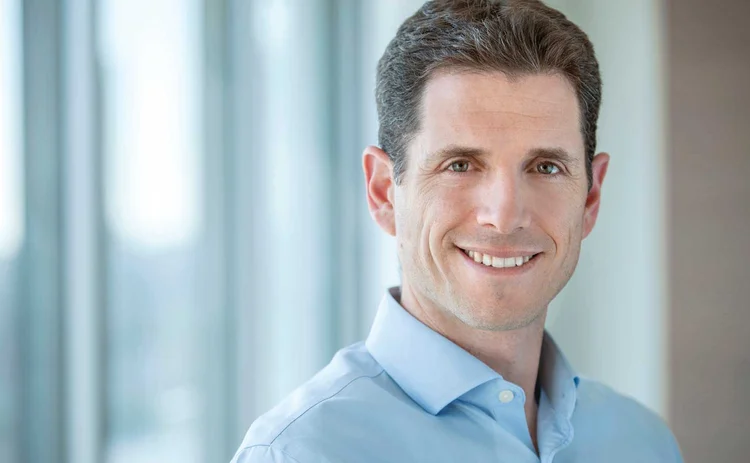
As chief risk officer for Man Group’s systematic investment division AHL and its Man Solutions unit, which tailors investment programmes for individual clients, Darrel Yawitch makes sure the firm’s models that use machine learning don’t take big unwanted risks. He is also tasked with keeping the human traders at Man GLG, the firm’s discretionary investment unit, in check.
This latter experience with GLG has helped shape his thinking on managing the new generation of machines. “Machines are good at repetitive tasks. Humans are good at making individual judgment calls and thinking creatively. Machine learning falls somewhere in between,” he says.
A big concern with the use of machine learning techniques in investing is difficulty understanding how algorithms are likely to behave in a given scenario – or even what they have done after the fact. For more complex forms of machine learning such as deep neural networks, there is no way for users to glean how a model reached a given output.
Besides being difficult to explain to end investors why a strategy has lost money, that also makes it hard to set risk controls, says Yawitch. But while fully systematic strategies sit at the easy-to-interpret end of a “spectrum” of different ways to trade, Yawitch argues human traders, not machine learning algos, sit at the other.
If you know what the market will do you can usually figure out how a systematic strategy will trade, he points out. Human traders, though, need sussing out. A risk manager will have a sense of what portfolio managers are thinking – and can ask for an explanation after the fact – but often they will not know which exact trades those managers are going to put on.
Machine learning-based strategies – which Man has been running in its multi-strategy client funds since 2014 – are not so different, Yawitch argues. They are less predictable than systematic programmes, but more predictable than human portfolio managers.
In practice, that means the new models require much the same controls and monitoring as a fully discretionary manager, even replicating the sorts of enquiries a risk manager might make of a trader.
This could include, for example, effectively interrogating learning algorithms to grasp their internal workings by “pre-feeding” them test trades and seeing how they behave.
Man has assembled a list of daily checks of this sort in its live models, as well as running such tests before models go live and ad hoc once models are in trading. Yawitch says the outputs have helped the firm build an “intuition” for how the models operate. The same process can be applied retrospectively, looking at how models behaved in past scenarios.
We’ve barely scratched the surface of what machine learning can do
Darrel Yawitch
Yawitch says the process is much like getting to know a new portfolio manager – “but with the added advantage that you can check their full trading history”.
So far, the approach is working: the firm has pumped the brakes on its machine learning models no more or less often than for its regular systematic strategies, says Yawitch. And where humans have stepped in, the reasons were the same as for conventional models and the interventions were common across different systematic programs.
“It’s normally where the assumptions of the model are no longer valid for some reason, and typically those situations are specific events that are highly unusual – something like the Brexit referendum or a liquidity event,” Yawitch says.
Scratching the surface
Man AHL was one of the original pioneers of trading with computers when it launched in the 1980s. In addition to its use of machine learning in investment, the firm’s systematic investment arm has also found applications for the technology in other areas, such as routing orders to the best execution channels.
Looking forward, Yawitch expects technology to play a broader role in the firm’s day-to-day risk management – helping detect internal fraud or spotting trading errors, for example. “We’ve barely scratched the surface of what machine learning can do,” he says. Critically, machine learning algorithms can apply logic in non-linear ways that humans struggle to match. “That’s powerful.”
His own team has used machine learning to help identify past stress events that most closely mimic a possible no-deal Brexit for use in stress-testing exercises. And the technology could in time take over much of the dull mechanistic work of the middle office, such as limit monitoring, Yawitch says.
What might hold back progress? One candidate is so-called ‘algorithm aversion’ – the instinct that makes humans nervous about handing their decisions over to an intelligent machine.
In one example, Google configured its maps app to suggest alternative routes to drivers even though it knows the fastest, Yawitch points out, so that users would feel a sense of control when they chose which route to follow.
But that aversion will fade with time, he thinks.
For sure, humans will play a big part in investing going forward: “There’s a role for machines and there’s a role for people, and they’re good at different things,” Yawitch says. At the same time, if he is right, future investors will think of Man’s AI algorithms just as they think of its portfolio managers today.
Additional reporting by Tom Osborn
Only users who have a paid subscription or are part of a corporate subscription are able to print or copy content.
To access these options, along with all other subscription benefits, please contact info@risk.net or view our subscription options here: http://subscriptions.risk.net/subscribe
You are currently unable to print this content. Please contact info@risk.net to find out more.
You are currently unable to copy this content. Please contact info@risk.net to find out more.
Copyright Infopro Digital Limited. All rights reserved.
As outlined in our terms and conditions, https://www.infopro-digital.com/terms-and-conditions/subscriptions/ (point 2.4), printing is limited to a single copy.
If you would like to purchase additional rights please email info@risk.net
Copyright Infopro Digital Limited. All rights reserved.
You may share this content using our article tools. As outlined in our terms and conditions, https://www.infopro-digital.com/terms-and-conditions/subscriptions/ (clause 2.4), an Authorised User may only make one copy of the materials for their own personal use. You must also comply with the restrictions in clause 2.5.
If you would like to purchase additional rights please email info@risk.net
More on Asset management
Execs can game sentiment engines, but can they fool LLMs?
Quants are firing up large language models to cut through corporate blather

Pension schemes prep facilities to ‘repo’ fund units
Schroders, State Street and Cardano plan new way to shore up pension portfolios against repeat of 2022 gilt crisis
Fears of runaway risk on offshore reinsurance
Life insurers catch the eye of UK regulator for pension buyout financing trick

Hot topic: SEC climate disclosure rule divides industry
Proposal likely to flounder on First Amendment concerns, lawyers believe

‘Brace, brace’: quants say soft landing is unlikely
Investors should prepare for sticky inflation and volatile asset prices as central banks grapple with turning rates cycle

Trend following struggles to return to vogue
Macro outlook for trend appears to be favourable, but 2023’s performance flop gives would-be investors pause for thought

Start-up bond platform OpenYield prepares to launch
Start-up aims to give retail brokers the same electronic liquidity used by the professionals
Can machine learning help predict recessions? Not really
Artificial intelligence models stumble on noisy data and lack of interpretability