SEC and FSA ban short selling on financials
The US Securities and Exchanges Committee (SEC) and UK Financial Services Authority (FSA) have both announced temporary bans on the short selling of financial stocks, as they look to halt the slide in bank equity prices.
In the UK, traders were prohibited from actively creating or increasing net short positions in publicly quoted financial companies from midnight last night. The rules cover any instrument that provides a net economic exposure to a financial company, including contracts for difference, futures and options.
In addition, the FSA will require daily disclosure of net short positions in excess of 0.25% of ordinary share capital from September 23 a move that will massively increase compliance and disclosure burdens on banks and asset managers.
However, the regulations do not apply to market makers, defined as those firms dealing as a principal in equities, options or derivatives to fulfil client orders, respond to client requests to trade or to hedge positions arising from those trades. The short selling ban also does not apply if the trade was entered into before September 19.
The rules will remain in force until January 16, although they will be reviewed after 30 days.
While we still regard short-selling as a legitimate investment technique in normal market conditions, the current extreme circumstances have given rise to disorderly markets, commented Hector Sants, chief executive of the FSA. As a result, we have taken this decisive action, after careful consideration, to protect the fundamental integrity and quality of markets and to guard against further instability in the financial sector.
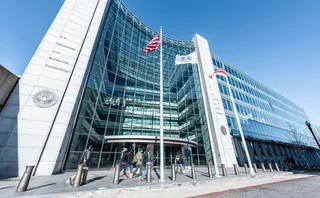
The SEC announced a similar ban this morning, covering securities of 799 financial companies with immediate effect. The US regulator's statement follows its decision to bank naked short selling on all public companies on Wednesday, a rule that came into force yesterday.
The SEC has also provided limited exceptions for certain market makers, as well as for short sales that occur as a result of automatic exercise or assignment of equity options held prior to the order becoming effective. However, the rules are merely delayed until 11.59pm on September 19 for any firm selling short as a result of market-making activities in derivatives referenced to financial stocks or the hedging of positions related to this business.
The prohibition on short selling will last until 11.59pm on October 2.
Only users who have a paid subscription or are part of a corporate subscription are able to print or copy content.
To access these options, along with all other subscription benefits, please contact info@risk.net or view our subscription options here: http://subscriptions.risk.net/subscribe
You are currently unable to print this content. Please contact info@risk.net to find out more.
You are currently unable to copy this content. Please contact info@risk.net to find out more.
Copyright Infopro Digital Limited. All rights reserved.
As outlined in our terms and conditions, https://www.infopro-digital.com/terms-and-conditions/subscriptions/ (point 2.4), printing is limited to a single copy.
If you would like to purchase additional rights please email info@risk.net
Copyright Infopro Digital Limited. All rights reserved.
You may share this content using our article tools. As outlined in our terms and conditions, https://www.infopro-digital.com/terms-and-conditions/subscriptions/ (clause 2.4), an Authorised User may only make one copy of the materials for their own personal use. You must also comply with the restrictions in clause 2.5.
If you would like to purchase additional rights please email info@risk.net
More on Regulation
Why watering down resolution plans is a bad idea
Bank failures are inevitable; banking crises are not

BIS’s Hernández de Cos on AI, non-bank risk and tokenisation
General manager talks about how the BIS is navigating a complex global environment

‘European SEC’ no silver bullet for growth
EU policymakers hope a single, centralised supervisor will help rev up Europe’s economy but critics are mustering

Permanent FRTB reforms seen as vital for IMA adoption
Temporary relief granted in June has done little to encourage internal model use in Europe

How to ensure the next Credit Suisse or SVB fails ‘well’
Regulators are planning changes to resolution rules after criticism that living wills were ignored in previous bank collapses

Asian firms waiting on exemptions from UST clearing mandate
Hoping for relief on extraterritoriality, 51% of Apac firms have yet to start compliance programmes
Already under FRTB, some banks hope for modelling reprieve
Risk Live: BMO and UBS opted for SA, but believe regulators could still opt to follow softer US rules

Regulators better prepared for next Credit Suisse, says SRB head
FSB strengthening guidance on international co-operation, but EU needs more mutual support