Enron charged with gas and broadband manipulation
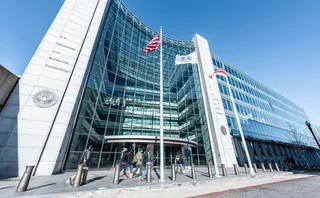
The US Commodity Futures Trading Commission (CFTC) yesterday finally charged bankrupt energy trader Enron and a former company vice-president with manipulating natural gas prices. Also yesterday, federal authorities arrested on fraud charges two Enron officials who had worked in the company's bandwidth trading unit, the US Department of Justice (DOJ) said.
The CFTC alleged that on July 19, 2001, Shively, through EnronOnline (EOL), caused Enron to purchase an extraordinarily large amount of Henry Hub (HH) spot market natural gas within a short period of time, causing artificial prices in the HH spot market and affecting the correlated New York Mercantile Exchange natural gas futures price.
The complaint also charges Enron with operating EOL as an illegal futures exchange from September 2001 to December 2001. According to the complaint, in September 2001 Enron modified EOL to effectively allow outside users to post bids and offers. Enron listed at least three swaps on EOL that were commodity futures contracts.
The complaint further alleged that with this modification, Enron was required to register or designate EOL with the CFTC or notify the CFTC that EOL was exempt from registration. Enron failed to do either, meaning that, in effect, EOL became an illegal futures exchange.
Finally, the complaint charged Enron with offering an illegal agricultural futures contract on EOL. According to the complaint, between at least December 2000 and December 2001, Enron offered a US financial lumber swap on EOL. The complaint alleged the EOL lumber swap was an agricultural futures contract that was not traded on a designated exchange or otherwise exempt, and therefore was an illegal agricultural futures contract.
Separately, the DOJ said two Enron executives who were involved in the company's broadband enterprise face charges of securities fraud and wire fraud in connection with Enron's $111 million contract with video retailer Blockbuster.
Kevin Howard and Michael Krautz, who were executives for Enron Broadband Services, were charged with conspiracy and making false statements to US FBI agents, the DOJ said. Howard and Krautz "intentionally violated the accounting requirements" to allow Enron to record $111 million as revenue in 2000 and 2001, said the affidavit released by DOJ.
The Enron Broadband Division signed a 20-year contract with Blockbuster on April 5, 2000, to "stream" movies into its customers' homes. But EBS never generated any significant recurring revenue from its telecommunications business, the affidavit added.
Only users who have a paid subscription or are part of a corporate subscription are able to print or copy content.
To access these options, along with all other subscription benefits, please contact info@risk.net or view our subscription options here: http://subscriptions.risk.net/subscribe
You are currently unable to print this content. Please contact info@risk.net to find out more.
You are currently unable to copy this content. Please contact info@risk.net to find out more.
Copyright Infopro Digital Limited. All rights reserved.
As outlined in our terms and conditions, https://www.infopro-digital.com/terms-and-conditions/subscriptions/ (point 2.4), printing is limited to a single copy.
If you would like to purchase additional rights please email info@risk.net
Copyright Infopro Digital Limited. All rights reserved.
You may share this content using our article tools. As outlined in our terms and conditions, https://www.infopro-digital.com/terms-and-conditions/subscriptions/ (clause 2.4), an Authorised User may only make one copy of the materials for their own personal use. You must also comply with the restrictions in clause 2.5.
If you would like to purchase additional rights please email info@risk.net
More on Regulation
French regulator wants permanent changes to EU’s output floor
Push for capital relief faces resistance from supervisors in Finland and the Netherlands

Council plans take Aquis, BME out of Esma oversight
German push to exempt Deutsche Börse catches three others, according to sources

Why watering down resolution plans is a bad idea
Bank failures are inevitable; banking crises are not

BIS’s Hernández de Cos on AI, non-bank risk and tokenisation
General manager talks about how the BIS is navigating a complex global environment

‘European SEC’ no silver bullet for growth
EU policymakers hope a single, centralised supervisor will help rev up Europe’s economy but critics are mustering

Permanent FRTB reforms seen as vital for IMA adoption
Temporary relief granted in June has done little to encourage internal model use in Europe

How to ensure the next Credit Suisse or SVB fails ‘well’
Regulators are planning changes to resolution rules after criticism that living wills were ignored in previous bank collapses

Asian firms waiting on exemptions from UST clearing mandate
Hoping for relief on extraterritoriality, 51% of Apac firms have yet to start compliance programmes