Quantcast Master’s Series: Walter Farkas, ETH – University of Zurich
Swiss planning, large joint faculty and public presentations shape the programme

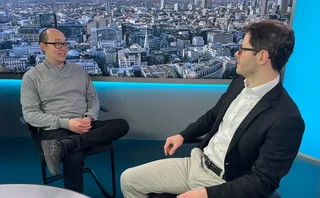
In the final episode of this year’s Quantcast Master’s Series – part of the Tomorrow’s Quants project – we welcome Walter Farkas, director of the Master’s in Quantitative Finance at ETH Zurich, University of Zurich.
The programme, like most of its peers, has strong connections with the industry, but the way it incorporates these connections into the curriculum is unique; 18 lecturers with industry
Only users who have a paid subscription or are part of a corporate subscription are able to print or copy content.
To access these options, along with all other subscription benefits, please contact info@risk.net or view our subscription options here: http://subscriptions.risk.net/subscribe
You are currently unable to print this content. Please contact info@risk.net to find out more.
You are currently unable to copy this content. Please contact info@risk.net to find out more.
Copyright Infopro Digital Limited. All rights reserved.
As outlined in our terms and conditions, https://www.infopro-digital.com/terms-and-conditions/subscriptions/ (point 2.4), printing is limited to a single copy.
If you would like to purchase additional rights please email info@risk.net
Copyright Infopro Digital Limited. All rights reserved.
You may share this content using our article tools. As outlined in our terms and conditions, https://www.infopro-digital.com/terms-and-conditions/subscriptions/ (clause 2.4), an Authorised User may only make one copy of the materials for their own personal use. You must also comply with the restrictions in clause 2.5.
If you would like to purchase additional rights please email info@risk.net
More on Views
Beyond epicycles: models must describe markets, not just fit them
Modelling needs to embrace complexity in volatility patterns, says Jean-Philippe Bouchaud

A smooth fit for complex volatility surfaces
Quant shows a new way to capture implied vol with optimisers

Podcast: Gordon Lee on how junior quants can go from newbie to MVP
Prioritising tasks and setting boundaries are key to career progression, says BNY’s head quant
Markets never forget: the lasting impression of square-root impact
Jean-Philippe Bouchaud argues trade flows have a large and long-term effect on asset prices

Podcast: Pietro Rossi on credit ratings and volatility models
Stochastic approaches and calibration speed improve established models in credit and equity
Degree of Influence 2025: Derivatives pricing dominates; quants don’t follow the AI herd
Rates and volatility modelling, as well as trade execution, top quants’ priorities

What the Tokyo data cornucopia reveals about market impact
New research confirms universality of one of the most non-intuitive concepts in quant finance

BlackRock appoints Pierre Sarrau as chief risk officer
Current CRO Edward Fishwick will be head of research at BlackRock’s RQA group