Sovereign hedging picks up as developing countries end fuel subsidies

A push to eliminate fuel subsidies across much of Africa, the Middle East and Asia is raising interest in the use of commodity hedging by governments as a way of containing social unrest. But it remains a challenge to get sovereign commodity hedging deals done, finds Alexander Osipovich
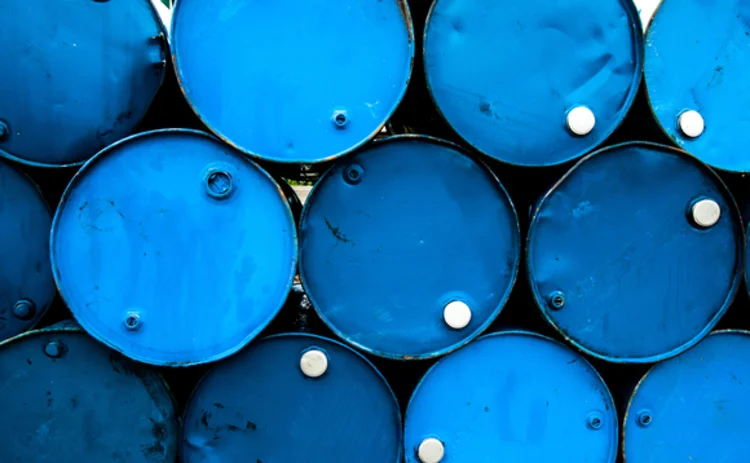
Oil barrels

To much of the general public, the use of derivatives is seen as a dark art practiced by mysterious financial wizards. Often, this activity bursts into the spotlight only when things go wrong – for example, the $6 billion ‘London whale' loss at JP Morgan in 2012, or the €4.9 billion equity derivatives loss uncovered at Société Générale in January 2008. As a result, citizens may be understandably nervous upon learning that their own governments are trading derivatives.

But that's precisely what happens when governments engage in sovereign commodity hedging programmes. Using such programmes, countries with exposures to volatile commodity prices use derivatives in an effort to mitigate the impact of unexpected price moves. Perhaps the best known example of a sovereign commodity hedger is Mexico, which regularly buys put options to hedge revenues from its crude oil exports, with the aim of ensuring stability for the Mexican state budget.

Over the past few years, commodity derivatives dealers say a new wave of interest in sovereign commodity hedging has emerged. But instead of commodity exporters such as Mexico, this interest is centred on commodity importers, particularly those in the process of lifting state fuel subsidies. For governments in these countries, hedging can mitigate the risks that arise from the removal of a popular subsidy, say dealers. In countries as far apart as Indonesia, Nigeria and Sudan, the end of fuel subsides has triggered violent protests in the past two years, while cuts to food subsidies contributed to the overthrow of several governments in the Middle East during 2010 and 2011.

Mindful of those lessons, authorities in a swath of countries across Africa, the Middle East and Asia have been looking more closely at ways to manage their commodity price risk. With several recent examples of governments using derivatives to blunt the impact of subsidy removal, sovereign hedging has become more palatable across the region, according to bankers.

"Sovereign hedging is still rare, but it's becoming an increasingly common topic of conversation," says José Cogolludo, London-based global head of commodity sales at Citi. "As more countries do it, it has become less of a taboo."

[Sovereign hedging] is becoming an increasingly common topic of conversation. As more countries do it, it has become less of a taboo

Morocco's move

Some of the new enthusiasm about sovereign commodity hedging stems from a recent deal by Morocco, in which the country reportedly hedged its fuel purchases by buying call options on European diesel.

According to the Financial Times – which reported the deal on October 9 – the Moroccan government executed the hedge with a local bank, Banque Marocaine du Commerce Extérieur (BMCE), which then laid off the risk with Barclays, Citi and Morgan Stanley. The call options effectively put a ceiling on the price that Morocco would pay for its fuel for the rest of 2013, the newspaper reported, citing two sources familiar with the deal. The hedge was executed in September, just as the country began to lift subsidies on diesel, petrol and fuel oil. Moroccan authorities had agreed to lift the subsidies as a condition for tapping a $6.2 billion line of credit with the Washington, DC-based International Monetary Fund (IMF).

The Moroccan finance ministry and BMCE did not respond to requests for comment, while Barclays, Citi and Morgan Stanley declined to comment on the report.

"In many countries, there has been a drive to eliminate fuel subsidies," says Cogolludo. "If you remove that subsidy in one go, it raises prices and increases volatility. In such situations, hedging comes in quite handy, because the moment you eliminate a subsidy, it gives people a reason for discontent. So one of the reasons why we are seeing more oil importing nations hedging is precisely because, if they move to eliminate a fuel subsidy, they want to smooth out the process of transitioning to international market prices."

Besides Morocco, the other countries that are publicly known to have hedged their energy imports are Panama and Ghana. The Ghanaian government began hedging its crude oil imports during 2010, and has also hedged its share of exports from the Jubilee oil field off the country's coast. Like Morocco, Ghana lifted subsidies on fuel prices in 2013, following pressure from the IMF.

Elsewhere, officials in Indonesia have discussed hedging the country's oil imports, according to local media reports, but have been unable to do so because the government lacks a legal basis for such transactions. Indonesia sharply cut fuel subsidies in June 2013, a move that sparked protests across the country.

Ebele Okeke, Dubai-based head of Middle East and Africa commodity sales at Credit Suisse, says he is seeing growing interest in sovereign hedging in the region. "Until recently, only a few sovereigns were talking about hedging, but it now seems many more ministries of finance in the Middle East and Africa are seriously considering it," he says.

Much of that has been driven by international pressure to end fuel subsidies. In September 2009, leaders of the Group of 20 countries agreed to phase out fuel subsidies, saying that such programmes distorted markets and encouraged wasteful consumption. Undoubtedly, subsidising energy prices is a costly policy for governments that do it: in a paper published in January 2013, the IMF estimated the worldwide cost of subsidies for petroleum products, electricity, natural gas and coal in 2011 was $480 billion, or 0.7% of global GDP.

As a source of emergency financing for cash-strapped governments, the IMF can be a powerful force in pushing countries to remove subsidies. Besides Morocco and Ghana, other African countries that have come under IMF pressure to lift fuel subsidies include Cameroon, Chad, Gabon, Guinea, Mauritania and Nigeria.

According to Okeke, hedging is an extremely useful tool for governments seeking to wean their citizens off subsidised fuel prices. "Removing subsidies helps budgets but often impacts the man on the street," he says. "If the subsidy was on an imported commodity subject to global price fluctuations, then you definitely need to start thinking about price risk management. Hedging, if correctly implemented, can help to smooth the effect of a subsidy removal, thereby easing the pain on the public."

The deals executed by commodity-importing countries may yet build momentum for further transactions. When officials are considering the use of commodity derivatives, they are much more likely to execute the transaction if other governments have already done similar deals, according to Julie Dana, Washington, DC-based lead financial officer in the treasury department of the World Bank. Morocco's example should help persuade other countries to follow suit, believes Dana, who has previously advised officials in developing countries on sovereign hedging programmes.

"Whenever we talk to countries about commodity hedging, the first thing they ask is, ‘who else has done this?' So there is a lot of interest in seeing other cases and examples, and having more countries use derivatives is helpful in strengthening confidence in the use of these tools," says Dana.

But some market participants suggest the current uptick of interest in hedging energy imports is driven by the IMF and will eventually peter out, as countries satisfy its demands and cut back their fuel subsidies. "With oil importing countries, such as Morocco, there has been a unique situation in recent months because of the IMF pressure to lift their fuel subsidies, and that has driven them to consider hedging more actively," says one Asia-based commodities dealer.

World of hedging

Even as more energy importing countries dabble in sovereign hedging deals, market sources stress that such transactions are much smaller and less frequent than the hedges executed by commodity exporting countries.

Mexico's oil hedging programme, which has been in place for more than two decades, is reputed to be the world's largest single hedging programme by value, among both corporates and sovereigns. Besides Mexico and Ghana, other countries that hedge their commodity exports include Chile, the world's biggest producer of copper. Ecuador has hedged its oil sales in the past, and Qatar reportedly hedged its crude oil exports by purchasing put options in 2011.

In addition to the relatively rare hedging deals executed directly by governments, many state-owned companies use derivatives to manage their commodity price risk. These include oil producers, such as Norway's Statoil; refiners, such as India's Bharat Petroleum; and airlines, such as Etihad, the flag carrier of the United Arab Emirates.

According to dealers, the counterparties in sovereign commodity hedging deals are usually the finance ministry or energy ministry of the country in question. But other government actors sometimes express interest in hedging too. "In some cases, we have also been approached by ministries of defence, which want to hedge the fuel purchases for upcoming military exercises against a prefixed budget allocation," says the Asia-based dealer.

Nonetheless, many governments across the globe remain wary of hedging their commodity exposures using derivatives. One reason for this is the unfortunate tale of a hedging deal that went sour for Sri Lanka's state oil refiner, Ceylon Petroleum Corporation (CPC).

After oil prices crashed in the second half of 2008, it emerged that CPC was facing losses of between $700 million and $1 billion due to hedges that had turned against it. As a result, CPC's chairman resigned and a long-running legal battle commenced between the firm and its counterparties, which included Citi, Deutsche Bank and Standard Chartered Bank.

The problem was that, at a time when oil prices were relatively high, CPC entered into a zero-cost collar to protect itself against further price increases. In such a structure, a refiner might buy an out-of-the-money call option with a strike price of $120 per barrel (/bbl) while simultaneously selling an out-of-the-money put option struck at $100/bbl – placing both a ceiling and a floor on the price it pays for crude oil. The advantage of this trade is that it costs nothing to enter, because the sale of the put offsets the premium paid for the call. The disadvantage is that if oil prices fall below the level of the floor, the refiner will find itself forced to pay out potentially large amounts of cash, which is what happened to CPC.

Mike Corley, president of Mercatus Energy Advisors, a Houston-based consultancy that advises both corporate and sovereign clients on their hedging programmes, says CPC's experience frightened a number of governments away from hedging. "The Sri Lankan story really killed a lot of sovereign hedging transactions that were in the works," says Corley. "The banks are not having as much success as a result of that story and a few others that are out there."

Some dealers say sovereign hedgers have moved away from zero-cost collars to avoid the risk of a Sri Lanka-style scenario. Citi's Cogolludo says that most of the governments he deals with prefer simple options strategies, like that used by Mexico, in which there is a fixed, upfront cost and no risk of a crippling payout down the road.

"Most sovereigns tend to hedge in one-year periods, and they tend to hedge with options," Cogolludo says. "If they're producers, they favour put options; if they're consumers, they generally use call options. But they almost always pay a premium in exchange for protection against an unfavourable price move, with full participation if the price moves their way."

The Asia-based dealer agrees that simple options strategies are best for sovereign hedgers, but adds that costless strategies still hold some appeal. "When we deal with sovereigns, we tend to recommend strategies that have a very predictable financial outcome, and that usually means buying options," he says. "Then again, some of these countries have very tight finances, and for them zero-cost collars or outright swaps may be the final outcome."

Hybrid strategies are also possible. To mitigate the heavy cost of option premiums, some sovereign hedgers prefer three-way collars, says Corley. In such a structure, a state-owned refiner seeking to protect itself against a spike in oil prices might buy a call option with a strike price of $120/bbl while selling a put option struck at $100/bbl – as in the previous example of a zero-cost collar. But in addition, the refiner would buy another put option with a strike price at a lower level – for instance, $80/bbl – to limit its downside risk.

"By adding that third leg, it allows them to mitigate the risk of the kind of disaster that you saw in the Sri Lankan deal, where they were exposed dollar-for-dollar all the way down," says Corley.

Tough, hard slog

Despite the rising interest in commodity hedging among some governments, there is unlikely to be a mad rush into such transactions. Dealers say it's inevitably a tough, hard slog to get a sovereign hedging transaction done, because governments move more slowly than other clients, and it is difficult to obtain all the necessary approvals from the senior officials who must sign off on any deal.

Moreover, officials in many countries have a poor understanding of hedging, and they typically need to undergo a long process of education before they feel comfortable enough to approve a transaction.

"In many countries, governments, and public sector entities in general, have never used derivatives," says Dana of the World Bank. "So it's a completely new concept, a completely new set of tools, and a completely new practice for them."

On top of that, governments can change as they are voted out of office, and newly appointed ministers may be more sceptical of the value of hedging than their predecessors. Mercatus's Corley says he often speaks to would-be sovereign hedgers about their potential strategies, but only a small fraction of them follow through by executing actual transactions.

"If we're involved in a dozen of those preliminary discussions a year, I'd say that maybe one of them ends up doing something, and it might take them 18 months before they do it," says Corley. "We had in-depth discussions with a sovereign oil producer in Latin America for upwards of two or three years, and then a politician who was not involved in any of those discussions up until that point came in one day, and basically said: ‘I don't understand it. So we're not going to do it.'"

With that, the deal was abruptly called off, says Corley. Still, he adds that discussions about sovereign hedging have become "more common and more serious" in recent years. And that could be good news for dealers hoping to execute commodity hedges for new sovereign clients.

"When it comes to implementation, getting consensus across all the different government stakeholders can be challenging," says Okeke at Credit Suisse. "But it's clearly not impossible."

Only users who have a paid subscription or are part of a corporate subscription are able to print or copy content.

To access these options, along with all other subscription benefits, please contact info@risk.net or view our subscription options here: http://subscriptions.risk.net/subscribe

You are currently unable to copy this content. Please contact info@risk.net to find out more.

Most read articles loading...

You need to sign in to use this feature. If you don’t have a Risk.net account, please register for a trial.

Sign in
You are currently on corporate access.

To use this feature you will need an individual account. If you have one already please sign in.

Sign in.

Alternatively you can request an individual account here