

Clearing house of the year: Japan Securities Clearing Corporation
Risk Asia Awards 2026
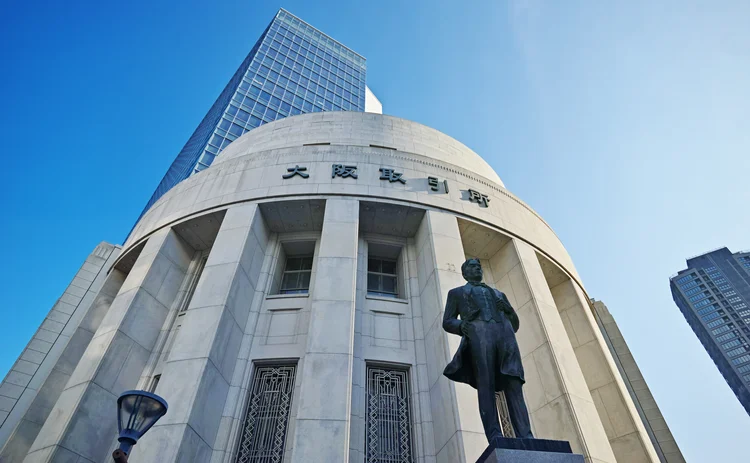
One of the biggest stories in derivatives clearing last year was the decision by the US Commodity Futures Trading Commission (CFTC) to grant US customers access to the Japan Securities Clearing Corporation’s (JSCC) interest rate swap-clearing service.
The rule change brings big benefits for US hedge funds, who like their European counterparts, can now clear at the most liquid venue for long-dated JPY swaps. This has proved especially valuable coming at a time when long-end rates in Japanese yen have soared to record highs.
“This matters because US investors had long been excluded from clearing at the venue with the deepest liquidity in JPY swaps,” says Tetsuo Otashiro, JSCC’s director of global policy and regulation. “This relief puts US investors on the same footing as non-US participants after years of an uneven playing field, at a time when fee-sensitive and risk-sensitive investors increasingly need efficient instruments to hedge JPY rate exposure amid monetary-policy change, higher inflation, and a weaker yen backdrop.”
Otashiro says that opening the JPY clearing service to US customers did not require any fundamental changes to the clearing house’s risk management framework, since JSCC already provides clearing services to customers from multiple jurisdictions.
Nonetheless – given the scale and risk appetite of the US market – JSCC was highly alert to the need to monitor the exposures of US customers and their clearing brokers on a daily basis. So far, no significant issues have surfaced.
A long history
JSCC tried to register as a Derivatives Clearing Organisation (DCO) as far back as 2014, but differences between US customer protection requirements and Japanese law prevented that route from being completed.
Instead, the CFTC granted JSCC DCO exemption status, providing a framework under which JSCC could clear proprietary swaps for certain US persons. However, direct customer clearing remained outside of this scope.
The competitive impact of the rule change could be substantial. In August 2026, JSCC’s share of the JPY swap market versus rival LCH was 48.2%, a 7.7-point increase quarter on quarter. In addition, the clearing house maintains the lion’s share of DV01 in tenors beyond 10 years.
“Opening JSCC to US customers therefore did more than broaden geographic access. It gave them access to the deepest existing pool of cleared yen-rate liquidity,” says Otashiro.
Onboarding
The market response to the CFTC’s No-Action Letter was swift. Within three months of the regulatory change, Millennium became the first US hedge fund to join JSCC’s yen IRS clearing service, shortly followed by Citadel.
In response to the increasing demand from customers for access to its swap clearing service, JSCC has focused on making the onboarding process as straightforward as possible.
One US client, which has worked with other clearing houses and exchanges around the world, highlighted JSCC’s responsiveness and service-oriented approach.
“KYC is never a pleasant process nowadays, anywhere you go, but I would say they made it as easy as they could. They were super responsive and a pleasure to work with,” says the client.
Despite the obvious time zone differences, JSCC managed to respond in a timely fashion to any queries or concerns that the client had. The clearing house supports triparty collateral services provided by global custodians such as Euroclear, helping clearing members and their customers manage the transfer of Japanese government bond collateral across borders.
It is this willingness to work through the practical challenges faced by clients of all sizes, rather than simply focusing on the largest participants, that has won plaudits from clients.
“They would clarify things and guide us towards what they thought would be the best fee structure for us, rather than what was the biggest revenue generator for them. I think it was a very good partnership,” says the client.
JSCC says that it has further technical enhancements in the pipeline, which should make the process even smoother.
Digital JGB collateral
One key challenge faced by overseas participants – including US customers – is the efficient mobilisation of collateral across jurisdictions and time zones.
Cross-border collateral movements can be affected by legal arrangements, operational cut-off times and time-zone differences. This is one of the reasons JSCC has been experimenting with distributed leger technology and tokenised Japanese government bonds (JGBs).
In 2025, the clearing house launched a proof of concept with Mizuho, Nomura and Digital Asset. If successful, the project could significantly reduce the operational burden associated with cross-border collateral management.
“This proof of concept explores whether distributed ledger technology can enable near-real-time, 24/7 collateral mobility and rethink the existing framework for CCPs,” says Ryosuke Shimizu, JSCC’s chief manager of strategic planning for clearing IT innovation. “This innovation is aimed at enhancing collateral management and supporting global market participants.”
The project has growing relevance as international interest in the JGB market grows. Today, moving JGB collateral across borders requires co-ordination between multiple intermediaries and is constrained by settlement processes, operating hours and time-zone differences. That can make it harder for investors to mobilise collateral quickly when margin requirements change.
JSCC is exploring whether a digital infrastructure could allow JGB collateral to move more quickly, potentially on a 24/7 basis. If successful, this could give overseas participants greater flexibility in meeting margin calls while making more efficient use of their available collateral and capital. In that sense, the project is not simply a technology experiment, but an attempt to address one of the practical frictions created by globalising JPY clearing.
This initiative builds on JSCC’s announcement last July that it would become the first Japanese financial institution to implement digital regulatory reporting, using the industry-standard Common Domain Model, in a production environment.
“Over the past 12 months, the JSCC has focused on three key objectives: expanding market access; strengthening resilience; and investing in the future of market infrastructure,” says Isao Hasegawa, president and CEO of JSCC. “All of these objectives have a single aim: to deepen the linkage between onshore and offshore capital flows, creating benefits for all market participants.”
コンテンツを印刷またはコピーできるのは、有料の購読契約を結んでいるユーザー、または法人購読契約の一員であるユーザーのみです。
これらのオプションやその他の購読特典を利用するには、info@risk.net にお問い合わせいただくか、こちらの購読オプションをご覧ください: http://subscriptions.risk.net/subscribe
現在、このコンテンツを印刷することはできません。詳しくはinfo@risk.netまでお問い合わせください。
現在、このコンテンツをコピーすることはできません。詳しくはinfo@risk.netまでお問い合わせください。
Copyright インフォプロ・デジタル・リミテッド.無断複写・転載を禁じます。
当社の利用規約、https://www.infopro-digital.com/terms-and-conditions/subscriptions/(ポイント2.4)に記載されているように、印刷は1部のみです。
追加の権利を購入したい場合は、info@risk.netまで電子メールでご連絡ください。
Copyright インフォプロ・デジタル・リミテッド.無断複写・転載を禁じます。
このコンテンツは、当社の記事ツールを使用して共有することができます。当社の利用規約、https://www.infopro-digital.com/terms-and-conditions/subscriptions/(第2.4項)に概説されているように、認定ユーザーは、個人的な使用のために資料のコピーを1部のみ作成することができます。また、2.5項の制限にも従わなければなりません。
追加権利の購入をご希望の場合は、info@risk.netまで電子メールでご連絡ください。
詳細はこちら 受賞歴
Risk Asia Awards 2026: The winners
The winners of this year’s Risk Asia awards

A single view of risk fuels further success for Murex
Murex’s single cross-asset platform and a services model built around continuous upgrades help Apac banks keep trading and risk infrastructure current as the pace of change accelerates

Derivatives house of the year, Singapore: Societe Generale
Risk Asia Awards 2026

Derivatives house of the year, Hong Kong: Crédit Agricole CIB
Risk Asia Awards 2026

RMB house of the year: Crédit Agricole CIB
Risk Asia Awards 2026

Securities house of the year: Huatai Securities
Risk Asia Awards 2026

Exchange of the year: Singapore Exchange
Risk Asia Awards 2026

Derivatives law firm of the year: King & Wood
Risk Asia Awards 2026
