MEP vote on Omnibus II postponed until July
Delay to plenary vote ‘will provide crucial additional time to negotiate contentious issues’
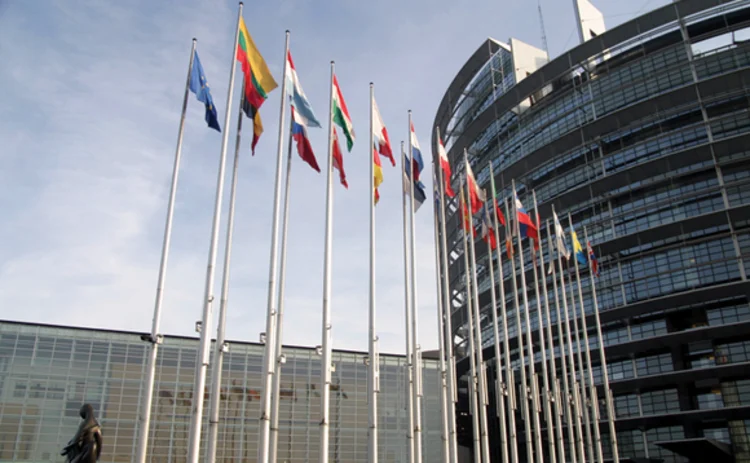
The European Parliament's plenary vote on Omnibus II has been postponed by nearly three months until early July in order to allow sufficient time for the crucial negotiations between the European institutions.
The vote, which was originally scheduled for April 17, will now take place between July 2 and July 5, a spokesman for the European Parliament confirmed.
The plenary vote by MEPs, which will approve Omnibus II, is a key step to finalising Solvency II's level 1 text.
The rescheduling of the plenary vote comes as no surprise as there were concerns that had the vote taken place in April there would be insufficient time for the ‘trialogue' negotiations between the parliament, the Council of the European Union and the European Commission.
The trialogue discussions to agree on a final version of Omnibus II will only begin once the European Parliament's Committee on Economic and Monetary Affairs (Econ) has voted to agree its position on the Omnibus II text. This vote, which has been repeatedly delayed, is scheduled to take place on March 21.
Observers say the rescheduling of the plenary vote will provide critical additional time for the complex trialogue negotiations, which are likely to focus on a number of highly contentious issues, including discount rates and transitional measures, on which a common position must be agreed.
"We already knew that April 17 was extremely optimistic given that the Econ vote was set for March 21 - it left less than a month for the trialogue. Given the current state of the eurozone and the scale of the issues that needed to be discussed and negotiated, there would not have been enough time," says Paul Clarke, global Solvency II leader at PricewaterhouseCoopers in London.
But the complexity of the discussions could still make reaching an agreement within the three-month window between the Econ's vote and the plenary vote difficult.
Clarke comments: "This certainly feels like enough time in which to achieve that [agreement] and there is sufficient commitment and motivation among all parties to achieve this within the time frame they set themselves. The negotiations need to start between all parties and then we will be in a clearer position to understand whether three months are enough," he says.
If the trialogue negotiations are not concluded in time then the plenary vote might have to be pushed back until after the European Parliament's summer recess beginning at the end of July, which could have major implications for the development of Solvency II.
The spokesman for European Parliament would not speculate on whether there would be adequate time for the trialogue negotiations. "What I can say is that from now to July would be a normal time frame [for such negotiations]," the spokesman says.
Only users who have a paid subscription or are part of a corporate subscription are able to print or copy content.
To access these options, along with all other subscription benefits, please contact info@risk.net or view our subscription options here: http://subscriptions.risk.net/subscribe
You are currently unable to print this content. Please contact info@risk.net to find out more.
You are currently unable to copy this content. Please contact info@risk.net to find out more.
Copyright Infopro Digital Limited. All rights reserved.
As outlined in our terms and conditions, https://www.infopro-digital.com/terms-and-conditions/subscriptions/ (point 2.4), printing is limited to a single copy.
If you would like to purchase additional rights please email info@risk.net
Copyright Infopro Digital Limited. All rights reserved.
You may share this content using our article tools. As outlined in our terms and conditions, https://www.infopro-digital.com/terms-and-conditions/subscriptions/ (clause 2.4), an Authorised User may only make one copy of the materials for their own personal use. You must also comply with the restrictions in clause 2.5.
If you would like to purchase additional rights please email info@risk.net
More on Solvency II
Lack of transposition to delay Mifid II enforcement
Some states won’t have adopted directive before June, making rule-imposition difficult, say lawyers

Capital and funding
Quants propose KVA and FVA accounting framework based on Solvency II regulation

Testing interest rate models for Solvency II applications
Alexey Botvinnik and Vladimir Ostrovski propose a validation method for interest rate models

Eiopa cuts matching adjustment risk margin
UK insurers welcome additional capital relief

Solvency II volatility dampener ineffective for euro periphery
Stress tests expose flaw in formula to calculate volatility adjustment

Solvency II technical draft too harsh, firms claim
Industry representatives call on Eiopa to soften draft specifications

Commission 'must ensure proportionality of Solvency II' rules as MEPs give green light to new regime
Omnibus II approved by European Parliament
EC to restrict deferred tax assets in Solvency II
Rules expected to be tightened on determination of future profits