Q&A: the Bundesbank’s Andreas Dombret on small banks, big banks and shadow banks

Andreas Dombret may not like the term ‘shadow banking’, but whatever term is used instead, the Bundesbank executive board member tells Risk.net supervisors are a long way from being able to understand the shifting risks it creates

andreas-dombret-app
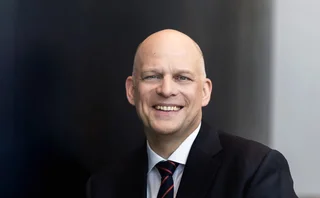
Andreas Dombret, Bundesbank

Small banks face too great a regulatory burden, big banks are retreating from some businesses, and the volume of shadow banking activity is growing – with regulators "miles away" from being able to monitor the new risks this might create.

That – in a nutshell – is the view of Andreas Dombret, head of the departments of banking and financial supervision and risk control at the Deutsche Bundesbank, on the impact of successive waves of post-crisis regulation.

It might sound a little gloomy, but Dombret – who is a member of the central bank's six-strong executive board – is not downbeat. The banking industry is stronger, as are markets generally, he says, and it's now a matter of keeping tabs on some of the side-effects of reform.

The Basel Committee on Banking Supervision is trying to make its rules less complex, so they do not have a disproportionate impact on smaller banks, he says, and the retreat of big banks from some business lines is a sensible and healthy thing, which will not leave clients in the cold. "You can usually assume that whenever there is demand, there is an offer," Dombret says.

Increasingly, though, that offer is coming from non-banks, and Dombret sees this as more of a problem – as things stand, supervisors are not equipped to follow the shifting risk profile, and understand whether banks are genuinely free of the exposure.

We are miles away from being able to monitor this shadow banking risk

"We will constantly need to work on this – for quite some time – to perfectly understand the risks we are facing. This is not a solved problem and, to be perfectly honest, it may never be completely solved," says Dombret.


In the past six months, we've seen huge moves in the Swiss franc and US Treasury yields. Has regulation made markets more brittle?

Andreas Dombret: I don't think so. I believe they are stronger than they were in 2008 and 2009. Markets need to breathe, and a sign markets are well-functioning is that they are able to react to sudden news and changing environments. The move in the Swiss franc was a reaction from the market to an announcement by the Swiss National Bank.

We live in a world with very low interest rates, rather low volatility, very low inflation and high liquidity. In such market circumstances, sudden news makes a big difference and markets will react to it.

That also shows us how important communication is these days for all market participants as well as for regulators. For topics such as the normalisation of interest rates, for instance, the earlier you communicate and the more transparent you are, the better. I think central banks very much understand the role of communication and its impact – much better than they did five or 10 years ago.

Have you seen changes to the volatility or liquidity characteristics of German assets?

AD: The quantitative easing programme that started only a few weeks ago will definitely have an impact on several asset classes, but I would rather wait to see the effect of this programme before commenting on the outcome.

Do you have any sympathy for arguments that the leverage ratio and the Liikanen bank structure rules should be softened?

AD: The Liikanen rules are being debated at the European Commission and the European Parliament. Let's wait for the outcome.

As for the leverage ratio, the Bundesbank is very much involved in the discussions. Looking at the broader picture, it is immediately obvious we have much more equity in the system but the leverage has not decreased as much as one would have thought. To have a leverage ratio, including and excluding derivatives positions below the balance sheet, is a good way to look at this as a package of measures. And I'm glad to see German banks are now focusing on the question of what a sustainable leverage ratio should be.

I see the leverage ratio primarily as a tool to supplement the risk-weighted approach and counterbalance its deficiencies. That's how it should be calibrated. That being said, we still need a leverage ratio.

What is the right minimum for the ratio? In the US, it can go up to 6%; in Europe, some countries are also planning to go beyond the level agreed internationally.

AD: That depends on many parameters, for example each country's accounting rules. Let's try to start with the minimum level set at the international level.

So 3%?

AD: Exactly, but we will still have to look at each bank's business model. The 3% is a general rule and then we need to go into the specifics.

andreas-dombret-2-app


Banks say the cost of regulation is forcing them out of some business lines. Do you agree, and is that a good outcome?

AD: Clearly if there are more regulations, there are more costs. But what we really have to appreciate is the cost society would incur if banks were to fail. If you look back at the crisis, then the costs that result from regulation are justified.

What I'm more worried about is the notion of proportionality. This is an argument
I hear quite often and I think we may indeed have gone too far with some of our regulation.

Having all that regulation for a small bank, which entails very low risk, is probably disproportionate. The fact is that a lot of the costs incurred by those small banks come from the complexity of regulation.

So we should look at the pieces of regulation and revise them slightly with a view to removing the unnecessary complexity. That's why we have a Basel Committee taskforce looking at reducing this complexity. This needs to be addressed.

If banks do retreat from some business lines, do you worry about dependency and concentration risks?

AD: There are several potential risks here. On the one hand, a lack of revenue means banks may not be there to provide the liquidity in some markets when we most need it. There is also the question of knowing whether banks will be able to build up reserves if they are not profitable enough. But, on the other hand, there is a concentration risk and I can see this trade-off.

But if banks get concerned about their profitability, it's their responsibility to look at their positions in certain businesses and review their business strategy. If they find themselves in some businesses where they don't have a position as market leader, they should probably focus on other activities in which their position is better.
This is what banks are doing right now, and it is a sensible thing to do.

Is there a risk some clients could be completely excluded from certain markets?

AD: As long as we still have markets and competition, everything will work well – there will still be interested parties to make sure businesses are profitable enough. And as long as there is enough profitable client demand, there will also be supply. I see the issue, but you can usually assume that whenever there is demand, there is an offer.

What if the offer comes from non-banks? Do you worry about the rise of shadow banking?

AD: The fact is that the more you regulate, the more people will try to avoid regulation and work around it. That's what leads to shadow banking activity.
But let me first tell you how much I dislike the term ‘shadow banking'. First, it's not conducted in the shadows. It's conducted right in front of us. Second, it's not banking. In the US, they call it non-bank banking, which is a much better term.

Apart from that, the real issue is whether banks' activities are shifted to an unregulated market space and whether there is a systemic risk that could impact the banking sector.

At that point, we would have a shadow banking problem and we would need to
regulate it.

For instance, some regulations prohibited proprietary trading in the past. As a result, banks shifted those activities to private equity firms, but those firms continued to take proprietary trading risk on the banks' credit lines. If you use the bank's credit line, the risk still lies with the bank. The only difference is that it's not regulated.

How confident are you that you will be able to monitor this risk?

AD: We are miles away from being able to monitor this shadow banking risk. We are very much trying to monitor it – through many initiatives – but we are not there yet.

The shadow banking sector keeps on growing. In some countries, this sector is actually much bigger than the banking sector itself. So it's a very relevant area to look at. We identified the issues very early on. We are making progress on our initiatives but we are not there yet – it will take us some time.

There are some initiatives at the Financial Stability Board (FSB) level...

AD: Yes, at the FSB level, at the G20 level and at the Iosco level. I'm not unhappy with the amount of work that is being put behind those initiatives, but I can realistically say we will constantly need to work on this – for quite some time – to better understand the risks we are facing. This is not a solved problem and, to be perfectly honest, it may never be completely solved.

Put crudely, the new prudential and resolution framework seems to mean depositors and taxpayers benefit – because they don't have to worry about bailing out a bank – but investors suffer, because the costs of making the banks stronger are passed along to them. Is that fair?

AD: Investors have always said, for as long as I've been in the market, they are suffering. So we always have to take this with a pinch of salt.

Having said that, without investors we don't have markets, and they play a crucial role. But in 2008-09, a lot of the burden was put on the taxpayer. You could argue this almost brought our entire system to the brink of collapse. Clearly, we were not prepared as a society to deal with this sort of shock. So it's only fair on our side to have some kind of hierarchy to determine who should assume the risk.

The German economist Walter Eucken once said that whoever reaps the benefits must also bear the liability. So it's only fair that investors at large, who take the profits, should also be the ones who pay. And the truth is that taxpayers are not fully off the hook yet because, even in Germany, some banks still rely on public money and on public guarantees.

So, in a word, I very much support the notion that we needed to return the hierarchy of responsibilities back to a normal level with incentives being set in the right manner.

The FSB released its new proposals on Total Loss-Absorbing Capacity last November. Do you think there will be a market for this type of debt?

AD: We are aware business models and refinancing structures differ around the world. The more high-quality capital banks hold, the clearer their organisational structure is, and the more transparent they are, the more I'm convinced investors will reward these efforts and provide the necessary capital.

Do you think banks are prepared for an interest rate rise?

AD: Interest rates are at historically low levels. Back in 2013, we executed a comprehensive bank survey on the impact of different interest rate scenarios on the interest income of German banks. This counterfactual analysis clearly demonstrated that a sudden increase in interest rates would impose considerable strain but only temporarily. Interest income would recover in the medium- to long-term.

In contrast, a continuing low interest rate environment makes a continuous decline in net interest income probable, and puts German banks at higher risk in the medium- to long-term.

Only users who have a paid subscription or are part of a corporate subscription are able to print or copy content.

To access these options, along with all other subscription benefits, please contact info@risk.net or view our subscription options here: http://subscriptions.risk.net/subscribe

You are currently unable to copy this content. Please contact info@risk.net to find out more.

Most read articles loading...

You need to sign in to use this feature. If you don’t have a Risk.net account, please register for a trial.

Sign in
You are currently on corporate access.

To use this feature you will need an individual account. If you have one already please sign in.

Sign in.

Alternatively you can request an individual account here