

LCH to become more commercially driven, says Axe
Regulatory changes mean the over-the-counter clearing space is becoming hugely competitive, with new entrants launching services to rival long-established clearer LCH.Clearnet. Long seen as a member-driven utility, LCH.Clearnet needs to become more commercial to compete, says new chief executive Ian Axe. By Nick Sawyer
LCH.Clearnet used to stand alone in the world of over-the-counter derivatives clearing. Those days are over. Encouraged by a Group of 20 (G-20) commitment to centrally clear all standardised OTC trades by the end of 2012, new central counterparties (CCPs) are jostling for position – at least 10 have either launched or announced plans to do so since the G-20 embraced clearing at its Pittsburgh summit two years ago.
In some senses, LCH.Clearnet still has an advantage over the newcomers – its interest rate swap clearing platform, SwapClear, has a proven track record, having launched in 1999. More importantly, the default of Lehman Brothers in September 2008 – when SwapClear handled the unwind of $9 trillion in swaps positions – shows the clearer’s default management process works. But that doesn’t mean it can just sit back and relax – at least, so says new chief executive Ian Axe.
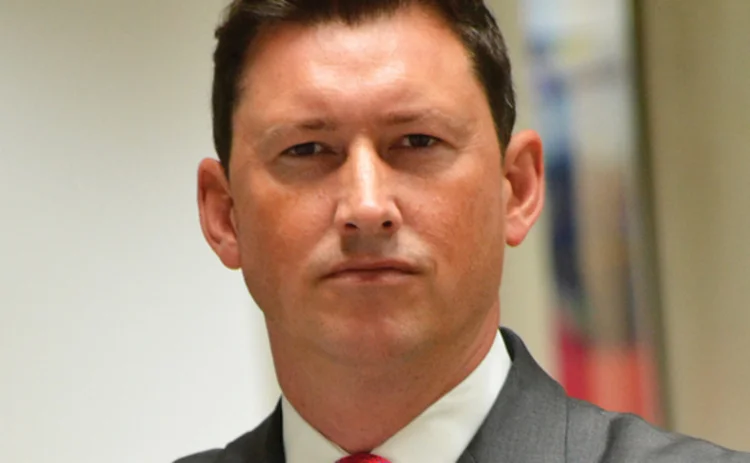
Appointed in February following the retirement of former head Roger Liddell, Axe is determined to shake off the image of LCH.Clearnet as an industry-owned utility and make the firm more commercially minded. That could be seen as a bit of a gamble – dealers often compare the utility-like culture of LCH.Clearnet favourably with the out-and-out profit-driven approach of its rivals. But it is a change the clearer has to make if it wants to remain relevant to the industry, believes Axe, who was formerly chief operating officer for Europe, the Middle East and Africa at Barclays Capital and global head of operations for Barclays Capital and Barclays Wealth.
“In the past, we’ve been a utility shop, with a limited client servicing strategy and not enough focus on the business planning of potential revenue and cost efficiency,” says Axe, speaking exclusively to Risk in his first media interview since taking on the chief executive role. “However, if you look at the change in competition in the market and the dynamics of legislation – be it the Dodd-Frank Act or the European Market Infrastructure Regulation – then we have to understand that the drivers of how you run the business are very different.”
Being a utility has its downsides, in other words. It means the firm may not have the commercial nous to recognise when to launch clearing services for new products or markets, or the clout to attract top talent, Axe fears. The clearer hasn’t exactly been sitting on its hands in recent years – SwapClear added three new currencies in July, bringing the total to 17; it has developed a client clearing capability; and has launched its futures clearing merchant service in the US. Meanwhile, work is under way to launch a foreign exchange clearing service, dubbed ForexClear (see box, below). But the firm still needs to be more forceful, Axe says.
“We need to build a risk management firm that can sustain itself and reinvest in world-class risk management platforms, can attract the best talent, and has the ability to expand the product and service capability in a dynamic way. Doing that means you have to be able to make money commercially – but it doesn’t mean you are setting yourself some commercial return-on-equity target. That would be a disadvantage in my view, because you would not be seen as the service provider to the market that was the advantage of the old utility title.”
This goal – to transform LCH.Clearnet from a slightly stodgy utility into a more aggressive, commercially focused group – is the centrepiece of a strategic plan drawn up by Axe. It involves changing the structure of the firm, with a move away from the old country-focused organisation – the London-based LCH.Clearnet Ltd and Paris-based LCH.Clearnet SA subsidiaries – to a single company split by business type: OTC (SwapClear and the new ForexClear and CDSClear), repurchase agreements (RepoClear) and exchange business (cash equities, listed derivatives, metals, freight and exchange-traded commodities).
“We are pushing for one organisation – a clearing, asset class-led organisation, as opposed to country-led. However, it is important to highlight we are absolutely keen to still have our legal entities – we are very proud of our French clearing house,” says Axe. “This structure needs to be signed off by the regulators, but they understand the importance of consolidating the risk across these asset classes, and they understand the inefficiency of having two sets of infrastructure. In a clearing environment that has become immensely competitive in pricing, they understand that is a disadvantage.”
This recognition of the need to create efficiencies extends to the provision of collateral management and liquidity services to clients. Clearing houses usually require cash or sovereign bonds to be posted as initial margin, but insist on cash only for variation margin. One problem with that is the sheer volume of standardised derivatives that will gravitate to CCPs – up to 70% of what is reckoned by the Bank for International Settlements to be a $600 trillion notional market – which will soak up huge amounts of high-quality, liquid collateral. For buy-side firms, which tend to take more directional exposures, the requirements could be particularly onerous – but these entities tend not to hold large amounts of cash on their balance sheets.
In response, some European legislators have proposed broadening the list of eligible collateral accepted by CCPs to ease the burden on end-users (Risk June 2011, page 10). Axe stresses the clearing house would need to be comfortable with the quality of the collateral it accepts, but says there’s some room for change.
“We understand there are not endless amounts of collateral in the market, so the efficiency of collateral and liquidity is naturally of strategic importance to clients. We are not trying to be too clever – it is just to understand that we cannot afford to be inefficient in a market that will put so much demand on collateral in the CCP space,” he says.
This has prompted several initiatives. One is a review of the types of collateral LCH.Clearnet accepts across its different businesses, something Axe says is an ongoing exercise. Another is considering how the clearer could be more efficient in its collateral calls, which could include cross-margining. This is a change of tone for LCH.Clearnet, which has tended to be conservative in the collateral it accepts. In this context, talk of cross-margining – where offsets in different markets are taken into account when calculating an overall margin figure – could almost be seen as racy.
Axe stresses cross-margining is just one of a variety of solutions being considered. “The topic is ‘wow, there’s a huge amount of collateral that potentially could be tied up in the system and are there ways of ensuring we are not being inefficient with our collateral’. That is the real question. Cross-margining is a topic that has been brought up as a solution, but it is not the whole story. You need to look at it more holistically – how am I going to make sure that I am a collateral and liquidity services provider to my clients?”
In essence, this is all about shoring up LCH.Clearnet’s position in a market that is set to become fiercely competitive. Several large clearers have launched OTC derivatives services over the past year or so, including CME Group and Eurex, while others are looking to develop their own offerings. Even smaller CCPs could be a threat if national regulators insist some portion of domestic business is cleared onshore, or local derivatives users want to use a solution that is close to home (Risk April 2011, pages 38–41). That competition will inevitably put pressure on CCP fees, as well as forcing firms to improve the efficiency of their processes. The fear expressed by some, though, is that it may encourage some clearers to lower margin requirements too far in order to win business – a concern voiced by Axe’s predecessor in April 2010. Axe claims LCH.Clearnet will not skimp on risk management – but says the firm needs to ensure it is not overly conservative.
“You need to make sure you are not uncompetitive. If you are over-insuring, that is an issue for your clients. But that is different from trying to compete in a race to the bottom on risk management,” he says.
Intensifying competition also extends to membership. As part of its Dodd-Frank rule-making, the Commodity Futures Trading Commission (CFTC) last December proposed a $50 million cap on the minimum capital requirements set by CCPs on clearing members – that compares to the current minimum of $5 billion set by SwapClear. The CFTC hopes this will promote fair and open access to clearing, increasing the number of firms able to act as members. However, some participants have argued it could threaten the stability of the CCP, claiming poorly capitalised members may not be able to stump up the necessary cash top-ups in a crisis situation (Risk February 2011, pages 34–36).
Axe says the $50 million proposal is too low, but stresses the firm intends to be Dodd-Frank compliant. “We are very open to open access, but it is important we have confidence our default management is in no way compromised by the eagerness to take on new clients. You have to protect the systemically important risk vehicle of the CCP, and you also have to think about your other members and the importance of not creating risk procedures that could create contagion. If you become a member and you get the benefit of membership, you have to be able to handle the responsibility of the default.”
Even without these rules, LCH.Clearnet has been pushing to increase its membership – 57 entities are now listed as members, compared with 37 at the start of this year, with recent new entrants including Danske Bank, BBVA and DZ Bank. Axe says the firm is now much more aggressive in its marketing. “In a commercial world, you can’t expect your clients to come to you – you have to be able to market and provide a service to those clients,” he says.
The change in regulation will ultimately mean more people and more instruments have to clear – in turn making each CCP a huge, systemically important hub in the financial system. Some observers have suggested CCPs should have access to central bank liquidity as a failsafe, arguing this would help clearers meet variation margin obligations in the event of a sudden default. However, the issue has split opinion among regulators and politicians, nervous about pledging taxpayer money to any financial institution (Risk July 2011, page 11, Risk January 2011, pages 18–21).
Axe notes that LCH.Clearnet already has access to the Banque de France via its Paris-based entity, which, due to a quirk of French regulation, has a banking licence. He recognises the benefits of using central bank facilities – but reckons the clearer has sufficient liquidity and would be more interested in making deposits than drawing cash. “In 2008, following the collapse of Lehman, we weren’t looking to have central bank access for liquidity. We were looking to deposit because we were nervous about which banks to put our deposits with. That’s the reverse of what people are thinking.”
There’s another aspect to all of this. In May, the company confirmed it had been approached by various parties to discuss “some form of possible business combination”. LCH.Clearnet is currently owned by a group of banks and exchanges, and there is speculation a sale could be on the cards. NYSE Euronext, London-based Markit and Nasdaq OMX have all been touted as possible buyers, either alone or in combination with others. Axe does not deny there has been interest from various firms, but stresses the push to make LCH.Clearnet more commercially driven needs to happen regardless. “We continue to be an attractive asset, as shown by the interest we’ve seen in the past year. However, with or without any transaction, the importance of the transformation of LCH.Clearnet into a commercial risk management firm is imperative to ensure we are best placed to deliver the highest-quality risk management solutions to our clients,” he says.
BOX
LCH.Clearnet looks to expand CDS offering
London-based LCH.Clearnet has a long history of clearing interest rate swaps via its SwapClear platform, but the firm is keen to position itself as a multi-asset-class clearer by clearing foreign exchange and credit default swaps (CDSs) too.
The company’s Paris-based entity, LCH.Clearnet SA, began clearing eurozone CDS contracts in March 2010 – but the service has had limited take-up. As of August 19, just 1,214 contracts had been cleared since launch, with a notional value of €49.37 billion. That compares with 134,388 index and 177,538 single-name contracts with a total notional value of €6.44 trillion at Ice Clear Europe since it launched in July 2009.
However, LCH.Clearnet is now looking to expand its CDS clearing service and make it more international, says Ian Axe, London-based chief executive of LCH.Clearnet. “We have a domestic offering in CDSs at LCH.Clearnet SA. We have been working on the option to have an international model,” he says.
The initiative is in its early stages, but some dealers say it will be welcomed by the market, which to date has cleared most of its CDS trades through Ice Clear Europe and Ice Clear Credit in the US. “You don’t want to have three clearing houses because of the margin and the netting. But if you have another that has proved successfully that the governance is clear, that it doesn’t appear like a very profitable profit centre and is doing the right thing for the community, then you are satisfied,” says one London-based credit trader.
However, Axe acknowledges the company has a long way to go before it gets anywhere close to the volumes cleared by Ice. “I am not looking to provide a utility service – it is something that needs to be commercially viable. But at the same time, there is a different dynamic between providing a service that is just for profit, so we are optimistic, but we really respect that Ice is ahead of us in this field.”
The clearer has also been working for some time on a foreign exchange clearing service, dubbed ForexClear (Risk January 2011, page 12). The service is widely expected to start with forex options, and was initially slated for this year, but Axe says the precise details of the offering and the timing of the launch has yet to be decided.
Some market participants believe progress has slowed following a report by the Committee on Payment and Settlement Systems and International Organization of Securities Commissions in March, which proposed that central counterparties (CCPs) should “provide clear and certain final settlement, at a minimum, by the end of the value date” – a requirement that could be problematic in the forex market, as it would oblige CCPs to guarantee that counterparties to every cleared currency trade receive the other leg of the payment in the relevant currency in the event of a default.
“The preparation has been very good, but the question is when to go live and whether it should be before the legislative requirement to go live. So that is still being discussed,” says Axe.
Only users who have a paid subscription or are part of a corporate subscription are able to print or copy content.
To access these options, along with all other subscription benefits, please contact info@risk.net or view our subscription options here: http://subscriptions.risk.net/subscribe
You are currently unable to print this content. Please contact info@risk.net to find out more.
You are currently unable to copy this content. Please contact info@risk.net to find out more.
Copyright Infopro Digital Limited. All rights reserved.
As outlined in our terms and conditions, https://www.infopro-digital.com/terms-and-conditions/subscriptions/ (point 2.4), printing is limited to a single copy.
If you would like to purchase additional rights please email info@risk.net
Copyright Infopro Digital Limited. All rights reserved.
You may share this content using our article tools. As outlined in our terms and conditions, https://www.infopro-digital.com/terms-and-conditions/subscriptions/ (clause 2.4), an Authorised User may only make one copy of the materials for their own personal use. You must also comply with the restrictions in clause 2.5.
If you would like to purchase additional rights please email info@risk.net
More on Clearing
BofA urges horizontal CCP fix after CME outage, others demur
Analysts say clearing meltdown bolsters case for futures-for-futures exchange with FMX

Passing the port? Drill needs more CCP hands in key test
As few plan to test porting, brokers say finer asset segregation, reg waivers and capital relief would help

Thin-skinned: are CCPs skimping on capital cover?
Growth of default funds calls into question clearers’ skin in the game

Girolami to leave LCH for NatWest
Clearing house CEO named CIB head for UK lender

Derivatives funding: smart solutions for a complex environment
Eurex’s cleared repo and GC Pooling offerings are helping market participants overcome challenges in the funding, financing and collateral markets

Taming the systemic risk Hydra: 10 years of mandatory clearing
Regulators, clearers and market participants reflect on a decade of the clearing requirement

Switching CCP – How and why?
As uncertainty surrounding Brexit continues and the impacts of Covid-19-driven market volatility are analysed, it is essential for banks and their end-users to understand their clearing options, and how they can achieve greater capital and cross…

BNP leads a comeback for Europe’s clearers
Brexit, leverage ratio tweaks and concentration fears could help European banks compete with US FCMs
