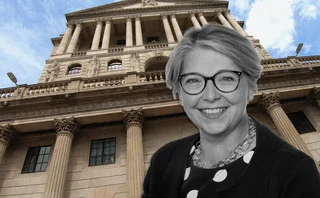
Profile - Federal Reserve Bank of New York's Theo Lubke
The Federal Reserve Bank of New York has been shepherding global efforts to improve the over-the-counter derivatives market since 2005 and continues to push dealers to improve in areas such as transparency and central clearing. Theo Lubke, senior vice-president at the supervisor, talks to Mark Pengelly

Despite a last-minute scramble to shore up support, US financial reform was on the brink of becoming law as Risk went to press. The new rules will overhaul the derivatives market, requiring dealers and a selection of other large derivatives users to clear standardised trades through central counterparties (CCPs), and will also provide regulators with far more information.
Although the legislative process in Congress has generated a lot of discussion, the Federal Reserve Bank of New York has long been a proponent of many of the ideas and concepts espoused in both the House and Senate bills. It got the ball rolling in 2005 when it demanded action by the major dealers to reduce huge credit derivatives confirmation backlogs, and has since set a series of strict deadlines for banks to improve levels of electronic confirmation and reconciliation and to encourage greater use of central clearing.
The New York Fed is currently focusing on four main areas of improvement: transparency, central clearing, standardisation and the risk management of trades that are not centrally cleared. “Transparency is crucial,” says Theo Lubke, senior vice-president and head of the financial infrastructure department of the bank supervision group at the New York Fed. “It is something that has not existed in this market before and it can provide a very strong foundation for a lot of other good outcomes.”
Specifically, greater transparency would provide supervisors with crucial insight into the over-the-counter derivatives market – something Lubke thinks is desperately needed: “Regulators have never had a full, complete view of the OTC derivatives market before, which is shocking when you think of how much it has grown and how significant it is.” Increased disclosure of transaction data would also help market participants to better risk-manage their positions and push down the spreads banks earn on derivatives transactions, he adds.
Dealers are less keen, arguing real-time reporting of derivatives trades to the public would hamper their ability to hedge, ultimately making them reluctant to enter the market and reducing liquidity. To back up their argument, many banks have pointed to the example of the Trade Reporting and Compliance Engine (Trace), introduced by the National Association of Securities Dealers in 2002 to distribute secondary market fixed-income data – a system they say has impaired liquidity in the US corporate bond market.
Lubke disagrees and thinks Trace has benefited market participants: “Trace didn’t solve all the problems but it certainly helped reduce bid-ask spreads.” Nonetheless, he acknowledges there is some basis for the concerns expressed by dealers over greater post-trade price transparency in the OTC market. “There are risks in expanding post-trade price transparency, so there is some legitimacy to dealers being concerned about it. But our perspective isn’t just how more transparency would affect large dealers but how it would benefit the market as a whole,” he says.
It is up to supervisors to ensure new transparency initiatives are implemented in ways that don’t harm the market, he adds. For instance, reporting price and volume data with a 15-minute delay (as with Trace) might not be appropriate for OTC derivatives, as it could discourage the risk-taking by dealers necessary for the market to function. Yet he believes the industry can accept a lot more transparency before its vital ecology is threatened.
Efforts to improve disclosure have so far centred on the credit default swap (CDS) market, culminating in the publication of aggregate CDS market data by the New York-based Depository Trust & Clearing Corporation that began in November 2008. But regulators are putting pressure on banks to improve transparency in other asset classes. In response, the major dealers in March committed to deliver data to help supervisors determine how best to increase transparency in the CDS, interest rate and equity derivatives markets.
Another area of focus for the New York Fed forms a central plank in derivatives regulation in both the US and Europe – namely, the requirement to clear all standardised derivatives through CCPs. One concern shared by a number of regulators is that dealers could try and avoid the clearing obligation by modifying standard transactions to make them look customised. As a result, the New York Fed is looking at ways it can counter this.
“We want to explore what incentives the banks have to use standardised or bespoke transactions so we can give them incentives to use the standardised transaction types. That doesn’t mean we think the bespoke trades shouldn’t exist, but we want them to exist only where the complexity serves a real economic purpose for the end-user, as opposed to an economic purpose benefiting the dealer,” says Lubke.
This will require global co-ordination between supervisors. Indeed, proposed changes to the Basel II capital framework should ensure banks have an economic incentive to push trades towards central clearing by setting a higher risk weight for transactions not cleared through a CCP. Another way regulators could make customised deals less attractive is by requiring greater transparency for non-cleared trades. “If we can add more transparency outside that pipe of open trading and clearing to some of the transactions that are bespoke, it takes away one of the incentives to stay in the bespoke arena,” Lubke says.
There has already been some progress on the clearing of OTC derivatives – a handful of platforms now exist for CDSs, while SwapClear, a London-based clearing service for interest rate derivatives, has existed for a number of years. Other firms have either launched or are preparing to launch rival interest rate clearing services.
Nonetheless, the push towards greater use of CCPs has been criticised by some market participants and academics, who worry they could create a single point of failure in any future market crash. Although Lubke says it is impossible to eliminate risk in financial markets, he cites work carried out at a global level (for instance, by the Committee on Payment and Settlement Systems and International Organization of Securities Commissions) to ensure CCPs adhere to minimum standards on risk management. But there’s no question of the benefits of clearing through CCPs, he stresses.
Much of the opposition to clearing is motivated by cost, he believes. Clearing through a CCP requires market participants to post initial margin and daily variation margin, while clearing members are required to contribute to a guarantee fund to be used in case of a default. In effect, Lubke sees these costs as a reflection of the wider risks posed by trading OTC derivatives. “You can view clearing as forcing dealers to internalise some of the systemic risk of doing the transactions. There’s resistance to that because it’s expensive,” he says.
Central clearing could prove costly in other ways too. With numerous CCPs operating in different jurisdictions and asset classes, dealers say clearing will force them to split books of trades, reducing the ability to net down exposures and increasing overall margin requirements. Lubke concedes the arrangements will be more expensive for market participants, but thinks this isn’t necessarily bad: “One fair comment from 2008 is there wasn’t enough capital set aside internally or resources set aside to protect against the failure of participants. There was too much risk and not enough good risk management.”
Eventually, he expects a consolidation between derivatives CCPs in different countries and asset classes, and points to the merging of securities clearing services in the US as a precedent: “From the experience with US securities markets, you can see the real economic benefits of consolidating central clearing. In the derivatives space, I would expect those same benefits to come to the fore over time as well.” In this context, margin efficiencies might be achieved in a safer environment with greater oversight from regulators, he adds.
Meanwhile, improving practices around the exchange of collateral on bespoke OTC trades is also a focus. While contracts sent to clearing houses are subject to initial and daily variation margin, the collateral agreements associated with OTC transactions are often not as rigorous. Drawing on the example of ill-fated insurer American International Group (AIG), Lubke says the New York Fed would like to see more timely reconciliation and exchange of collateral in the OTC market. AIG was initially bailed out by the New York Fed in September 2008 after being stung by gargantuan collateral calls on CDS contracts linked to subprime mortgages. Ideally, he says, the risk of a sudden large-scale collateral call should be cushioned by more regular exchanges of collateral.
Against this backdrop, it is easy to forget the operational problems that initially concerned the New York Fed and other regulators in 2005, when outstanding confirmations at the major dealers threatened to spiral out of control. Lubke says there has been tremendous progress in the interest rate and credit derivatives markets to eliminate backlogs and process trades via electronic platforms. The equity derivatives market has lagged behind, but this is due to the nature of the asset class: much of the equity derivatives market is already exchange-traded, he points out.
With the strong emphasis currently being placed on central clearing, operational issues could be seen as having taken a back seat. This isn’t the case, argues Lubke: “One element I think is underappreciated is how much the various reforms build on each other. Regulators can’t require trade reporting or central clearing until the operational infrastructure can support these objectives.”
In fact, the efforts to reduce backlogs and promote electronic processing prevented the crisis from being even worse, he claims. “If you look back to when this effort first started, banks did not know the books and records they maintained on trades were accurate – banks couldn’t have confidence knowing what their risks were,” says Lubke. This situation could have proved disastrous following the near-collapse of Bear Stearns in March 2008 and failure of Lehman Brothers six months later, he adds.
Achievements have also been made in tearing up offsetting derivatives transactions through trade compression. The results have been particularly pronounced in the CDS market, with outstanding notional volume shrinking from $62.2 trillion at the end of 2007 to $31.2 trillion by the end of June last year, according to the International Swaps and Derivatives Association. By the end of 2009, notional CDS volumes had retreated further to $30.4 trillion.
Governance is another area where progress has been made. At Isda’s annual general meeting in Beijing in April 2009, Lubke accused a handful of large dealers of dominating the derivatives market. This has now changed. “I think there are different circumstances today than before. One of our big successes over the past couple of years is saying to dealers ‘you can’t just go into that backroom and make a decision – you need to have a transparent open process’,” he says.
An obvious example are the Isda credit derivatives determinations committees, which include buy-side representatives and make decisions about whether a credit event has taken place and what obligations are deliverable against a CDS. Similarly, Lubke says decisions that affect market structure and governance should be taken in an open manner with representation from buy-side firms. “It’s just the right way of organising the game,” he says. In February, Isda also created a documentation committee advisory board that includes both buy-side and sell-side firms.
Despite the New York Fed’s keen focus on OTC derivatives, its view on the market contrasts with some of the more critical voices internationally and in Washington, DC. While they played a role in the escalation of the global financial meltdown, derivatives were not the chief culprit, says Lubke. “There’s a lot of focus on derivatives in the financial crisis. Derivatives were a source of risk and problems, but we don’t think they were the root cause or primary source of problems in the market.”
Dealing with dealers
The Federal Reserve Bank of New York has a 10-strong team dedicated to monitoring and improving the OTC derivatives market. Based across the street from its main building in downtown Manhattan, the group is run by Theo Lubke, a senior-vice president and head of the financial infrastructure department of the New York Fed’s bank supervision group.
With any initiative on derivatives, international co-operation is crucial, says Lubke. The global nature of the market means dealers might easily respond to heightened regulation in one country by simply trading from less tightly regulated subsidiaries elsewhere. Consequently, the team regularly holds early morning conference calls with European and Asian regulators. That goes alongside regulatory co-ordination with other supervisory authorities in the US, including the Federal Reserve Board, the Commodity Futures Trading Commission and the Securities and Exchange Commission.
A head count of 10 might seem paltry compared with a global derivatives market totalling $615 trillion in notional. However, the team also draws upon other resources within the New York Fed, including the legal team, economists and markets group. These colleagues and others with an interest in the OTC market meet every Monday to discuss aspects of their work that touch on derivatives.
Since 2005, the centrepiece of the regulator’s work has been the so-called Fed letters sent by major derivatives market participants to their primary supervisors. The most recent, on March 1, contained a ream of deadlines for improvements in transparency, collateral management, standardisation and central clearing.
As with prior commitments, the pledges were the product of an earlier formal meeting held between the president of the New York Fed and chief risk officers from major dealers, as well as senior operations and business executives.
On a more informal basis, Lubke and his team hold conference calls every two weeks to check on progress across the major dealers. Typically featuring 20–30 market participants, these calls often focus on a particular area, such as interest rate or equity derivatives. Meanwhile, the regulator attempts to keep in constant contact with individuals at major dealers and buy-side firms. “I’ve made myself and the team very accessible to market participants because I think if we’re not very accessible, we’re not going to learn and understand the market as well,” he says.
Lubke says the dealer calls are generally friendly and co-operative. On some occasions, though, things get tough. The drive to make CDS clearing services available for buy-side market participants – a pledge made by dealers in June 2009 – has been particularly acrimonious. While a deadline to implement buy-side clearing by December last year was met by dealers, they report little interest in the services from buy-side clients. Market participants also suggest there are operational hurdles that still need to be overcome before buy-side clearing can be used on a routine basis.
Targets and deadlines provide a frequent area of contention between dealers and the New York Fed. On clearing, for example, dealers might offer to centrally clear a certain percentage of new eligible CDS trades by a particular date. But ultimately, if this number fails to satisfy supervisors, Lubke and his team will tell them it must be raised. Other areas of work have also sometimes failed to meet the requirements set by supervisors, such as those requiring qualitative analysis and reports submitted by dealers.
Only users who have a paid subscription or are part of a corporate subscription are able to print or copy content.
To access these options, along with all other subscription benefits, please contact info@risk.net or view our subscription options here: http://subscriptions.risk.net/subscribe
You are currently unable to print this content. Please contact info@risk.net to find out more.
You are currently unable to copy this content. Please contact info@risk.net to find out more.
Copyright Infopro Digital Limited. All rights reserved.
As outlined in our terms and conditions, https://www.infopro-digital.com/terms-and-conditions/subscriptions/ (point 2.4), printing is limited to a single copy.
If you would like to purchase additional rights please email info@risk.net
Copyright Infopro Digital Limited. All rights reserved.
You may share this content using our article tools. As outlined in our terms and conditions, https://www.infopro-digital.com/terms-and-conditions/subscriptions/ (clause 2.4), an Authorised User may only make one copy of the materials for their own personal use. You must also comply with the restrictions in clause 2.5.
If you would like to purchase additional rights please email info@risk.net
More on Regulation
Amid debanking drama, banks try to say ‘no’, safely
A basic risk management tool – the ability to turn a customer away – has become a political football

Erba myth: will US banks choose new capital measure?
B3E gives US banks a dilemma – adopt expanded risk-based approach, or a new standardised alternative

Illiquid assets pricing still needs expert judgement, say banks
EU regulators want more transparency in valuations, but some asset prices remain elusive

Fed to move tailored-capital goalposts soon, says Bowman
Banks hope agencies will index triggers for harsher capital rules to economic growth
Will SEC reporting proposal supercharge alt data providers?
Move that would allow companies to opt out of quarterly reporting disclosures welcomed

EU lawmaker calls for review of Luxembourg’s cross-border rules
Grand Duchy accused of side-stepping rules aimed at prising away banking business from London

Un-American or un-JPM? Surcharge rethink divides G-Sibs
Some see sense in rethink to funding indicator, others call for a backtrack

Bank of England softens tone on CCP cross-product margining
Breeden supports margin efficiencies to encourage more repo clearing, but still warns on leverage