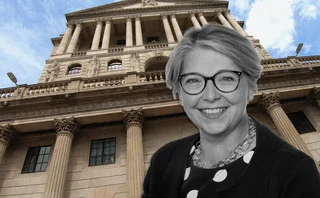
In the thick of it
Eddy Wymeersch, chairman of CESR, talks to Alexander Campbell

Regulators have been at the sharp end of the most recent, and damaging, phase of the financial crisis. Following their involvement in negotiating emergency takeovers of troubled banks, the extension of deposit insurance, the introduction of short-selling restrictions and the emergency nationalisation of banks on both sides of the Atlantic, regulators are now looking ahead to how the regulatory landscape ought to change. Some have already called for greater oversight of the derivatives market.
"In derivatives such as credit default swaps, we have very little disclosure of prices. There have been projects saying we should put these transactions on exchanges. I think that's going too far, but we should have more disclosure of over-the-counter prices - the markets would be better informed and we would have more basis for correct valuations," says Eddy Wymeersch, head of the Belgian Banking, Finance and Insurance Commission, and chairman of the Committee of European Securities Regulators.
In the meantime, there is plenty for regulators to do. Short-selling bans on financial institutions, introduced by supervisors in Europe, the US and Asia in September, could be extended as long as the markets remain unsettled, says Wymeersch. "I think there is still a lot of short selling going on in places that are not regulated. I can not prove this, but perhaps sooner or later we will have more information on what has been going on in the market."
But shouldn't equity investors be able to take whatever view they want? Not on financial stocks, as falling share prices can undermine confidence in the creditworthiness of banks and affect the entire system, Wymeersch argues. "We have been confronted with a confidence crisis, expressed at the level of equity then reverberating at the level of liabilities, and that is very strange because the liabilities are not necessarily in danger. The equity valuation is based on largely different factors from those taken into account for creditworthiness. We will have banks collapsing if things continue, because the shares have gone down and undermined the trust of the creditors, even if there was no real reason for the creditors to be worried."
Regulators in Europe and the US have also called for fair-value accounting - increasingly blamed for escalating the writedown of illiquid securities on the balance sheets of banks - to be suspended. Wymeersch supports these initiatives.
"You can see the mark-to-market rule is driving down the banking system from one week to the next. It's ridiculous what has been going on. Prices go down, the assets of the banks go down, they have to sell and so the prices go down more. It's a self-destructive system," he asserts. European accounting rules should be tweaked along the same lines as in the US to give more leeway on the use of mark-to-market, he suggests.
Looking forward, Wymeersch sees a broader role for central banks, which will move from managing inflation to keeping a watch on the entire economy. "In the past, central banks have never been much interested in asset prices. When I was in the Belgian central bank, this was a subject considered of no importance. I think that has changed," he remarks. "We have to have a worldwide supervisory system. It's very striking that the entire subprime crisis was largely unknown in Europe. We knew there was a dramatic price increase, but the fine points - all the fraud and all the illegal techniques used in the market - were unknown. Somebody should have been following it up."
The International Monetary Fund, he suggests, would be the best choice as a worldwide economic watchdog, alerting banks around the world to an asset bubble or an abnormal market. "It need not be a very big change, but it would be a healthy change. I don't know if it is likely, but it would be welcome."
- Alexander Campbell
Read the full interview online at www.risknews.net/public/ShowPage.html?page=821284
Biography: Eddy Wymeersch
2007: Elected chairman of CESR
2001: Chairman of the Belgian Banking, Finance and Insurance Commission
1993: Regent of the Belgian national bank
1989-2001: Assessor, Belgian Council of State
1967-present: Student and later professor, University of Ghent.
Only users who have a paid subscription or are part of a corporate subscription are able to print or copy content.
To access these options, along with all other subscription benefits, please contact info@risk.net or view our subscription options here: http://subscriptions.risk.net/subscribe
You are currently unable to print this content. Please contact info@risk.net to find out more.
You are currently unable to copy this content. Please contact info@risk.net to find out more.
Copyright Infopro Digital Limited. All rights reserved.
As outlined in our terms and conditions, https://www.infopro-digital.com/terms-and-conditions/subscriptions/ (point 2.4), printing is limited to a single copy.
If you would like to purchase additional rights please email info@risk.net
Copyright Infopro Digital Limited. All rights reserved.
You may share this content using our article tools. As outlined in our terms and conditions, https://www.infopro-digital.com/terms-and-conditions/subscriptions/ (clause 2.4), an Authorised User may only make one copy of the materials for their own personal use. You must also comply with the restrictions in clause 2.5.
If you would like to purchase additional rights please email info@risk.net
More on Regulation
Amid debanking drama, banks try to say ‘no’, safely
A basic risk management tool – the ability to turn a customer away – has become a political football

Erba myth: will US banks choose new capital measure?
B3E gives US banks a dilemma – adopt expanded risk-based approach, or a new standardised alternative

Illiquid assets pricing still needs expert judgement, say banks
EU regulators want more transparency in valuations, but some asset prices remain elusive

Fed to move tailored-capital goalposts soon, says Bowman
Banks hope agencies will index triggers for harsher capital rules to economic growth
Will SEC reporting proposal supercharge alt data providers?
Move that would allow companies to opt out of quarterly reporting disclosures welcomed

EU lawmaker calls for review of Luxembourg’s cross-border rules
Grand Duchy accused of side-stepping rules aimed at prising away banking business from London

Un-American or un-JPM? Surcharge rethink divides G-Sibs
Some see sense in rethink to funding indicator, others call for a backtrack

Bank of England softens tone on CCP cross-product margining
Breeden supports margin efficiencies to encourage more repo clearing, but still warns on leverage