Swaps market mutation could replace managed change
Banks are finding it harder to control the future of the swaps market - that's no bad thing

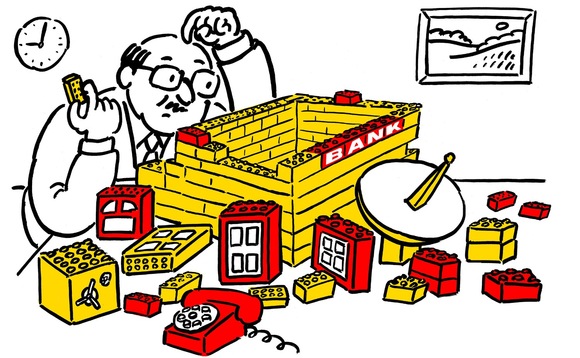
The man on the other end of the line – founder of a year-old fintech start-up – sighed audibly. He was recounting his experiences in trying to close a round of financing that would have given his firm the capital it needed to expand: its service was tried and tested, bank users were benefiting, but bank investors were proving difficult to work with, on two counts.
First, he said, they were not willing to tie up as much capital as the firm needed – forcing him to expand the size of the prospective investing consortium. Second, keeping a large number of potential investors happy was a lot of work for a small firm operating on a shoestring budget.
In the meantime, the company was trying to buy itself time, and find mentors, by competing for the resources and advice offered by start-up accelerators and incubators.
At times, success seemed to be just beyond his grasp; at others, it felt completely out of reach.
Banks tell the same story from a different perspective: of teeming fintech start-ups, tighter capital constraints, and a splintering of bank strategy that makes it harder for dealers to agree on a common goal.
There is frustration on both sides. The former head of one bank's strategic investing team says bluntly: "Regulators don't want us making principal investments". The fintech founder believes he has hit a Catch-22 for start-ups – the firm needs a consortium to back it; but such a consortium is near-impossible to construct or satisfy.
All of this has big implications for the way innovation happens – or doesn't happen – in the derivatives markets. The past 20 years have seen radical shifts in central clearing, confirmations, electronic trading, market data and messaging, among other areas, but in many cases the companies leading the way were collectively owned by the dealers. When change happened, it did so with the blessing of the industry.
Even some bankers now acknowledge the flaws in this model. Speaking to Risk.net recently, a veteran derivatives trader said ruefully: "We were too slow to change; too closed. There was too much control."
That may be less true in future. The current explosion of ideas and innovation is not something the banks can control via their relatively small – and newly constrained – strategic investing teams. The outcome may be that some good ideas wither away; but it also seems likely to increase the chance that the evolution of markets businesses is no longer stage-managed; there will be surprises, mutations and evolutionary leaps.
Only users who have a paid subscription or are part of a corporate subscription are able to print or copy content.
To access these options, along with all other subscription benefits, please contact info@risk.net or view our subscription options here: http://subscriptions.risk.net/subscribe
You are currently unable to print this content. Please contact info@risk.net to find out more.
You are currently unable to copy this content. Please contact info@risk.net to find out more.
Copyright Infopro Digital Limited. All rights reserved.
As outlined in our terms and conditions, https://www.infopro-digital.com/terms-and-conditions/subscriptions/ (point 2.4), printing is limited to a single copy.
If you would like to purchase additional rights please email info@risk.net
Copyright Infopro Digital Limited. All rights reserved.
You may share this content using our article tools. As outlined in our terms and conditions, https://www.infopro-digital.com/terms-and-conditions/subscriptions/ (clause 2.4), an Authorised User may only make one copy of the materials for their own personal use. You must also comply with the restrictions in clause 2.5.
If you would like to purchase additional rights please email info@risk.net
More on Markets
Hedge funds shelved yen basis bet on US deal
Funds exited USD/JPY flatteners tied to Japan’s $550bn pledge and new funding may not revive the trade

BRL bulls hold firm after Bolsonaro first-round win
Hedge funds keep USD/BRL puts ahead of election run-off as protection premiums for Lula upset soar

AI boom turns Morgan Stanley into a hot commodity
Talking Heads 2026: Data centres need long-dated power and gas hedges that only a big bank can provide
PGGM sees a chance to diversify with fourth-trigger CDSs
Dutch pension manager hopes bank demand will continue to grow for derivatives counterparty credit protection

How Quoniam boosted its sentiment strategy by adding an LLM
Upgraded system creates scores from more-informative forward-looking parts of news

The changing shape of fixed income trading
As volumes surge and electronification spreads, trading desks are rethinking how they access liquidity and the technology that supports it

Canton: has Wall Street found its blockchain?
Network and privacy behind Digital Asset spin-off’s tilt at next-gen settlement

NSE chief blames algos for India closing auction turmoil
Ashishkumar Chauhan said traders should retrain algos instead of asking Sebi to change closing auction