Domestic priorities threaten global standards


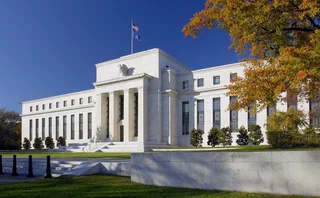
What does it mean to be courageous, in the context of regulation? Sheila Bair, former chairwoman of the Federal Deposit Insurance Corporation in the US, uses the term in this month's cover story, to describe Federal Reserve proposals that would regulate the local offshoots of foreign banks as though they were standalone entities.
It's brave because it's a break with tradition. Usually, banks are regulated on a global, consolidated basis, allowing capital and liquidity to be managed at the group level. But that assumes parental resources will always be enough to support local entities - and will always be available. The crisis showed this may not be a safe assumption.
Regulators outside the US recognise these flaws as well, and some are quietly pressing for the local arms of global banks to keep more capital and liquidity close at hand. In essence, the Fed is doing publicly what others are edging towards privately. That's brave, too.
A similar fearlessness is being displayed by the Commodity Futures Trading Commission - it wants to ensure risks taken by US banks and other US entities overseas do not hurt the economy and taxpayers back home. As a result, it has proposed that all trades involving a US person - no matter where the counterparties are based - be subject to Dodd-Frank Act rules.
And the US doesn't have a lock on courage. In Europe, legislators have boldly veered away from the Basel III script to provide an exemption from the credit valuation adjustment (CVA) charge for trades involving corporates, sovereigns and pension funds.
Regulators are bound to look to their domestic economy, markets and institutions first - they answer to their own politicians, not to global standards. So courage has nothing to do with it
In each of these cases, a local regulator has looked at what is best for its own market, its own country and has dared to tear up the script.
That's one way to see it. An alternative view is that regulators are bound to look to their domestic economy, markets and institutions first - they answer to their own politicians, not to global standards. So courage has nothing to do with it. Instead, what we are witnessing is a pragmatic acceptance that - when the next crisis hits - regulators will be judged on their ability to defend national priorities, rather than the extent to which they have supported cross-border banking.
So while politicians and policy-makers are publicly calling for co-operation, harmonisation and consistency, banks and regulators alike are privately voicing more cynical views. As one banker puts it in this month's issue: "Regulatory co-operation is a joke. No matter how many nice words supervisors say about the concept, we all know it is not happening and is not going to happen".
Only users who have a paid subscription or are part of a corporate subscription are able to print or copy content.
To access these options, along with all other subscription benefits, please contact info@risk.net or view our subscription options here: http://subscriptions.risk.net/subscribe
You are currently unable to print this content. Please contact info@risk.net to find out more.
You are currently unable to copy this content. Please contact info@risk.net to find out more.
Copyright Infopro Digital Limited. All rights reserved.
As outlined in our terms and conditions, https://www.infopro-digital.com/terms-and-conditions/subscriptions/ (point 2.4), printing is limited to a single copy.
If you would like to purchase additional rights please email info@risk.net
Copyright Infopro Digital Limited. All rights reserved.
You may share this content using our article tools. As outlined in our terms and conditions, https://www.infopro-digital.com/terms-and-conditions/subscriptions/ (clause 2.4), an Authorised User may only make one copy of the materials for their own personal use. You must also comply with the restrictions in clause 2.5.
If you would like to purchase additional rights please email info@risk.net
More on Regulation
Amid debanking drama, banks try to say ‘no’, safely
A basic risk management tool – the ability to turn a customer away – has become a political football

Erba myth: will US banks choose new capital measure?
B3E gives US banks a dilemma – adopt expanded risk-based approach, or a new standardised alternative

Illiquid assets pricing still needs expert judgement, say banks
EU regulators want more transparency in valuations, but some asset prices remain elusive

Fed to move tailored-capital goalposts soon, says Bowman
Banks hope agencies will index triggers for harsher capital rules to economic growth
Will SEC reporting proposal supercharge alt data providers?
Move that would allow companies to opt out of quarterly reporting disclosures welcomed

EU lawmaker calls for review of Luxembourg’s cross-border rules
Grand Duchy accused of side-stepping rules aimed at prising away banking business from London

Un-American or un-JPM? Surcharge rethink divides G-Sibs
Some see sense in rethink to funding indicator, others call for a backtrack

Bank of England softens tone on CCP cross-product margining
Breeden supports margin efficiencies to encourage more repo clearing, but still warns on leverage