CFTC still facing tough to-do list
Regulator has finalised 39 rules but 14 remain at proposal stage - including six that have been outstanding for more than 500 days
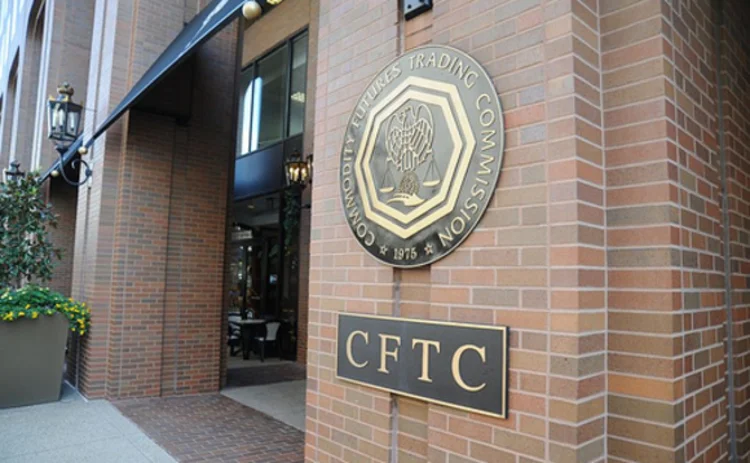
US swap market participants have been waiting more than 500 days for final versions of six proposed Dodd-Frank Act rules by the Commodity Futures Trading Commission (CFTC), with at least a further eight proposed rules also awaiting finalisation, analysis by Risk shows.
Among the outstanding items are some of the most controversial rules the CFTC has been tasked with, including those on swap execution facilities, margin requirements for uncleared trades and the agency's version of the Volcker rule – Dodd-Frank's ban on proprietary trading. As a result, lawyers and other market participants say the regulator will struggle to meet its self-imposed end-2012 deadline to finish the rule-makings.
"The more controversial a proposal is, the more comments there are and the longer it takes to come to a final rule. There are more discussions, more compromises and all these add to the delays. Also bear in mind that concessions made to secure the vote of one commissioner can end up losing the vote of another commissioner who had agreed to the rule as it was previously written," says one former CFTC commissioner.
Of the 65 proposed rules and interim final rules published by the CFTC under the auspices of Dodd-Frank since July 2010, 51 had been finalised as of October 22, 2012 – although the current count of final rules stands at 39, given that in some cases as many as five proposed rules were consolidated into one final rule.
Despite the progress made, dealers and swap end-users have been waiting for clarity on at least one rule for more than two years. Conflict of interest rules for derivatives clearing organisations (DCOs), designated contract markets (DCMs) and Sefs were proposed 735 days ago.
The more controversial a proposal is, the more comments there are and the longer it takes to come to a final rule
Not far behind are rules on the protection of customer collateral in uncleared swaps, governance requirements for DCOs, DCMs and Sefs, and core principles for Sefs, for which the industry has been waiting 689 days, 655 days and 654 days respectively.
Some of these rules have been held up because they are controversial, former regulators say, while others have been postponed for the opposite reason – they are not seen as a priority. But many observers take issue with the CFTC's rule-making schedule, arguing rule-makings that were central to the regulatory framework were tackled too late – for example, the swap entity and product definitions that clarify which companies and trades are caught by the rules.
"It struck me that the swap entity and product definitions were finalised very late in the process. In terms of sequencing I would have assumed that definitions would have been the rule-making to start with but obviously they ended up coming at the tail end," says James Overdahl, vice-president in the securities and finance practice at Nera Economic Consulting, and a former chief economist and director of the office of economic analysis at the Securities and Exchange Commission (SEC).
One of the reasons the product definitions took so long is that the CFTC and the SEC were required to work together on the rules, analysts say. Others point to the threat of legal challenges as a reason why the process has taken longer than planned.
In July 2011, the US Court of Appeals for the District of Columbia Circuit overturned an SEC rule on proxy access. The court vacated the rule on the grounds that the SEC had not done enough cost-benefit analysis.
On September 28, the US District Court for the District of Columbia similarly dismissed the CFTC's commodity position limits final rule, finding the CFTC had misinterpreted congressional intent by attempting to impose the limits without first working out whether they were needed. Observers say these legal precedents are compelling the CFTC to be more careful when interpreting its mandate and weighing up the costs and benefits of its rules.
"Industry groups have decided to litigate rules in some cases, with the first shot across the bows being the proxy access case with the SEC, in which the DC Circuit Court decided to pass that rule back to the SEC because of insufficient cost-benefit analysis," says Wallace Turbeville, a senior fellow at non-partisan think tank Demos, in New York.
"Of course the industry groups will file similar suits on other rule-makings – why wouldn't they? If they are doing it for the purposes of disruption then I think filing more suits make sense," Turbeville adds.
A feature on the CFTC's remaining rule-makings will appear in the November issue of Risk.
Only users who have a paid subscription or are part of a corporate subscription are able to print or copy content.
To access these options, along with all other subscription benefits, please contact info@risk.net or view our subscription options here: http://subscriptions.risk.net/subscribe
You are currently unable to print this content. Please contact info@risk.net to find out more.
You are currently unable to copy this content. Please contact info@risk.net to find out more.
Copyright Infopro Digital Limited. All rights reserved.
As outlined in our terms and conditions, https://www.infopro-digital.com/terms-and-conditions/subscriptions/ (point 2.4), printing is limited to a single copy.
If you would like to purchase additional rights please email info@risk.net
Copyright Infopro Digital Limited. All rights reserved.
You may share this content using our article tools. As outlined in our terms and conditions, https://www.infopro-digital.com/terms-and-conditions/subscriptions/ (clause 2.4), an Authorised User may only make one copy of the materials for their own personal use. You must also comply with the restrictions in clause 2.5.
If you would like to purchase additional rights please email info@risk.net
More on Regulation
Amid debanking drama, banks try to say ‘no’, safely
A basic risk management tool – the ability to turn a customer away – has become a political football

Erba myth: will US banks choose new capital measure?
B3E gives US banks a dilemma – adopt expanded risk-based approach, or a new standardised alternative

Illiquid assets pricing still needs expert judgement, say banks
EU regulators want more transparency in valuations, but some asset prices remain elusive

Fed to move tailored-capital goalposts soon, says Bowman
Banks hope agencies will index triggers for harsher capital rules to economic growth

Will SEC reporting proposal supercharge alt data providers?
Move that would allow companies to opt out of quarterly reporting disclosures welcomed

EU lawmaker calls for review of Luxembourg’s cross-border rules
Grand Duchy accused of side-stepping rules aimed at prising away banking business from London

Un-American or un-JPM? Surcharge rethink divides G-Sibs
Some see sense in rethink to funding indicator, others call for a backtrack

Bank of England softens tone on CCP cross-product margining
Breeden supports margin efficiencies to encourage more repo clearing, but still warns on leverage