Isda AGM: Treasury unimpressed with Isda efforts
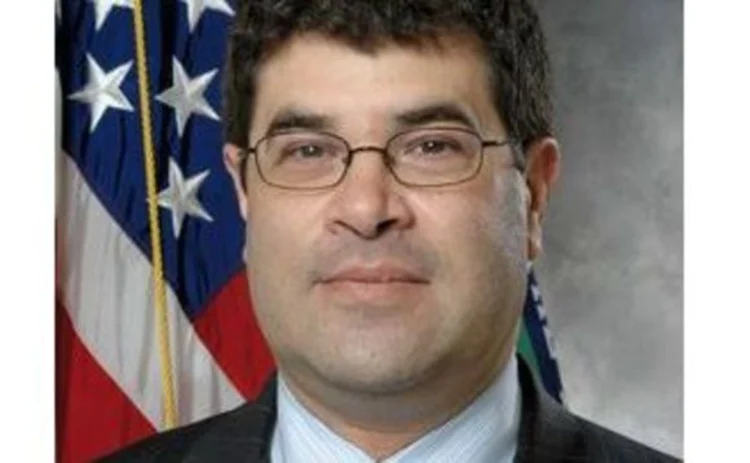
Steps taken by the derivatives industry to improve the over-the-counter market are not enough, according to Neal Wolin, US deputy secretary of the Treasury, speaking at the International Swaps and Derivatives Association's annual general meeting in San Francisco on April 22.
“I know that, recently, Isda has stated its commitment to taking some initial steps toward transparency, standardisation and more effective collateral requirements,” he said. “We welcome these commitments. But make no mistake: they are not enough. There can be no substitute for effective regulation and oversight of a market so large, so important and – still today – so unsupervised.”
Wolin's remarks came shortly after Isda executive vice chairman Bob Pickel outlined a number of steps the industry was taking to improve the derivatives market. “Supervisors today are focused on one key goal: reducing systemic risk. They aim to achieve this goal by making sure that an effective regulatory framework is in place for key firms, strengthening counterparty risk management, improving transparency and building a robust operational infrastructure. We completely endorse these initiatives,” he said.
Pickel outlined a number of areas Isda was working on, including promoting standardisation, central clearing and the use of trade repositories.
Nonetheless, Wolin was unimpressed. He said the US could not afford to wait to establish stronger supervision for financial firms, establish a consumer financial protection agency, separate banking from proprietary trading and bring transparency to over-the-counter derivatives. “Each of these reforms is necessary and long overdue,” he said.
We welcome these commitments. But make no mistake: they are not enough
Wolin said he recognised that OTC derivatives served a purpose, helping businesses manage risks and making it easier for financial institutions to extend credit, for example. “But at the same time, the rapid growth in the use – and misuse – of derivatives has exposed our financial system to risks it was not prepared to bear,” he said.
Noting the messy default of Lehman Brothers and the near-collapse of American International Group in late 2008, he said the US paid a “high price” for failings in the market. “That is why the administration has said we will oppose efforts to weaken or undermine the strong regulatory framework that Senate Banking Committee chairman Christopher Dodd has put forward,” he said.
He also alluded to another version of the bill that passed in the Senate Committee for Agriculture, Nutrition and Forestry on April 21. The bill - supported by Republican senator Charles Grassley - is one of the toughest yet to emerge on regulatory reform. The bill would mean all standardised derivatives would have be to be traded on exchange, while major banks would be forced to spin off their swap dealing arms from deposit-taking institutions.
Some commentators have speculated the bill – sponsored by Democratic senator Blanche Lincoln – was harsher than the Treasury might have found comfortable. Nonetheless, in his comments, Wolin stood firmly behind the idea of bringing standardised over-the-counter derivatives onto exchanges or “regulated electronic trading platforms". The administration was encouraged to see a Republican voting with Democrats on the issue, he added.
“The benefits of exchange trading are obvious. Exchange trading improves transparency and price discovery – allowing end-users, large and small, to judge more effectively whether and how to hedge their risks, and giving regulators and market participants important and real-time market insights,” he said. Large dealers profited too much from the current system of bilateral OTC trades, he said, while greater transparency in the market would make the market safer, increase liquidity and reduce costs for end users.
The benefits of exchange trading were questioned by others at the conference, however. “There's this very flawed notion that exchange trading will create liquidity and better pricing for clients. The idea that people are making unfair profits is absurd,” said Connie Voldstad, Isda chief executive, during a press conference immediately following Wolin's speech.
Similarly, the idea that derivatives users were demanding greater transparency in OTC markets was mistaken, he suggested. “You have to remember the end-users are not individuals, they are institutions. They have access to dealer screens and so on and they deal generally inside the market-place – they're not clamouring for transparency,” said Voldstad.
Later, Athanassios Diplas, chief risk officer and deputy chief operating officer for the global credit business at Deutsche Bank, rejected the idea of exchange trading as a silver bullet for systemic risk. “Exchange trading has been discussed a lot, and it has been targeted as a panacea for reducing systemic risk. We believe exchange trading shouldn't be mandated and doesn't resolve all the systemic risk issues,” he said during a panel discussion on the issue.
Responding to a question on pre-trade transparency, Diplas also underlined the transparency already available to dealer clients: “It's important to remember what pre-trade transparency already exists. The idea the market lacks any of that is completely false. Dealers disseminate a lot of information to their clients and there are several vendors that help them use that information more efficiently,” he argued.
Only users who have a paid subscription or are part of a corporate subscription are able to print or copy content.
To access these options, along with all other subscription benefits, please contact info@risk.net or view our subscription options here: http://subscriptions.risk.net/subscribe
You are currently unable to print this content. Please contact info@risk.net to find out more.
You are currently unable to copy this content. Please contact info@risk.net to find out more.
Copyright Infopro Digital Limited. All rights reserved.
As outlined in our terms and conditions, https://www.infopro-digital.com/terms-and-conditions/subscriptions/ (point 2.4), printing is limited to a single copy.
If you would like to purchase additional rights please email info@risk.net
Copyright Infopro Digital Limited. All rights reserved.
You may share this content using our article tools. As outlined in our terms and conditions, https://www.infopro-digital.com/terms-and-conditions/subscriptions/ (clause 2.4), an Authorised User may only make one copy of the materials for their own personal use. You must also comply with the restrictions in clause 2.5.
If you would like to purchase additional rights please email info@risk.net
More on Regulation
Double, but no trouble? CVA capital hit may lack clout
Industry opinion mixed around Basel III endgame derivatives charge

Amid debanking drama, banks try to say ‘no’, safely
A basic risk management tool – the ability to turn a customer away – has become a political football

Erba myth: will US banks choose new capital measure?
B3E gives US banks a dilemma – adopt expanded risk-based approach, or a new standardised alternative

Illiquid assets pricing still needs expert judgement, say banks
EU regulators want more transparency in valuations, but some asset prices remain elusive

Fed to move tailored-capital goalposts soon, says Bowman
Banks hope agencies will index triggers for harsher capital rules to economic growth
Will SEC reporting proposal supercharge alt data providers?
Move that would allow companies to opt out of quarterly reporting disclosures welcomed

EU lawmaker calls for review of Luxembourg’s cross-border rules
Grand Duchy accused of side-stepping rules aimed at prising away banking business from London

Un-American or un-JPM? Surcharge rethink divides G-Sibs
Some see sense in rethink to funding indicator, others call for a backtrack