Senate Ag committee to take OTC derivatives transparency to new levels
New draft legislation on financial regulatory reform will require real-time reporting of derivatives trades to both regulators and the public, according to Blanche Lincoln, chairman of the Senate Committee on Agriculture, Nutrition and Forestry, who is drafting the proposal.
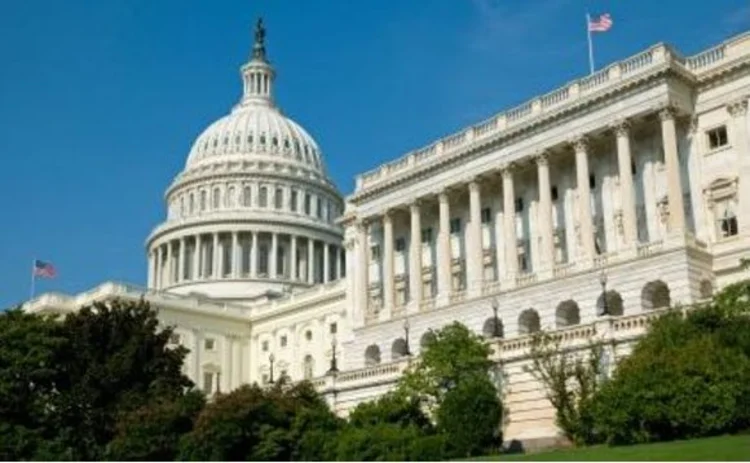
The declaration was made in a letter to four fellow senators on April 13, ahead of the expected introduction of a draft bill as early as today. If included, the reporting requirement would go further than what has been proposed in both the Wall Street Reform and Consumer Protection Act, passed in the House of Representatives on December 11, and a version of the bill introduced by Christopher Dodd, the chairman of the Senate Committee on Banking, Housing and Urban Affairs, on March 15.
"My bill will bring 100% transparency of this market to both regulators and, most importantly, the public. No exceptions. As Justice Louis Brandeis once said, ‘sunlight is the best disinfectant'. For these currently dark markets full exposure to the light of day is long overdue," Lincoln wrote.
Previous bills have included clauses that require derivatives trades to be reported to trade repositories, which would then make the information available to global regulators. The repositories would also be obligated to disclose aggregated information to the public. The other bills make no mention of real-time reporting to the public.
For their part, banks have argued real-time reporting of derivatives trades to the public would damage liquidity, as it would make it more difficult to hedge exposures. If dealers were required to disclose trades immediately, before they have had a chance to square their positions, there is a risk the market could move against them, they say. The only entity to benefit would be a third party that gets to glimpse a competitor's trading strategy, they argue.
As a result, some dealers have proposed a delay in the reporting of positions, or suggested reporting of trade volumes and pricing without the disclosure of counterparty names.
Lincoln's letter also touches on the issue of an end-user exemption for non-financial firms. Corporate users of derivatives have lobbied hard to be excluded from a requirement that standardised swap contracts be cleared through a registered clearing house, arguing the obligation to post initial and variation margin would eat into precious working capital.
Both the House and Senate Committee on Banking, Housing and Urban Affairs included exclusions for end-users in their versions of the bill. However, Lincoln wrote any exception would be "surgical" in its scope to avoid loopholes.
She specifies only commercial firms that are solely hedging their own commercial risks should be able to use "some limited exemption". Unlike other versions, the Agriculture committee bill will give regulators the authority to punish firms that abuse the exemption. In addition, the bill will explicitly name those financial firms that are prohibited from using the clearing exemption.
The letter has been viewed with surprise by market participants, who believe that Lincoln, a Democrat, has come under political pressure from the Obama administration to be tough on derivative markets. Some observers speculate this may derail the possibility of a bipartisan Agriculture committee bill, as Republican members generally favour a broader end-user exemption.
Only users who have a paid subscription or are part of a corporate subscription are able to print or copy content.
To access these options, along with all other subscription benefits, please contact info@risk.net or view our subscription options here: http://subscriptions.risk.net/subscribe
You are currently unable to print this content. Please contact info@risk.net to find out more.
You are currently unable to copy this content. Please contact info@risk.net to find out more.
Copyright Infopro Digital Limited. All rights reserved.
As outlined in our terms and conditions, https://www.infopro-digital.com/terms-and-conditions/subscriptions/ (point 2.4), printing is limited to a single copy.
If you would like to purchase additional rights please email info@risk.net
Copyright Infopro Digital Limited. All rights reserved.
You may share this content using our article tools. As outlined in our terms and conditions, https://www.infopro-digital.com/terms-and-conditions/subscriptions/ (clause 2.4), an Authorised User may only make one copy of the materials for their own personal use. You must also comply with the restrictions in clause 2.5.
If you would like to purchase additional rights please email info@risk.net
More on Regulation
Amid debanking drama, banks try to say ‘no’, safely
A basic risk management tool – the ability to turn a customer away – has become a political football

Erba myth: will US banks choose new capital measure?
B3E gives US banks a dilemma – adopt expanded risk-based approach, or a new standardised alternative

Illiquid assets pricing still needs expert judgement, say banks
EU regulators want more transparency in valuations, but some asset prices remain elusive

Fed to move tailored-capital goalposts soon, says Bowman
Banks hope agencies will index triggers for harsher capital rules to economic growth
Will SEC reporting proposal supercharge alt data providers?
Move that would allow companies to opt out of quarterly reporting disclosures welcomed

EU lawmaker calls for review of Luxembourg’s cross-border rules
Grand Duchy accused of side-stepping rules aimed at prising away banking business from London

Un-American or un-JPM? Surcharge rethink divides G-Sibs
Some see sense in rethink to funding indicator, others call for a backtrack

Bank of England softens tone on CCP cross-product margining
Breeden supports margin efficiencies to encourage more repo clearing, but still warns on leverage