Source: Risk magazine | 11 Nov 2009
Categories: Banking, Derivatives
Topics: Chris Dodd, derivatives, House Financial Services Committee, US Senate Banking Committee, US HOUSE AGRICULTURE COMMITTEE
US corporates' hope for exemption from the central clearing of derivatives took a knock yesterday as a US Senate committee released a draft discussion bill that differs from two existing derivatives bills introduced in the House of Representatives.
Advertisement
The Senate draft defines a major swap participant without making an exception for corporate end users
The bill, the Restoring American Financial Stability Act 2009 - released by the Senate Banking Committee under the chairmanship of Senator Chris Dodd - proposes sweeping reforms to the regulatory system, including the creation of a single federal banking regulator and a systemic risk agency, while also imposing a 10% retention requirement for originators of securitisations. But the big talking point for corporate hedgers will be the apparent lack of clauses exempting them from the use of central clearing.
The Senate bill uses a different definition of a major swap participant to that which appears in both the Over-the-Counter Derivatives Markets Act 2009, passed on October 15 by the House Committee on Financial Services (HCFS) and the House Committee on Agriculture's Derivative Markets Transparency and Accountability Act 2009, passed on October 21. In all three proposed bills, major swap participants are required to centrally clear and execute trades on a board of trade or an alternative swap execution facility.
Unlike the two House bills, however, the Senate draft defines a major swap participant without making an exception for corporate end users. The implication is that corporates would be required to centrally clear trades, despite their fierce objections to posting initial and variation margin. Corporate end users argue any mandatory margin requirement will deplete working capital and put them under severe pressure during periods of market stress.
The Senate bill states that a major swap participant is defined as any person whose outstanding swaps create net counterparty credit exposures (current or potential future exposures) to other market participants that would expose those other market participants to significant credit losses in the event of the person's default.
However, in the HCFS's version, a major swap participant is defined as any person who maintains a substantial net position in outstanding swaps excluding positions held primarily for hedging, or otherwise mitigating commercial risk. A similar clause is used in the Agriculture Committee's bill. The practical effect of the hedging clauses is to exclude corporates from the central clearing requirement.
The Senate bill also states that both initial and variation margin should be imposed on all non-cleared trades. But the regulator has the discretion to exempt trades from margin requirements if one of the counterparties to the swap is not a swap dealer or major swap participant, or using the swap as part of an effective hedge under generally accepted accounting principles. The bill, unlike the HCFS's version, makes no mention of whether the use of non-cash collateral would be permitted.
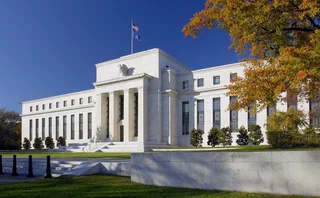
In the other departure from previously proposed regulation, the Federal Reserve board of governors would be stripped of its authority to monitor bank holding companies. "The Federal Reserve will focus on monetary policy without being distracted by responsibilities for bank oversight," the Senate bill states.
Responsibility for monitoring bank holding companies would pass to a new body called the Financial Institutions Regulatory Administration (Fira). Fira would also undertake the functions of the Office of the Comptroller of the Currency and the Office of Thrift Supervision, as well as the state bank supervisory functions of the Federal Deposit Insurance Corporation (FDIC). It would be headed by an independent chairman appointed by the President, while its board would include the chairmen of the FDIC and the Federal Reserve and two other independent members.
Fira is broadly comparable to the National Bank Supervisor proposed by the Financial Regulatory Reform white paper released by the Obama administration on June 17, aiming to "eliminate the alphabet soup of multiple bank regulators that has led to a weak, confusing regulation where it's easy for problems to fall through the cracks". However, stripping the FDIC and Federal Reserve of state bank supervisory roles is a new proposal. Moreover, curbing the Federal Reserve's regulatory scope is a marked departure from the Obama white paper, in which the Federal Reserve's role as a regulator of financial institutions was reinforced.
The Senate bill also differs from the Obama administration's white paper on the subject of securitisation. The bill moots a 10% retention requirement for originators of securitisations, as opposed to the 5% requirement put forward in the June white paper. Neither the Senate bill nor the white paper stipulates particular methods for retention.
Some observers have claimed an overly high retention requirement could adversely affect the economics of securitisations. Defenders of the measure say retention is a valid mechanism to prevent the renaissance of institutions that originate only to distribute, which were responsible for propagating subprime mortgages.
Municipal securities practices also come under scrutiny in the Senate bill. While the Obama administration white paper advises greater "standards of care" and disclosure requirements to be imposed when marketing derivatives to "unsophisticated counterparties like municipals", the Senate bill goes further by demanding advisers and brokers to municipals be registered with the Securities and Exchange Commission (SEC). Moreover, these advisers and brokers would be subject to rules issued by the Municipal Securities Rulemaking Board (MSRB) and enforced by the SEC. Investors and public representatives are to be given a majority representation on the MSRB.
Elsewhere, the Senate bill largely conforms to regulation proposed in previous bills and white papers. It puts forward measures to mitigate risk associated with systemically important institutions, such as increased capital and liquidity levels, as well as a leverage limit. The idea of financial institutions drawing up 'living wills – or 'funeral plans' as the Senate bill calls them – is also present. A systemic risk body entitled the Agency for Financial Stability – which largely resembles the Financial Services Oversight Council proposed in the Obama white paper – is to be founded. However, the Senate bill is unique in requiring institutions to issue long-term hybrid debt securities to act as capital buffers during future crises "so failing institutions can provide their own life support".
As per the Obama white paper, the Senate bill provides for a Consumer Financial Protection Agency. Similarly, it requires hedge funds to register with the SEC as investment advisers. The Senate Bill agrees the SEC should bolster its supervision of credit rating agencies, and provides for the creation of a new Office of Credit Rating Agencies at the regulator. Lastly, the bill broadly supports previously mooted changes to executive compensation practices, including non-binding shareholder votes on executive pay and reinforcing the independence of compensation committees.
Related articles
Other articles from Risk magazine
Most read
Most popular audio/video
Related conferences
South Africa, 11th - 12th Mar 2010
UK, 23rd - 23rd Mar 2010
USA, 23rd - 25th Mar 2010
Related training
USA, 16th - 17th Feb 2010
USA, 3rd - 4th Mar 2010
UK, 10th - 11th Mar 2010
Updating your subscription status
Latest Whitepapers
Weekly poll
Email alerts
Register for regular alerts to receive up to date news directly into your inbox

Related jobs
Advertisement