Risk 25 firms of the future: Basel Committee
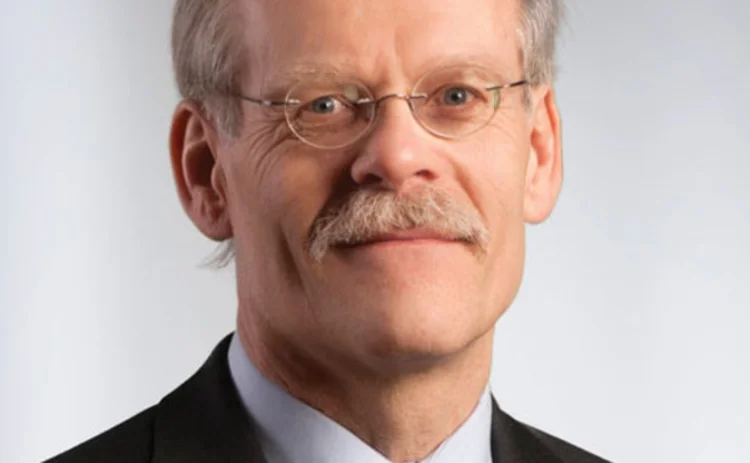

Stefan Ingves, the governor of the Sveriges Riksbank – Sweden’s central bank – and chairman of the Basel Committee on Banking Supervision, won’t be rushed.
He says it’s too early to tell whether banks are retreating from far-flung branch networks as a result of Basel III (see pages 4-8). It’s also too soon to say whether the country assessments being implemented by the committee – its first attempt to judge whether member countries are following the rules they helped write – will judge the US to be non-compliant because it plans to implement a capital floor that is not in the Basel text. And it’s difficult to know whether structural reforms like those laid out by the UK’s Independent Commission on Banking (ICB) are necessary given the extra layers of protection introduced by Basel III.
But that’s fair enough. Ingves probably had his fill of decisions made on the fly when running Sweden’s Bank Support Agency, set up to help the country through the bursting of its mortgage bubble in the early 1990s.
Decisions can be made in more leisurely fashion today, but while Ingves is reserving judgement on certain issues, he has plenty of opinions. He is certain Basel III will reduce the probability and severity of future crises. He says most crises are the result of excess leverage, so increasing the amount of equity capital banks hold has to be a good thing.
He says contingent convertible (CoCo) bonds might be more useful than bail-in debt in a country like Sweden. The former would help ensure banks never reach a point where they need to be wound up and losses absorbed by investors or the state – a difficult decision to take when a country has only a few, outsize banks.
Clearly, if you are going through a systemic banking crisis, a different type of banking sector will come out of that, almost regardless of what the regulatory framework looks like – Stefan Ingves, Basel Committee
Ingves defends the Basel Committee’s proposal to fully deduct debit value adjustment (DVA) from bank capital – the component of a derivative’s value that is determined by the bank’s own creditworthiness. It wasn’t the original plan to insist on complete deduction, Ingves says, but the committee decided the issue was too complicated to propose something more nuanced.
And he argues for more “horizontal co-operation” between different regulatory agencies as post-crisis reforms continue. As an example, he points to the Basel Committee’s attempts to write capital rules for exposures to central counterparties (CCPs), which started with an initial draft in December 2010 and have recently been delayed after sparking concern at fellow global standard-setters, the Committee on Payment and Settlement Systems (CPSS) and the International Organization of Securities Commissions (Iosco). The rules will be published by the end of July, Ingves says.
He declines to answer questions about the CCP capital rules and the two unfinished liquidity standards – the liquidity coverage ratio (LCR) and net stable funding ratio (NSFR) – but says the committee’s aim is to finalise the LCR by the end of this year. The NSFR is more controversial and requires more work, but he denies rumours it is set to be discarded by the committee. “It’s not going to fade away,” he says.
Risk: What did you learn when running Sweden’s Bank Support Authority in 1992 and 1993?
Stefan Ingves (SI): The whole crisis was initially handled within the finance ministry, but when it accelerated a few years later, you had to get used to working under extreme stress. You know a lot is at stake, so you end up doing things at 2am, you work through the night. You don’t know – when you decide things – how markets will react the next morning, but you know you have to reach a decision before markets open. That’s very different to how you work in normal times, where you can rewrite your paper, or think about it for another day or a few more weeks. At the peak of a systemic banking crisis, you just have to make decisions.
The nice part of it is, if your decisions make sense and you actually have a good story to tell, it affects people’s expectations – and, if you’re able to deliver what you said you will deliver, that’s how you engineer a turnaround.
Risk: Put very simply, the job of the Basel Committee is to put in place a framework that makes it less likely that people will find themselves in that kind of situation. How different is this role to your previous one?
SI: It’s like night and day – a totally different type of undertaking. I’m an old man now – I’ve done both, and both have their pluses and minuses so, in that sense, I’m a privileged person. I’ve had the opportunity to deal with both, and that has taught me many good lessons.
Risk: Do you think Basel III will reduce the probability and severity of future crises?
SI: Yes, I do – because Basel III is about more capital, more liquidity and having a better-matched portfolio than in the past. If you look at a banking crisis ex post, you almost always come to the same conclusion – that it started with too much leverage in the financial sector, or somewhere in the economy, and that always comes back to bite you in one way or the other. And if you have more capital, particularly more common equity, the system can withstand more losses and that’s a good thing.
Risk: Is the trade-off well understood at this point, in terms of the impact on specific sectors, products and businesses?
SI: You can never understand the impacts ex ante – you’d need some kind of financial sector equilibrium system looking into the future – but what you can do, and what we do in the committee, is to really focus on these issues and try to avoid unintended consequences. There can be some confusion there, though, because you have to remember that some of the consequences are actually intended.
Risk: Is there any indication so far that the rules are having unintended consequences?
SI: There is a constant debate about that, but no, not really, not when it comes to capital. And one needs to bear in mind that Basel III has many different elements to it. The new capital requirements are being implemented gradually, but you also have the LCR, NSFR and leverage ratio and they haven’t been completed yet, so time will tell.
Risk: Could the rules be playing a part in what might be called deglobalisation – banks retreating geographically because of increased requirements for overseas branches to be locally capitalised and supported by local liquidity?
SI: It’s too early to tell. Increasing capital or reducing leverage has to be engineered one way or another, and that will affect the structure of the business in various ways, but these are essentially business decisions that have to be made by banks themselves. Eventually, it will be up to the historians to dig through this some years down the road. Part of it is about regulatory changes and part is also about what is going on in various banking sectors in various parts of the world. Clearly, if you are going through a systemic banking crisis, a different type of banking sector will come out of that, almost regardless of what the regulatory framework looks like.
Risk: How much will you be focusing on consistency of implementation?
SI: Much more than in the past. We’ve started an assessment process, which is the first time ever that Basel Committee representatives are going to countries to discuss what is in place with the national authorities and ask whether countries actually implemented what they said they would.
There are three assessments under way, covering the European Union (EU), the US and Japan. We plan to finalise the reports in September and have constructed a kind of rating system where countries are either in compliance, partially compliant, or not in compliance. After the US, the EU and Japan, we’ll do Singapore and then other Basel Committee member countries. Eventually, we’ll do all those and move on to cover the rest of the world. So down the road, we’ll have a very good mapping of what countries actually do and how that relates to the Basel III agreement.
Risk: ‘Not in compliance’ could mean lots of different things. The US is implementing Basel III subject to a capital floor that is not part of the Basel text, for example – is that the kind of thing you’re looking to identify?
SI: It’s up to the assessment team and assessors to decide – that’s when we’ll do the technical work and see what bubbles to the surface, then decide whether a country is in compliance or not. It will take a while to get used to because the Basel Committee hasn’t done this kind of thing before.
Risk: But you’re not going to be holding committee members’ feet to the fire. Is it just going to be a disclosure of compliance?
SI: If you are not very much in compliance then, that will not go unnoticed by others in committee meetings. It creates difficulties for you if you are a member of an institution that is based on consensus and you say you are willing to comply with the consensus but then don’t – you aren’t playing by the rules. If you are not in compliance and are a member of the committee, all that will be out in the open, and eventually it will be the drop of water that hollows out the stone.
Risk: What do you think of bailing-in private bondholders?
SI: It’s an interesting concept because when you’re talking about very large sums of money – large percentages of GDP in some countries – it always raises the issue of who is going to pay for all of this. But it is still a little too early to say how to go about doing it.
Essentially, if you accept fractional reserve banking, there is something unstable built into that, which is why we put in place all these other rules and regulations trying to deal with that potential instability – and the concept of bail-in is one part of that. But we’re not in a position to say what it would actually look like technically, and what a balanced design would look like. For the sake of argument, let’s say you don’t have bail-in on short-term instruments, then maybe too much short-term debt is issued. On the other hand, if short-term debt is subject to bail-in powers, you might end up having a run on those instruments.
Risk: Banks have started asking how bail-in triggers would interact with the various elements of the capital stack – which buffers can they eat into and how does it affect recovery and resolution procedures?
SI: I understand, but we don’t have an answer to that, at this stage – there are all kinds of views on how to design these triggers and where to place them. Another way to think about it is to say in very general terms that if you do CoCos instead, then you don’t have to deal with these issues because if you make them convertible at a very high capital level, you would never need to be bailed in.
Risk: Do you have a personal preference? Could the two things be used side by side?
SI: It’s hard to know. In a small country like Sweden where you have relatively few banks, it’s hard to engineer a smooth resolution. In that sense, if it’s possible, it would be easier to work with a going-concern concept, and that’s what CoCos produce.
I’m not saying it has to be like that everywhere, and countries can certainly come to their own conclusions. But one important watershed is to work out whether we are looking for instruments that produce a going-concern effect, trying to keep an institution alive as long as possible, or whether the focus is only on gone-concern and who should pay the bill.
There are no clear answers to this, so an awful lot of work needs to be done in the years to come and I am pretty sure different countries and banks can have different views on it.
Risk: One frequent complaint from the banks is that different groups of regulators are all addressing the same problems using different tools – so you have Basel III, bail-in debt, the ICB report and the Volcker rule, all of which share some common aims. Do they overlap? Is it necessary to ring-fence a Basel III bank?
SI: It’s difficult to answer at this stage because it depends on individual cases and it’s not on the Basel agenda. But I take your point about the need for what might be called horizontal co-operation between regulators. What I have in mind here is that, when it comes to dealing with central clearing, you have Iosco or the CPSS group and, in the past, they did their work pretty much independently of what others like the Basel Committee were doing. But when you start drawing up rules on what kind of capital you need to hold against your positions in a clearing house, then all these various standard-setters need to co-operate and make sure there are no unintended consequences.
Another example is the paper we put out recently with Iosco, the CPSS and the Committee on the Global Financial System on margin requirements for bilateral OTC derivatives. Again, you need horizontal co-operation because those rules do not exist in isolation – they have an impact on the clearing houses, on Basel III, on the overall demand for margin and collateral. So when it comes to pushing more transactions towards central clearing, we’re going to have to watch what happens over time to ensure these systems actually work together to create the incentives and end result we want.
Risk: What end-result do you want?
SI: What we want is to set up these structures in such a way that the incentive is to centrally clear trades. It should be more favourable to clear through a clearing house than to trade OTC.
Risk: There are lots of recent examples where regulators appear to be either de-emphasising or constraining capital models – Basel 2.5, the review of the trading book, the probe of risk-weighted asset calculations – and also attempts in Sweden to increase the capital required for mortgage lending. Has there been a change in philosophy?
SI: I can’t speak for others, but I think there is a general reflection that if there have been losses far in excess of what the models predicted, then were the models right and were they robust enough? It’s time well-spent to look into that – and this is regardless of whether you are working in the public or private sector – to think hard about how these models work and what they do.
You gave one example from my own country, so let me explain the issue. If, on one hand, losses on mortgages have been minuscule for a long time, that leads you to one conclusion. But, on the other hand, if the debt-to-disposable-income ratio among households has also been rising over that same period, how do you reflect that in modelling terms? Clearly, in my opinion, the debt-to-income ratio shouldn’t go up forever, because we end up with something unsustainable. At some stage of that process, we need to ask whether our models are really catching this. If they aren’t, we need to think about how to deal with it.
Risk: Is there a danger that removing some modelling freedom results in systemic model risk where everyone makes the same decisions based on the same, regulator-set models?
SI: There are no easy trade-offs here. If you allow modelling to be done bank by bank, you end up with something that is incredibly hard to understand – but, if you replace it with something that is an oversimplification, you can also be criticised for having rules that are too crude. The aim is to find a reasonable balance. One example of that is the leverage ratio – you could look at that as a failsafe. In most cases, modelling should ensure you don’t get over-leveraged but, at the same time, having a very simple leverage ratio in place puts an ultimate limit on balance-sheet expansion, regardless of what models you use, and that is not such a bad idea.
Risk: The committee proposed last year to deduct DVA fully from capital – is that a firm position?
SI: We weren’t planning to do it that way from the beginning but, after looking at DVA in a more granular way, it proved to be very difficult, so it’s better to be on the safe side – the approach we have decided.
Risk: On the LCR, banks are hoping for the introduction of a criteria-based approach to determine eligible assets – or, at least, an expansion in the range of assets that can be used. Is that going to happen?
SI: I have no comments on this at the moment. The LCR is there, it’s been decided and the committee is working hard on some of the technical details to be sure we meet our end-of-year deadline.
Risk: How about the NSFR – will that also be finished by the end of this year?
SI: Our work programme is to finish the LCR first. Once that has been taken care of and a final set of rules has been published, we will start digging into the NSFR.
Risk: Some people are claiming the NSFR is being shelved. Are you still committed to it?
SI: The NSFR is part of the package. As soon as we’re done with the LCR work programme, we’ll get going in earnest and will use the time between now and 2018 to get the NSFR calibration right and avoid unintended consequences.
Risk: So it is something banks will have to comply with in 2018 – it’s not going to fade away?
SI: That’s right – it’s not going to fade away.
Only users who have a paid subscription or are part of a corporate subscription are able to print or copy content.
To access these options, along with all other subscription benefits, please contact info@risk.net or view our subscription options here: http://subscriptions.risk.net/subscribe
You are currently unable to print this content. Please contact info@risk.net to find out more.
You are currently unable to copy this content. Please contact info@risk.net to find out more.
Copyright Infopro Digital Limited. All rights reserved.
As outlined in our terms and conditions, https://www.infopro-digital.com/terms-and-conditions/subscriptions/ (point 2.4), printing is limited to a single copy.
If you would like to purchase additional rights please email info@risk.net
Copyright Infopro Digital Limited. All rights reserved.
You may share this content using our article tools. As outlined in our terms and conditions, https://www.infopro-digital.com/terms-and-conditions/subscriptions/ (clause 2.4), an Authorised User may only make one copy of the materials for their own personal use. You must also comply with the restrictions in clause 2.5.
If you would like to purchase additional rights please email info@risk.net
More on Basel Committee
FRTB implementation: key insights and learnings
Duncan Cryle and Jeff Aziz of SS&C Algorithmics discuss strategic questions and key decisions facing banks as they approach FRTB implementation

Basel concession strengthens US opposition to NSFR
Lobbyists say change to gross derivatives liabilities measure shows the whole ratio is flawed

Basel’s Tsuiki: review of bank rules no free-for-all
Evaluation of new framework by Basel Committee will not be excuse for tweaking pre-agreed rules

Pulling it all together: Challenges and opportunities for banks preparing for FRTB regulation
Content provided by IBM

EU lawmakers consider extending FRTB deadline
European Commission policy expert says current deadline is too ambitious

Custodians could face higher Basel G-Sib surcharges
Data shows removal of cap on substitutability in revised methodology would hit four banks

MEP: Basel too slow to deal with clearing capital clash
Isda AGM: Swinburne criticises Basel’s lethargy on clash between leverage and clearing rules

Fears of fragmentation over Basel shadow banking rules
Step-in risk guidelines could be taken more seriously in the EU than in the US