Cross-border resolution hinges on trust

Work to develop a cross-border recovery and resolution regime is progressing, but the need for individual regulators to sign co-operation agreements is seen as a potential problem. It boils down to trust – and that worries some participants. Michael Watt reports
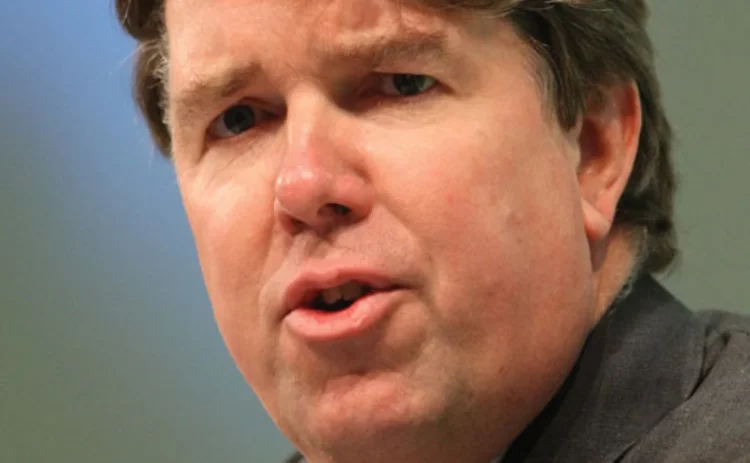
Paul Tucker

The machinery of bank recovery and resolution is industrial in its scale – bail-in bonds that will raise vast sums of capital, living wills that describe how to wind up a globe-spanning leviathan, and resolution authorities with the strength to use these levers. But, when it comes to the final, crucial question of how authorities in different countries will ensure the painless demise of a cross-border bank, the whole contraption appears to be driven by something rather more ephemeral – trust.

A regulator that is host to a foreign banking group is expected to sign a memorandum of understanding (MOU) with the bank’s home supervisor, stating that it will step aside and allow the home authorities to lead any resolution process – a so-called single-point-of-entry approach. Paul Tucker, deputy governor at the Bank of England (BoE) and chair of the Financial Stability Board’s (FSB) steering group on resolution, sums it up: “These memoranda are not legally binding agreements. So, a regulator has to make a judgement over whether it can trust its opposite number in another country.”

That makes some uneasy. When push comes to shove, critics say, each authority will act in its own national interests, ignoring MOUs and instead trying to protect domestic creditors. “An old colleague of mine once said that such understandings are only worth the paper they are written on. You can’t run the vital process of bank resolution on a gentleman’s agreement that isn’t legally binding. It just won’t work,” says Marco Lichtfous, Luxembourg-based partner at Deloitte and former senior regulator at the Central Bank of Luxembourg.

Others are even more explicit. “Regulators will always have a suspicion that their colleagues in other countries won’t do what they say they’ll do. Trust is not a common commodity these days. Regulators also don’t operate outside political influence, so the temptation or pressure to act unilaterally in the event of a bank failure could be very strong. At that crucial point, an MOU won’t stand for much,” says one former regulator who now works as a regulatory policy adviser for a bank.

Some regulators are already preparing for that possibility. In December last year, the US Federal Reserve issued new proposals for the regulation of foreign banking organisations, which require overseas firms with $50 billion in US assets to place all their US subsidiaries into an intermediate holding company (IHC) that has to meet strict domestic capital and liquidity rules (Risk May 2013, pages 16–20). For some, this confirms that co-ordinated, cross-border recovery and resolution is a pipe dream.

A regulator has to make a judgement over whether it can trust its opposite number in another country

“It feels like the Fed has little trust in MOUs and other informal co-operative agreements on resolution, so it has developed a Plan B,” says the regulatory policy adviser. “Now that everyone knows the Fed has the Plan B, will they be more likely to come up with their own Plan B and dishonour any MOU with the Fed? You start getting into this game of bluff and double bluff, which really won’t be helpful.”

Not everyone sees it that way – including the BoE’s Tucker, who argues local regulators can draw up fall-back measures without jeopardising effective cross-border resolution. “What the international regulatory community is collectively arguing is that, for many global, systemically important banks, the preferred strategy is likely to be single-point-of-entry resolution at the level of the parent. In those circumstances, the structure of the group below is of less consequence. But this may not always be the best strategy, and it would be imprudent to plan on the basis that it was. The fall-back would be to resolve the most critical businesses within a group, and so jurisdictions are right to think through the structure that would work best in that scenario. You can think of this as a belt-and-braces approach,” he says. The Federal Reserve declined to comment.

If local resolution is a contingency measure, the ideal to which regulators are aspiring was set out by the FSB in its Key Attributes of Effective Resolution Regimes for Financial Institutions, published in November 2011. The paper makes it clear that regulators must work together to avoid a repeat of the chaos that followed the collapse of Lehman Brothers in September 2008, when domestic authorities took an every-man-for-himself approach in dealing with local subsidiaries. In the absence of a robust resolution regime, most had to rely on local insolvency laws ill-suited for a global, interconnected firm.

“Independent, host-country resolutions executed in an unco-ordinated way around the world would not only break the distressed bank into bits; by being unco-ordinated, it might create confusion and destroy some of the surplus value held in host countries that could help out the home regulator as it resolves the parent group,” says the BoE’s Tucker.

There are also other incentives for domestic regulators to work with their peers overseas –attempts to shore up a local subsidiary by requiring additional capital and liquidity may prove insufficient in the event of a large bank failure, says Tucker. “National jurisdictions shouldn’t think they can protect themselves from the rest of the world. It would take more than some extra capital to prevent the group collapse of a large foreign banking entity having a big effect on systemic risk in its host countries around the world,” he says.

The Bank of England and the US Federal Insurance Deposit Corporation (FDIC) released a joint paper last December that set out a framework for the application of a top-down resolution strategy involving a single authority dealing with a globally active bank at the parent level. The paper focuses on how that could work for a US or UK financial group – and states the Bank of England and FDIC will continue to work together to agree resolution strategies. Tucker says these kinds of agreements are hugely important, particularly for the UK, which hosts a large number of foreign banks.

“Memoranda of understanding would govern the conditions by which a host country would step aside and not exercise its own resolution powers over a foreign banking entity. It’s not in a host’s interests to independently resolve a subsidiary if the home regulator can do as good a job for the subsidiary by sorting out the whole group. That could shield the UK, as a major host for overseas banks, from a lot of negative consequences,” he says.

Progress hasn’t been quick, however – a point recognised by the FSB in a report on the implementation of its key principles, published in April. While most home regulators have developed high-level resolution strategies, and have set up cross-border crisis management groups for all relevant G-Sifis, the legislation to allow a full-blown cross-border resolution has not yet been passed in most countries. For instance, few authorities have the ability to exercise their resolution power over the local operations of a foreign firm to support the home regulator in implementing a group-wide resolution. An effective mechanism for sharing information is also missing in many jurisdictions. This absence is a “significant weakness that can undermine the effective implementation of group-wide resolution strategies”, the FSB warns. Indeed, no cross-border co-operation agreements have yet been signed.

This lack of progress could be behind the Fed’s decision to establish its own rules for foreign banking groups, some speculate. With revamped bankruptcy and resolution regimes in place via Title I and Title II of the Dodd-Frank Act, US regulators may have decided not to wait for others to catch up. “The IHC concept is certainly a point of tension. Some nations, like the US, feel pressure to take separate action – creating a local fortress to protect their domestic banking system while other jurisdictions finalise their resolution regimes. Some argue the IHC structure gives the Fed a reason to be patient and work towards a co-operative global resolution, but others worry the IHC model gives them the ability to not participate – to simply wall off the US and ignore broader interests. While it’s legitimate to protect your home turf, I think there are better ways to do it. I hope the Fed takes a more international perspective, and tilts the IHC proposal to avoid Balkanisation and recognise the importance of host country co-operation in a resolution,” says Wilson Ervin, vice-chairman at Credit Suisse in New York.

But even if the rules are intended solely as a fall-back, critics fear it could become a slippery slope, with other countries putting similar provisions in place and ultimately overburdening cross-border banks. “I’m not sure the logical conclusion of widespread subsidiary resolution powers is necessarily going to be more regulatory co-operation. It’s just as likely that regulators will compete over how much capital and liquidity must be trapped in subsidiaries to be used in a resolution. The more capital and liquidity a regulator traps, the easier an independent resolution will be for them to execute,” says one chief risk officer at a large, global bank. “There’s no incentive for a regulator to have non-existent or relaxed subsidiary funding rules relative to other jurisdictions because they will have nothing left to grab onto when a cross-border bank is resolved. At some point, this competition will become way too expensive for the industry to cope with.”

This may be less of a problem once the European Union (EU) adopts and implements its recovery and resolution directive. The European Commission has been working on its common template for the resolution of European credit institutions for more than two years, and the legislation is expected to be passed into law in the next few months, with implementation by 2015.

The directive should eliminate many of the legislative hurdles to effective cross-border resolution in Europe – a big step forward given the number of G-Sifis domiciled in the EU, the FSB says. But that doesn’t eliminate the need for MOUs to be put in place between European regulators, particularly when agreeing action plans for individual firms.

That means trust will still hold the framework together for many national regulators – that is, assuming other jurisdictions want to sign MOUs with them in the first place. “Dozens of European nations have banks with operations in the US and the UK, but are not host to any firms from these big countries. So, the incentive to sign MOUs only goes in one direction. There is little reason for US or UK regulators to devote their time to signing agreements with every other regulatory authority. This is a big problem for small jurisdictions – are they going to be consulted or have a say in the resolution decisions, or will things be imposed on them?” asks one former European regulator.

Only users who have a paid subscription or are part of a corporate subscription are able to print or copy content.

To access these options, along with all other subscription benefits, please contact info@risk.net or view our subscription options here: http://subscriptions.risk.net/subscribe

You are currently unable to copy this content. Please contact info@risk.net to find out more.

Most read articles loading...

You need to sign in to use this feature. If you don’t have a Risk.net account, please register for a trial.

Sign in
You are currently on corporate access.

To use this feature you will need an individual account. If you have one already please sign in.

Sign in.

Alternatively you can request an individual account here