

OTC trading platform of the year: UBS

There is an old joke about two hikers who disturb a bear. One pulls on his running shoes in response, prompting his weirdly rational companion to point out that outrunning the bear will be impossible. “I don’t need to outrun the bear,” the first hiker replies, “I just need to outrun you.”
This devil-take-the-hindmost attitude was behind the launch of a new credit default swap (CDS) trading platform by UBS in January last year, called Price Improvement Network (Pin). In an attempt to ensure its own survival in the face of new capital pressures facing derivatives market-makers, the bank broke one of the industry’s unwritten rules – allowing clients to trade directly with each other. UBS argues this is the future and other dealers will follow suit – it claims two of its rivals are close to joining as market-makers on the platform. In the meantime, the Swiss bank has what could be a valuable head start.
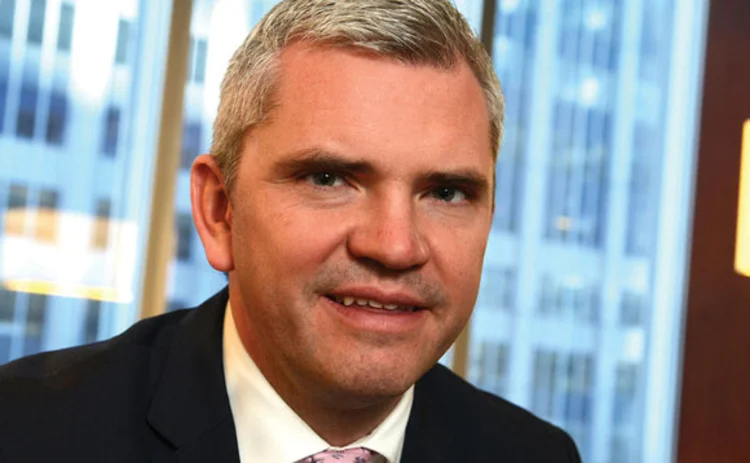
“It is a meaningful change in market structure that we have brought about,” says Paul Hamill, head of matched principal trading at UBS in New York. “We think the market will increasingly operate this way when new regulation kicks in. There is an overwhelming demand to replicate the model we have been pushing – but it’s a big change, definitely.”
Put bluntly, it is voluntary disintermediation for UBS – at least, in its traditional role as a derivatives market-maker. On trades executed between clients – roughly 40% of the platform’s volume – the bank still makes money, but does so by charging a fee rather than collecting the bid-offer spread. On those trades, it plays the same role as a broker in the interdealer market – acting as the counterparty to each side of the transaction, but executing equal and offsetting legs that are not subject to a bid/offer spread. Five years ago, dealers would have tried to strangle this concept at birth, but post-crisis reforms have changed that.
“What we have done with Pin is to look forward and embrace the idea that we should be offering clients the best price in the market, rather than the UBS price. The logical consequence is that we no longer need to deploy as much capital in the business,” says Chris Murphy, global head of rates and credit.
It is a meaningful change in market structure that we have brought about
That is the attraction. Ultimately, no bank will be able to outrun the Basel III bear – and the fixed-income business at UBS has already endured a mauling. On October 30, the bank announced a dramatic rescaling of its ambitions as a market-maker, along with the loss of 10,000 jobs – in large part because the business consumes huge amounts of risk-weighted assets, on which capital requirements are calculated. Flow credit trading will continue, but still faces a struggle – and Pin gives the bank a way to hang on to its clients in a capital-efficient way.
“Our ability to service clients would have been reduced,” says Hamill. “I don’t think we would be out of the business without Pin, but it certainly would be less clear how we could service clients 12 or 24 months from now if we weren’t building the future around this kind of platform.”
But it is a bold step. Dealers have traditionally sought to protect their role as liquidity providers by locking other market participants – big hedge funds and proprietary trading shops, for example – out of the interdealer broker market.
“Dealers used to warn that if a broker admitted a client, then they would cut lines to that client, or stop using the broker,” says a credit trader at one European bank. “They were protecting their competitive advantage in terms of getting market colour from the brokers, but this UBS platform rebalances that advantage with market colour on the client side. You might see something trading on the platform and all the clients are aware of the trade but dealers are not. That is completely different from the historical model.”
UBS is not worried it may have ruffled some feathers. “We are less concerned about what our competitors think, and more concerned about what our customers think,” says Murphy.
So far, customers seem to think it’s pretty neat. Since its January 2012 launch, the number of different trading firms using the platform each month has increased from nine to 95. As of December last year, a total of 185 firms had either posted liquidity or traded against a price on screen. Hamill says the split between clients trading against UBS prices and other customer prices varies from month to month, but is usually around 60:40 in favour of UBS prices. Over the year, around $40 billion notional was executed in client-to-client trades, representing 34% of the total notional traded.
Only users who have a paid subscription or are part of a corporate subscription are able to print or copy content.
To access these options, along with all other subscription benefits, please contact info@risk.net or view our subscription options here: http://subscriptions.risk.net/subscribe
You are currently unable to print this content. Please contact info@risk.net to find out more.
You are currently unable to copy this content. Please contact info@risk.net to find out more.
Copyright Infopro Digital Limited. All rights reserved.
As outlined in our terms and conditions, https://www.infopro-digital.com/terms-and-conditions/subscriptions/ (point 2.4), printing is limited to a single copy.
If you would like to purchase additional rights please email info@risk.net
Copyright Infopro Digital Limited. All rights reserved.
You may share this content using our article tools. As outlined in our terms and conditions, https://www.infopro-digital.com/terms-and-conditions/subscriptions/ (clause 2.4), an Authorised User may only make one copy of the materials for their own personal use. You must also comply with the restrictions in clause 2.5.
If you would like to purchase additional rights please email info@risk.net
More on Awards
One to watch: ennrgy.com
Energy Risk Awards 2026: Energy tech and managed services company develops AI-driven intelligence platform with unique payment model

Innovation of the year – tech firm: MatLogica
Energy Risk Awards 2026: Fintech’s breakthrough enables firms to compute pricing and Greeks faster than traditional products can compute price alone

Base metals house of the year: Societe Generale
Energy Risk Awards 2026: Tech focus helps bank support clients through base metals market shifts
Derivatives house of the year – bank: Natixis CIB
Energy Risk Awards 2026: Bank’s physical market expansion and ETRM enhancements underpin innovative derivatives structures that address volatility

One to watch: CarbonAI
Energy Risk Awards 2026: Start-up uses AI to create dynamic, auditable carbon market intelligence

Weather house of the year: Parameter Climate
Energy Risk Awards 2026: Parameter Climate launches innovative new vehicle to connect corporate hedgers with capacity providers

Voluntary carbon markets house of the year: SCB Environmental Markets
Energy Risk Awards 2026: SCB’s robust methodologies ensure compliance with tighter standards in voluntary carbon markets

OTC platform of the year: AEGIS Markets
Energy Risk Awards 2026: Energy swap platform hits record volumes despite regulatory relief
