

Interest rate derivatives house of the year - Goldman Sachs
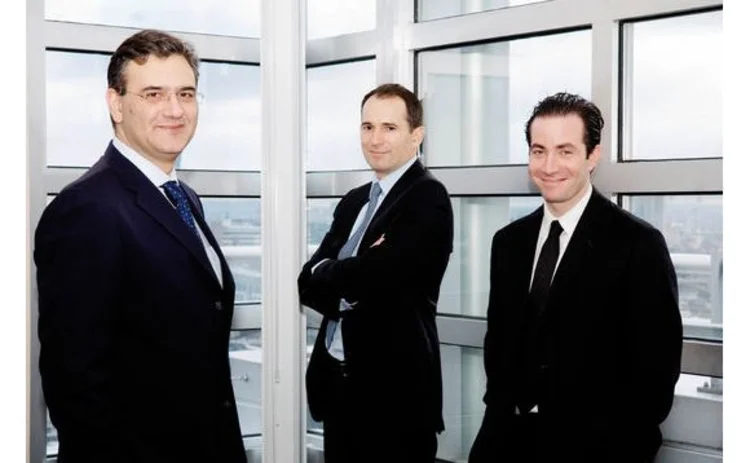
Goldman Sachs has been called a lot of things over the past 12 months. To some, it’s the distillation of all the banking industry’s ills – a secretive, power-broking, huge-bonus-paying, profit-hungry machine that enriches itself at the expense of everyone else. Even its peers claim Goldman took advantage of the post-Lehman chaos to rip off other market participants. It seems like everyone hates Goldman Sachs – until you speak to the bank’s clients.
“They’re the best in the Street – it’s quite simple. They are talented people, they know how to support the client, they can think strategically, they provide the best quotes,” says the head of group treasury at one large Italian corporate. “They are what all the other banks aim to be.”
Others tell the same story, praising Goldman across a range of areas: the bank’s interest rate derivatives business is faster, smarter, provides tighter prices on bigger positions, and is better at working in partnership with clients than many of the competitors, they say. One treasury consultant tries to explain why: “Its customer base comes to it less easily than that of the commercial banks, which get clients off the back of lending business. So of all the banks, Goldman is most willing to go the extra mile.”
“In terms of intellectual capital, they’re the best we work with. They are great at explaining things in both commercial and technical terms,” adds the head of capital markets at a UK corporate. Even some of the client contacts provided by other dealers favoured Goldman: “I think Goldman has the edge – it is faster and more innovative,” says one European asset manager.
In part, it is this kind of feedback that makes Goldman this year’s interest rate derivatives house of the year. Although Barclays Capital, Deutsche Bank and JP Morgan were close runners-up, client enthusiasm wasn’t as universal, nor was it laced with as many superlatives.
But Goldman could still be seen as an odd choice. Just over a year ago, there were doubts the bank would survive the crisis. The collapse of Lehman Brothers in September 2008 triggered a two-month-long white-knuckle ride, in which Goldman first changed its corporate status to become a bank holding company, then received a $5 billion injection of capital from Warren Buffett, and – at the end of October 2008 – a further $10 billion from the US Treasury’s Troubled Asset Relief Program. During this period, the bank’s stock price halved, while its five-year credit default swap (CDS) spread spiked to 620.6 basis points – almost seven times where it trades today. Even after capital had been injected and the market’s view on the bank had stabilised, sceptics argued Goldman had the wrong business model and no future as a standalone institution.
Liz Beshel, Goldman’s New York-based global treasurer, concedes it was “a scary time” but says the outlook for the bank was never as black as it was painted: “Our stock went down, our spreads blew out and every time you turned on the news they were talking about how our end was imminent, but if you actually looked at the facts, we had a tremendous amount of cash on hand, our balance sheet was really clean, our funding had a very long duration, we were making money and we absolutely understood the risk on our books. It was almost like people were talking about two different companies.”
Goldman’s strength came from a long-standing fear it could be choked to death in the same way as Lehman. Beshel says she once asked her boss – Goldman’s chief financial officer, David Viniar – for his top three worries and was told, “liquidity, liquidity, liquidity”. As a result, the bank went into the crisis sitting on a big pile of cash and with a longer-dated funding profile than many other dealers – Beshel says the weighted average life of the bank’s unsecured debt book is around seven years.
Those measures have a high price tag in terms of opportunity and borrowing costs, but Beshel says they were vital in seeing Goldman through the darkest days of the crisis: “I can’t say I wasn’t nervous, because it’s my job to be nervous and I’ve been nervous my entire career, but having that pool of cash – and it was more than adequate for the needs we had – gave us enormous confidence that we were able to manoeuvre and defend ourselves through the crisis. In some ways, it was very gratifying to see all those years of preparation pay off.”
In addition, Goldman hasn’t skimped on investment in the more mundane aspects of running a bank, such as technology and documentation. “We maintain our investment in these areas in good times and bad, and this really paid off over the recent period,” says Michael Daffey, global head of equities sales and head of fixed income and foreign exchange sales for Europe, the Middle East and Africa.
This might all seem slightly remote from the day-to-day interest rate derivatives business, but it proved invaluable in the weeks that followed Lehman’s collapse. Sophisticated counterparties were keeping an eye on Goldman’s CDS spreads and they didn’t like what they saw. “There were big questions about Goldman. We were very sensitive to CDS spreads at the time and the question was: who would get government support? Barclays and Deutsche were easier calls in that respect,” says the head of rates at one large asset manager.
In itself, this was a threat. One or two counterparties backing away could easily become 10, and could mushroom to 100 – and the perception of weakness during the crisis was as dangerous as actual weakness. So Goldman countered it aggressively.
“People were watching CDS spreads and, yes, our spreads blew out. If our name was turned down, or even if it was rumoured to be turned down, we addressed the issue head-on with the client. That meant, for example, calling the chief investment officer of the client, taking them through our current situation and getting them comfortable, replacing all the innuendo and rumour with the facts,” says Daffey.
Partners responsible for client relationships, like Daffey, were available at all hours to reassure clients that Goldman was sitting on a huge cushion of liquidity and had a clear understanding of its counterparty exposures. The calls were handled as a matter of urgency. There was typically no more than 30 minutes between a client stepping back and a Goldman team putting in a call. “When our name was in question, we acted immediately to get senior management involved,” says Daffey.
In some cases, very senior management indeed was involved – up to and including Goldman chief executive Lloyd Blankfein, says Kostas Pantazopoulos, global head of interest rate products at the bank in London: “Because Lloyd and other management committee members were easily accessible, we were able to immediately address issues. The solution was to have the information at hand, to be open and aggressive with the facts.”
Beshel also pitched in: “I spent a lot of time in September and October talking to hedge funds in particular. They had obviously seen what happened to Bear, what happened to Lehman – now they were watching what was happening to our credit spreads and I think they were right to ask questions. We’d have done the same if we’d been on the other side, but we knew we had a good story to tell and the facts were very supportive of them continuing to do business with us,” she says.
This strategy seems to have worked. “There were high-level calls with very senior people to offer regular reassurances. Then, once they had bank holding company status, the counterparty concerns went for many of us,” says the asset manager’s head of rates.
Goldman had another solution too: where the client was keen, it reduced the threshold on existing collateral support annexes (CSAs) to zero, so any change in exposure was fully covered. These arrangements cover all interbank derivatives trades but are rarely extended to other sectors. During the post-Lehman period, though, they helped assuage fears about Goldman as a credit risk. “We had concerns but solved the problem by bringing down the threshold on our CSA from €40 million to zero,” says the treasurer at one large European telecoms company. “Goldman was one of the few counterparties where we didn’t get dragged into lots of conversations about reducing the threshold – we had a positive position but it was no problem with Goldman.”
Fears about further bank collapses may now have died away, but counterparty risk remains a hot topic. Pantazopoulos says Goldman has always been rigorous about pricing derivatives transactions to reflect the expected cost of a counterparty default, and sometimes will not be able to match the lower prices quoted by more relaxed dealers as a result. The bank’s answer was to separate out the credit component of a large trade and invite other banks to quote on it instead, seeking to obtain the lowest all-in transaction cost via an auction process. The bank claims the benefits can be material.
That doesn’t seem to be hot air – Goldman’s clients go out of their way to praise the auctions. “We’ve been seeing a far wider range of credit pricing, which makes the auctions more valuable, and Goldman has done a fine job arranging them for us,” says the treasurer at one UK corporate.
Specific rates transactions have also gone down a storm – the Tesco sale-and-leaseback deal, for example, which helped reopen the commercial mortgage-backed securities market (see pages 74–75), as well as swap spread lock trades that enabled clients with big swap positions to fix spreads after they blew out to extreme levels. “We called our clients who had effectively seen a windfall profit as a result of the market moves. That was, throughout the crisis, a way to turn defence into offence – and it became a phenomenal product,” says Daffey.
To illustrate the magnitude of the gains, Sam Wisnia, global head of global macro group strategy and structuring, says swap spreads had widened by about 100bp when clients first took advantage of the locks – a move large enough to create gains of hundreds of millions of dollars on some companies’ swap positions.
When it comes to the performance of the interest rate derivatives business, Goldman clams up – but given the $19.3 billion earned by the bank’s fixed income, currency and commodities trading businesses during the first three quarters this year, it seems reasonable to assume it has done well. “We have done the best we can. We feel satisfied that Goldman was able to consistently be there for our clients,” says Pantazopoulos.
And the bank as a whole is proud of how the rates derivatives business has performed, says Ed Eisler, co-head of the global securities division and a member of Goldman’s management committee: “We are delighted to win this award as recognition of our client activities in interest rate derivatives. The team worked tremendously hard during challenging market conditions to maintain a constant dialogue with clients, providing liquidity, and devising innovative solutions to meet their requirements.”
Only users who have a paid subscription or are part of a corporate subscription are able to print or copy content.
To access these options, along with all other subscription benefits, please contact info@risk.net or view our subscription options here: http://subscriptions.risk.net/subscribe
You are currently unable to print this content. Please contact info@risk.net to find out more.
You are currently unable to copy this content. Please contact info@risk.net to find out more.
Copyright Infopro Digital Limited. All rights reserved.
As outlined in our terms and conditions, https://www.infopro-digital.com/terms-and-conditions/subscriptions/ (point 2.4), printing is limited to a single copy.
If you would like to purchase additional rights please email info@risk.net
Copyright Infopro Digital Limited. All rights reserved.
You may share this content using our article tools. As outlined in our terms and conditions, https://www.infopro-digital.com/terms-and-conditions/subscriptions/ (clause 2.4), an Authorised User may only make one copy of the materials for their own personal use. You must also comply with the restrictions in clause 2.5.
If you would like to purchase additional rights please email info@risk.net
More on Awards
One to watch: ennrgy.com
Energy Risk Awards 2026: Energy tech and managed services company develops AI-driven intelligence platform with unique payment model

Innovation of the year – tech firm: MatLogica
Energy Risk Awards 2026: Fintech’s breakthrough enables firms to compute pricing and Greeks faster than traditional products can compute price alone
Base metals house of the year: Societe Generale
Energy Risk Awards 2026: Tech focus helps bank support clients through base metals market shifts
Derivatives house of the year – bank: Natixis CIB
Energy Risk Awards 2026: Bank’s physical market expansion and ETRM enhancements underpin innovative derivatives structures that address volatility
One to watch: CarbonAI
Energy Risk Awards 2026: Start-up uses AI to create dynamic, auditable carbon market intelligence

Weather house of the year: Parameter Climate
Energy Risk Awards 2026: Parameter Climate launches innovative new vehicle to connect corporate hedgers with capacity providers

Voluntary carbon markets house of the year: SCB Environmental Markets
Energy Risk Awards 2026: SCB’s robust methodologies ensure compliance with tighter standards in voluntary carbon markets
OTC platform of the year: AEGIS Markets
Energy Risk Awards 2026: Energy swap platform hits record volumes despite regulatory relief
