

Deal of the year - Cairn High Grade Funding SIV-Lite Restructuring
"An oasis of calm in the subprime maelstrom," was how New York-based Moody's Investors Service described the structured investment vehicle (SIV) sector in a report issued in late July. Less than a month later, that assessment appeared remarkably myopic, as banks and hedge funds were sucked into an SIV storm of downgrades, liquidations and restructurings.
Moody's is far from the only firm to be caught out by the shortcomings of SIVs and SIV-lites. These vehicles have been hugely popular with banks, hedge funds and asset managers. They typically finance themselves through issuing short-term commercial paper and medium-term notes, and buy long-dated assets such as asset-backed securities (ABSs) and collateralised debt obligation (CDO) tranches. By doing so, they are able to profit by taking advantage of the spread between their investments in assets with relatively long maturities and funding through short maturity debt.
The turmoil of July and August, sparked by a surge in delinquencies on US subprime mortgage loans, changed all that. Concerned about potential exposures to subprime loans, asset-backed commercial paper (ABCP) investors refused to rollover short-term financing, leaving vehicles facing a severe liquidity crisis. With the value of structured credit portfolios tumbling, and with some breaching net asset value tests (a measure of available funding versus the market value of the portfolio), some vehicles were left facing the prospect of a forced liquidation of portfolios to meet liabilities. SIVs owned by Barclays Capital, Citi, Dresdner Kleinwort, HSBC, Rabobank and Societe Generale have all run into problems over the past few months, as have vehicles managed by independent managers such as Geneva-based Avendis, and London-based Cheyne Capital and Solent Capital.
Many SIVs and SIV-lites are now in desperate need of a service (Risk December 2007, pages 75-77). Some banks, such as Citi and Societe Generale, have resorted to consolidating them on to their balance sheets. Others have tried different solutions. Dresdner Kleinwort, for example, has sought to cut the collateral pools of its SIVs into pieces - effectively selling off chunks to investors in a method known as vertical slicing. During October, Bank of America, Citi and JP Morgan also unveiled a headline-grabbing plan to create a giant conduit, called the Master Liquidity Enhancement Conduit, which would attempt to stabilise the money markets by purchasing SIV assets (Risk November 2007, page 8). But since Citi's announcement on December 13 that it will consolidate its SIVs on to its balance sheet, the chances of the scheme coming to fruition seem increasingly remote.
The achievement of the only successful SIV or SIV-lite restructuring as Risk went to press therefore looks increasingly impressive. That accolade goes to London-based hedge fund Cairn Capital, which announced the shake-up of its High Grade Funding 1 (HGF) SIV-lite on August 31. As part of the restructuring, the vehicle's potentially disastrous market value triggers were removed and the ABCP funding replaced by a $1.6 billion term loan from Barclays Capital - effectively turning it into a de facto cashflow CDO.
Paul Campbell, London-based chief executive at Cairn, is eager to stress the firm did not actively solicit Risk's coveted Deal of the Year award for its achievements. That may be understandable - as in all restructurings, investors ultimately did not get the deal they had originally bargained for. However, a number of senior bankers have privately applauded the manager for its foresight and open-mindedness in reworking the structure at such an early stage. As a result, its investors got a far better deal than they would have received otherwise, a fact adequately demonstrated by the turmoil that has engulfed other vehicles since August 31.
HGF originally started life in January 2006 via arranger Barclays Capital. At the time, SIV-lites were seen as a natural evolution on the success of the older and well-established SIV model (Risk May 2006, pages 28-30). Unlike SIVs, SIV-lites are typically structured as one-off issuance vehicles with a finite life and size. They are also often more highly leveraged and hold higher-yielding assets than traditional SIVs. At the time of HGF's inception, it comprised $1.8 billion notional of high-grade ABSs with a weighted average rating of AAA, according to a presale document obtained from Standard & Poor's (S&P). The agency rated $90 million of tier 1 mezzanine notes AAA, and $36 million of tier 2 mezzanine notes AA. In addition, $36 million of the structure's capital notes were rated BBB-. In common with other independent managers, responsibility for commercial paper issuance was outsourced to London-based SIV administrator QSR Management.
David Littlewood, founding partner at Cairn in London, says the deal sat easily within the manager's normal surveillance process: "Quite honestly, ABCP funding never ordinarily kept us awake at night and required very little maintenance, apart from agreeing a daily funding strategy with QSR."
This changed quickly as market-wide fear grew over soaring levels of bad debt in the US subprime mortgage market. When demand for ABCP began to contract in July, Littlewood and his team at Cairn found themselves in daily - and sometimes hourly - contact with QSR about keeping HGF fully funded. Like many other SIV-lites, HGF's structure did not include liquidity lines to cover the full value of its portfolio. Instead, it included a so-called maximum cash-out test to ensure the vehicle had enough liquidity to pay off maturing ABCP. Had the vehicle failed the test for five consecutive business days without cure, the SIV-lite would have entered a so-called enforcement phase - under which it would have been unable to issue new debt, and would have been forced to liquidate assets.
Breaching such a test was becoming a growing concern during July and August, says Littlewood. This would have spelled disaster for HGF due to the structure's critical dependence on investor confidence. To avoid this and buy as much time as possible, Cairn accepted the longest ABCP maturities it could.
"We were finding we really had to scrabble around to get the maturities and the financing rates we wanted on the commercial paper," says Littlewood. Where previously, HGF had funded at close to Libor, it was now having to pay around 30-40 basis points across maturities for ABCP financing. As July went on, this got worse - at one stage, three-day funding for HGF ballooned to as much as 120bp. While competing managers sought different solutions to similar funding problems, Littlewood says Cairn took the decision to restructure HGF during the week of August 6.
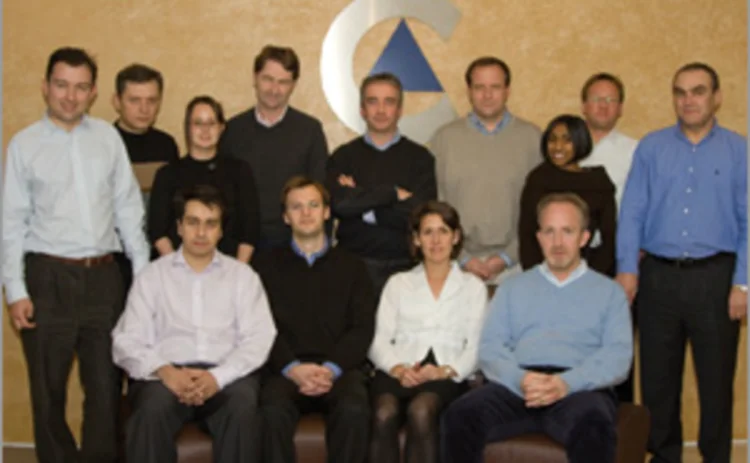
"We basically camped in the boardroom for three weeks during the month of August," remembers Littlewood. From mid-August, concerned investors were able to call a continuously manned telephone line into the manager's London boardroom, which subsequently became known as the war room. Cairn's 10-person team came up with several possible structures they considered commercially viable - all of which involved eliminating the vehicle's reliance on short-term commercial paper and replacing it with term-funding until maturity.
For any restructuring to be successful, the plan would need the support of the SIV-lite's capital and mezzanine note investors. When the final proposal was decided, every one of these investors was telephoned to alert them of the danger HGF was in - and the course of action Cairn wanted to take. "Some of them had already spotted the problem because they were investors in other SIVs. Others weren't aware as to how urgent the situation was, and how bad it could get," explains Littlewood.
While an initial attempt at restructuring HGF failed, the manager's second effort was more successful. Getting the plan past investors required Cairn to be sensitive to their interests in the deal, and the potential conflicts between them. Cairn's openness with investors was paramount to winning investor trust, says Campbell: "Half the battle was getting all the investors pointing in the same direction and ensuring they all supported the deal."
The final restructuring was approved by all mezzanine and capital noteholders, along with S&P and Moody's, by August 31. At a difficult time in the market, Barclays Capital provided $1.6 billion in term funding, which would incrementally replace the SIV-lite's commercial paper as it matured. As part of the funding package, which was delivered at commercial rates, an unnamed hedge provider was also brought in to insure the credit risk of the $1.6 billion notional portfolio until the deal's final maturity in 2056. S&P withdrew ratings from the mezzanine notes, and reissued AAA and AA ratings on the restructured tier 1 and tier 2 mezzanine notes for principal only. Mezzanine investors will continue to receive a positive but reduced coupon, according to Cairn. While S&P awarded no new ratings to the restructured capital notes, the manager believes it is likely the capital note investors will receive a recovery of their investment by the deal's maturity.
One of the most conspicuous reasons for the success of the Cairn restructuring was the absence of any need to consult commercial paper investors. Other attempted restructurings have foundered because of tensions between various noteholders - in particular, conflicting interests between commercial paper investors and term noteholders. Littlewood says that, on the advice of the transaction's lawyers and security trustee, the consent of ABCP investors was not required for the restructuring. However, a number of calls took place with them so that they were aware of what was happening. The fact that consent was not a requirement was itself thanks to the strong performance of HGF's underlying collateral - and the fact that no market value or liquidity triggers had been tripped.
The underlying collateral pool currently consists of 93% US residential mortgage-backed securities, with the remainder in US commercial mortgage-backed securities - all of which are rated AAA. The strength of this portfolio also meant that the restructuring was able to attract both liquidity and a portfolio credit default swap to cover the credit risk of the collateral pool during a particularly difficult trading period. According to Cairn, the credit quality of the vehicle's portfolio remains sound, and none of its assets are on watch for a possible downgrade.
Despite the credit quality of the portfolio, however, the real prerequisite for the success of Cairn's deal was timing. "Our issue with HGF was very much a liquidity issue," says Littlewood. "The SIV problem started as a liquidity issue, but it's now a liquidity and a market value issue."
Amid flailing market values for even the most highly rated ABS assets, the difficulties faced by other managers in restructuring beleaguered SIVs and SIV-lites have been hugely compounded. Perhaps more than anything else, the substance of Cairn's achievement lies in effectively calling the bottom of the SIV market.
See also:
Only users who have a paid subscription or are part of a corporate subscription are able to print or copy content.
To access these options, along with all other subscription benefits, please contact info@risk.net or view our subscription options here: http://subscriptions.risk.net/subscribe
You are currently unable to print this content. Please contact info@risk.net to find out more.
You are currently unable to copy this content. Please contact info@risk.net to find out more.
Copyright Infopro Digital Limited. All rights reserved.
As outlined in our terms and conditions, https://www.infopro-digital.com/terms-and-conditions/subscriptions/ (point 2.4), printing is limited to a single copy.
If you would like to purchase additional rights please email info@risk.net
Copyright Infopro Digital Limited. All rights reserved.
You may share this content using our article tools. As outlined in our terms and conditions, https://www.infopro-digital.com/terms-and-conditions/subscriptions/ (clause 2.4), an Authorised User may only make one copy of the materials for their own personal use. You must also comply with the restrictions in clause 2.5.
If you would like to purchase additional rights please email info@risk.net
More on Awards
One to watch: ennrgy.com
Energy Risk Awards 2026: Energy tech and managed services company develops AI-driven intelligence platform with unique payment model

Innovation of the year – tech firm: MatLogica
Energy Risk Awards 2026: Fintech’s breakthrough enables firms to compute pricing and Greeks faster than traditional products can compute price alone
Base metals house of the year: Societe Generale
Energy Risk Awards 2026: Tech focus helps bank support clients through base metals market shifts
Derivatives house of the year – bank: Natixis CIB
Energy Risk Awards 2026: Bank’s physical market expansion and ETRM enhancements underpin innovative derivatives structures that address volatility
One to watch: CarbonAI
Energy Risk Awards 2026: Start-up uses AI to create dynamic, auditable carbon market intelligence

Weather house of the year: Parameter Climate
Energy Risk Awards 2026: Parameter Climate launches innovative new vehicle to connect corporate hedgers with capacity providers

Voluntary carbon markets house of the year: SCB Environmental Markets
Energy Risk Awards 2026: SCB’s robust methodologies ensure compliance with tighter standards in voluntary carbon markets
OTC platform of the year: AEGIS Markets
Energy Risk Awards 2026: Energy swap platform hits record volumes despite regulatory relief
