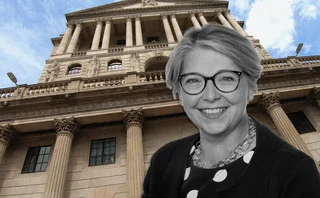
FSA determined to stamp out financial fraud
The UK Financial Services Authority (FSA) is determined to stamp out fraud and abuse, and will use all its powers to “clean up” the UK’s financial markets, said Margaret Cole, director of enforcement at the FSA, in a speech at the Fraud Advisory Panel’s annual general meeting on Tuesday.
“We are committed to using all our tools, our powers and resources to fight fraud in the UK,” she said. That means using not only the FSA’s regulatory powers but also its capacity to prosecute offenders.
Cole said the FSA has taken a much tougher stance against market offences over the past three years, recognising that criminal prosecutions send a much stronger deterrent message.
“We are determined to deliver this message confidently, and to be a feared and respected criminal prosecutor, because we are determined to reduce the harm caused both by insider dealing and by unauthorised business fraud,” she said.
To fight insider dealing it is important to change behaviour so that it is recognised as a serious crime for which people can be sent to prison.
“We recognised that civil fines and the threat of them, however large, hadn’t made enough of an impact, and that the threat of a criminal sanction – a criminal conviction and a custodial sentence – is much more powerful,” she said.
“It is important to demonstrate that those who commit white-collar crime aren’t immune from the criminal justice system,” she said.
With complex criminal prosecutions there are no quick wins, but the FSA’s tougher stance is starting to show results, with recent successful trials for insider dealing and more cases coming up.
The FSA approach is that criminal conduct will be prosecuted unless there is a good reason not to, she said.
It will also continue to insist that authorised firms have the systems, controls and monitoring capabilities in place to reduce the risk of insider dealing, and take action against firms that fail to provide information on transactions.
The FSA can also prosecute people who conduct regulated activity without authorisation and who falsely claim to be regulated. The FSA can take civil action – to freeze assets and restrain activities by injunction, wind up firms using insolvency powers and declare individuals bankrupt.
The recent economic downturn has seen an increase in unauthorised deposit-taking, where fraudsters offer victims a greater return on their savings than banks.
“In the current economic environment, we might expect to continue to uncover more unauthorised business frauds,” she said, adding that the regulator has increased the number of staff and set up a special department to deal with this type of fraud.
Only users who have a paid subscription or are part of a corporate subscription are able to print or copy content.
To access these options, along with all other subscription benefits, please contact info@risk.net or view our subscription options here: http://subscriptions.risk.net/subscribe
You are currently unable to print this content. Please contact info@risk.net to find out more.
You are currently unable to copy this content. Please contact info@risk.net to find out more.
Copyright Infopro Digital Limited. All rights reserved.
As outlined in our terms and conditions, https://www.infopro-digital.com/terms-and-conditions/subscriptions/ (point 2.4), printing is limited to a single copy.
If you would like to purchase additional rights please email info@risk.net
Copyright Infopro Digital Limited. All rights reserved.
You may share this content using our article tools. As outlined in our terms and conditions, https://www.infopro-digital.com/terms-and-conditions/subscriptions/ (clause 2.4), an Authorised User may only make one copy of the materials for their own personal use. You must also comply with the restrictions in clause 2.5.
If you would like to purchase additional rights please email info@risk.net
More on Regulation
Amid debanking drama, banks try to say ‘no’, safely
A basic risk management tool – the ability to turn a customer away – has become a political football

Erba myth: will US banks choose new capital measure?
B3E gives US banks a dilemma – adopt expanded risk-based approach, or a new standardised alternative

Illiquid assets pricing still needs expert judgement, say banks
EU regulators want more transparency in valuations, but some asset prices remain elusive

Fed to move tailored-capital goalposts soon, says Bowman
Banks hope agencies will index triggers for harsher capital rules to economic growth
Will SEC reporting proposal supercharge alt data providers?
Move that would allow companies to opt out of quarterly reporting disclosures welcomed

EU lawmaker calls for review of Luxembourg’s cross-border rules
Grand Duchy accused of side-stepping rules aimed at prising away banking business from London

Un-American or un-JPM? Surcharge rethink divides G-Sibs
Some see sense in rethink to funding indicator, others call for a backtrack

Bank of England softens tone on CCP cross-product margining
Breeden supports margin efficiencies to encourage more repo clearing, but still warns on leverage