He who laughs last
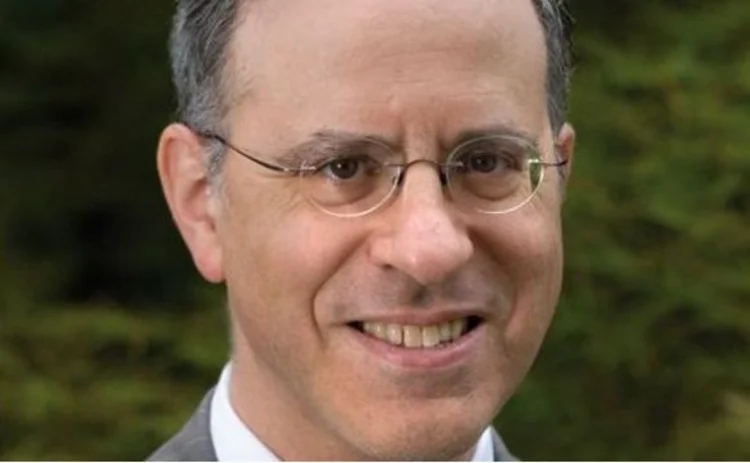
Professor Leon Metzger is a seasoned campaigner on the importance of internal controls within asset management firms, and has faced ridicule over the years from those who valued returns over operational controls. Then along came Madoff. No-one's laughing now. He talks to Duncan Wood

It seems like a mouth-watering investment opportunity - a hedge fund with a stellar track record of average returns in excess of 40% for the past 20 years. But who would still agree to sink their money into this hypothetical fund if the track record was the only information they could lay their hands on - if they had no information about how the fund operated, and no clue about its investment strategy?
Leon Metzger, an adjunct professor and lecturer at Columbia's School of Engineering, New York University's Stern School of Business, and Yale's School of Management, asks his students this question periodically throughout the courses he teaches on how to operate hedge funds and other alternative investments. At the start of the course, the class is invariably bewitched by the fund's past performance - almost all the hands go up - everyone would invest, despite the opacity. As the course rolls on, Metzger spends a lot of time drumming home his message that internal controls are more important than track records, and some students see the light - but for many, the lure of past performance is still too much. It's hard to get the message across.
On December 11, 2008, something happened that should stamp that message indelibly on the asset management industry. Metzger was driving home from the campus, after the penultimate class of the course - an oral exam in which students presented in front of a panel of judges picked from the asset management industry. "It was just an exciting day, I was exhilarated. And I was on my way home thinking about what I was going to do for the final class - and then I got back home, put on CNBC and heard about Madoff. And everything changed," he says.
In more ways than one. For Metzger, it meant scrapping his lesson plans and devoting his last three-hour class to Madoff. For his students, it meant a change of heart, too - not one raised their hand when Metzger asked, for the final time, if they'd invest in the black box hedge fund. "When I asked that question on December the 18th, nobody wanted to invest. Typically, as the semester progresses, we chip away - fewer and fewer hands go up in the air, but I would say that, each time, the majority of the class would still have invested in this hypothetical fund. But when I asked that class a week after the Madoff story broke, everyone got it: it's not just the performance record that counts," he says.
Metzger hopes the industry as a whole is changing, also. A large chunk of his career has been spent focusing on operational risk in asset management - first during an 18-year stint with one of the hedge fund world's most venerable names, the Greenwich-based Paloma Partners, where his last role in 2006 was as vice-chairman and chief administrative officer; and more recently in academia, where he has tried to educate the next generation of fund managers about what he sees as a huge blind spot. "People spend too much of their time chasing returns. Investors focus on it and so, naturally, managers do the same," he says. "They have so many ways to measure investment performance and none to measure operational performance. It's not seen as important and that needs to change."
This message has often fallen on barren ground. As an example, Metzger recounts an experience from a February, 2005 conference in Stamford, Connecticut, during which he took part in a panel discussion on hedge fund investing. Each member of the panel was asked how they would decide whether or not to invest in a given fund. Metzger's answer was detailed - he started by talking about internal controls, raising questions about who in the fund has access to cash, whether the fund uses third-party asset valuations and has an audited performance record, whether it has an independent risk management function; he then asked whether the interests of management and investors were aligned, whether there was a code of ethics at the firm, a disaster recovery plan, and a reputable accounting firm checking the fund's financials. Lastly, he brought up the topics that were first on everyone else's list - expected returns, leverage and risk-adjusted performance.
The response from one of Metzger's fellow panellists - a hedge fund manager - was scathing. "He laughed. He ridiculed me - he said, sarcastically, 'Yeah, because operational controls are more important than how much money you make.'"
The hedge fund manager wasn't alone. In an industry that focused overwhelmingly on returns, Metzger's zeal for internal controls often seemed quaintly irrelevant - despite plenty of corroborating evidence. Metzger points to studies carried out in 2003 by consulting firm Capco, and in 2007 by French business school, Edhec, both of which found that more hedge funds collapse because of operational weaknesses than risky investment strategies - 67% versus 33%, according to Edhec - but throughout the long, pre-crisis bull run, Metzger says there was almost no appetite for change.
One of Metzger's students even produced a video for his classmates on one occasion, spoofing the professor's focus on internal controls. "People laughed at me. They scoffed. Nobody ever thought operational issues could be so important. They were wrong," he says.
Today, Metzger is listened to more readily - and by people with real power. At the start of this year, he testified at a hearing on regulatory responses to the Madoff case, which was held by the Congressional Committee on Financial Services. His message was the same one he has been preaching for years. He told committee members about "the need for top-notch internal controls" and insisted "operational risk is the great unspoken danger". Nobody was laughing this time.
In the same way that operational risk always existed in the banking industry, but was anonymous and ignored until the death of Barings, asset managers now have Madoff as an example of what can go wrong. As happened with banks, the Madoff case could now create a sea-change in attitudes among regulators, investment firms and - crucially, says Metzger - among investors.
When asked how Madoff was able to pull off what's been estimated as a $65 billion fraud, Metzger focuses less on over-matched accounting firms and shortcomings by regulators, and instead points the finger first at so-called sophisticated investors - if they had insisted on an independent, third-party custodian, he says, Madoff's scam should have been uncovered before it could mushroom. Professional investors also ought to know that the kind of consistently high returns provided by Madoff are unusual, he says. "It's simple. He was able to do this because he had good reported returns. People were blindsided by that. They didn't want to ask any questions." And many less-sophisticated investors just followed the herd.
This lack of scrutiny from customers has enabled a laissez-faire approach to op risk management to grow unchecked, he says. "The reason some asset management firms have relatively poor controls is that investors just haven't been demanding them. Instead, they focus on returns. It's really that straightforward - if investors started to tell the industry they would not invest unless operational controls were improved, funds would be forced to respond."
Post-Madoff, some investors are putting their foot down. Metzger points to the example of Union Bancaire Privee (UBP), one of the world's largest hedge fund investors, which had a total of about $700 million in Madoff-linked assets and had set aside roughly $56 billion to be invested in hedge funds by its managers. From mid-December last year, the firm instructed managers to pull money out of all funds that lacked independent administrators and custodians. The result: funds that wanted to keep UBP's money raced out and hired third-party firms such as Citco, says Metzger. "This is a case where the investor asked for something, and the investor got it. So, why haven't better internal controls been emphasised? Because investors haven't been demanding them. Now, hopefully, they will insist," he says.
There have always been, of course, some exceptions to this general malaise. Metzger recalls testimony delivered in front of the US House Financial Services Committee by Princeton University's investment office back in 2007, after the spectacular collapse of Amaranth, a multi-strategy hedge fund. Before investing in a hedge fund, Princeton staff spend at least 400 hours weighing the decision, meeting the fund's managers, visiting its offices, checking references and trying to gain insight into the character and motivation of the people who run the firm. In addition, 70 hours a year are spent monitoring the investment. But this, he thinks, is the exception rather than the rule.
Metzger knows what a well-run fund looks like - and has seen first-hand how little value investors typically attribute to it. Paloma's chairman and founder, S Donald Sussman, was determined not to let operational issues cause problems for the firm's investors - the thinking was that Paloma existed to take investment risk on behalf of investors, not op risk - and the firm was structured in a correspondingly forward-thinking way, with employees 'indoctrinated' in the importance of internal controls. Says Metzger: "It was a hallmark of the firm. Paloma invested in safeguarding against operational risk and the tone came right from the top, from Donald Sussman - it was not going to happen on his watch. If the firm was going to have an issue it wasn't going to be in operational control."
As a result, Paloma implemented a number of measures that are unusual for asset managers - and one at least that is unusual for any financial firm: compensation was not tied to the performance of Paloma's investment portfolio, so there was no incentive to boost short-term returns with an end-of-year pay-off in mind. Traders also had no control over asset valuations - those were done by an in-house accounting team who reported to the chief financial officer. Paloma's risk managers were also functionally separate from the traders - they had completely separate reporting lines to allow them to think and act independently. But while everyone at Paloma - from Sussman down - knew and valued the firm's principles, not all investors understood how they were benefiting, says Metzger. "I don't think they really appreciated the importance of our internal controls. What they wanted to talk about was returns."
But this is where Metzger himself learned that successful asset managers can't focus solely on making smart investments. After working for Arthur Andersen, IBM and law firm Skadden Arps in a variety of tax and accounting roles, he started working for Paloma as a consultant in 1988, when the still-young company was based in Manhattan and its employees could be counted on the fingers of one hand. Metzger pitched in across the board in the firm's early days, working on everything from tax and compliance to legal issues and investor communications.
"It was my dream job. Just about every aspect of management that I wanted to, I could get into. I learned so much about how to build a business and I was excited about going to work every single day. It was so much fun, I couldn't believe they were paying me to work there," he says.
Paloma grew rapidly and, as it did so, it hired specialists to look after tax, compliance, investor relations and so on - and Metzger's meticulous focus on control saw him elevated to the role of chief administrative officer over his long stay with the firm. It's this experience that informs his views today, and which he shared with politicians in his Congressional testimony earlier this year, condensing it into 10 recommendations. Metzger's opinion is that the markets don't need to suffer another Madoff-scale event, but it will take some hard work to prevent it, and investors will need to re-think their priorities.
His recommendations range from splitting the role of regulators, so that some are exclusively responsible for market stability and others for market integrity, to the development of an official, Securities and Exchange Commission-sponsored due diligence questionnaire. Armed with a regulator-endorsed questionnaire, perhaps fewer investors would leap head first into poorly run funds, Metzger says.
An additional tip is that investors should spend as much time worrying about diversifying op risk as they do investment risk. The latter is a well-worn investing maxim - everyone knows it's risky to put all the eggs in a single basket. This is equally true when applied to op risk, but tends to be ignored. Metzger gives the example of an investor who places a chunk of cash with a fund of funds - if the various funds engage in a range of strategies the investor has achieved diversification of investment risk, but it could all be for nothing if the fund-of-fund manager is a crook or is simply negligent. In theory, the answer is simple - investors should just spread their assets around a series of separate firms. But in practice, especially in the hedge fund world, it can be tough to achieve real diversification. "A lot of people who invest in hedge funds don't have the ability to diversify, because hedge funds have minimum investment requirements. Maybe you also want to invest in real estate, venture capital, stocks, put some money in cash. At the end of the day, at some point you are not going to be able to achieve that kind of diversification," he says.
But by far the most detailed of Metzger's recommendations is his bread-and-butter topic - implementing better controls at asset managers themselves. The sticking point, he concedes, is that bringing risk management up to scratch will require significant investment at many firms - in people and systems - at a time when the industry has been struggling to recapture its former glory.
"I never felt like talking to people about internal controls was a futile exercise, because I believed in it - I believed strongly. At Paloma we took the decision that an operational deficiency was not going to hurt us, and it didn't. The problem is, it costs money. It costs funds money and it costs investors money. So the question is - if you want better operational controls, if you want to hire independent people to value your portfolio - do you think it's worth the money? I think so," he says.
Over the next few years, asset managers and investors will have to decide if the Madoff disaster has left them with the same convictions. Metzger believes it has. "I certainly hope everyone has seen enough at this point."
Only users who have a paid subscription or are part of a corporate subscription are able to print or copy content.
To access these options, along with all other subscription benefits, please contact info@risk.net or view our subscription options here: http://subscriptions.risk.net/subscribe
You are currently unable to print this content. Please contact info@risk.net to find out more.
You are currently unable to copy this content. Please contact info@risk.net to find out more.
Copyright Infopro Digital Limited. All rights reserved.
As outlined in our terms and conditions, https://www.infopro-digital.com/terms-and-conditions/subscriptions/ (point 2.4), printing is limited to a single copy.
If you would like to purchase additional rights please email info@risk.net
Copyright Infopro Digital Limited. All rights reserved.
You may share this content using our article tools. As outlined in our terms and conditions, https://www.infopro-digital.com/terms-and-conditions/subscriptions/ (clause 2.4), an Authorised User may only make one copy of the materials for their own personal use. You must also comply with the restrictions in clause 2.5.
If you would like to purchase additional rights please email info@risk.net
More on Operational risk
Evalueserve tames GenAI to boost client’s cyber underwriting
Firm’s insurance client adopts machine learning to interrogate risk posed by hackers

Integrated GRC solutions 2024: market update and vendor landscape
In the face of persistent digitisation challenges and the attendant transformation in business practices, many firms have been struggling to maintain governance and business continuity

Vendor spotlight: Dixtior AML transaction monitoring solutions
This Chartis Research report considers how, by working together, financial institutions, vendors and regulators can create more effective AML systems

Financial crime and compliance50 2024
The detailed analysis for the Financial crime and compliance50 considers firms’ technological advances and strategic direction to provide a complete view of how market leaders are driving transformation in this sector

Automating regulatory compliance and reporting
Flaws in the regulation of the banking sector have been addressed initially by Basel III, implemented last year. Financial institutions can comply with capital and liquidity requirements in a natively integrated yet modular environment by utilising…

Investment banks: the future of risk control
This Risk.net survey report explores the current state of risk controls in investment banks, the challenges of effective engagement across the three lines of defence, and the opportunity to develop a more dynamic approach to first-line risk control

Op risk outlook 2022: the legal perspective
Christoph Kurth, partner of the global financial institutions leadership team at Baker McKenzie, discusses the key themes emerging from Risk.net’s Top 10 op risks 2022 survey and how financial firms can better manage and mitigate the impact of…
Emerging trends in op risk
Karen Man, partner and member of the global financial institutions leadership team at Baker McKenzie, discusses emerging op risks in the wake of the Covid‑19 pandemic, a rise in cyber attacks, concerns around conduct and culture, and the complexities of…