

MaxQ Fund: North Asset Management
Winner: Best global macro hedge fund
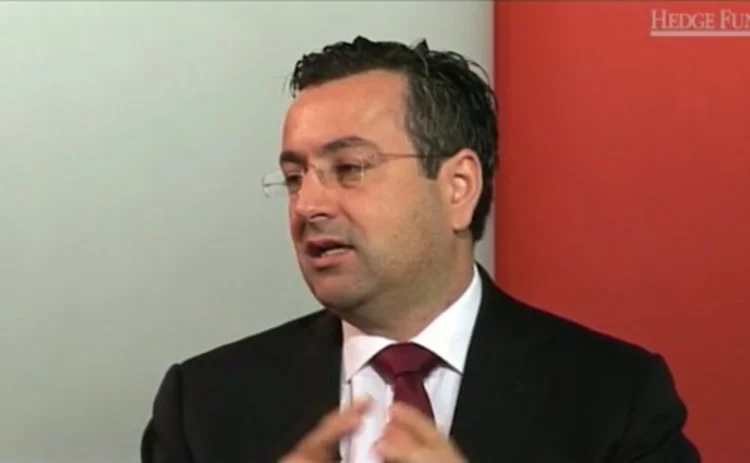
North Asset Management's MaxQ Fund distinguishes itself from other global macro funds by focusing beyond just the G3 markets, says the company's chief investment officer and portfolio manager George Papamarkakis. This, combined with its active trading approach, has helped the fund through the volatility in 2011 and so far in 2012.
The fund was up 25.19% last year. Papamarkakis says having a short-term investment horizon meant the fund was not caught out by reversals in the market.
"There were a lot of dislocations around the world, so we took advantage of, for example, the slowdown in China," he explains. "We took advantage of the fact that the Chinese renminbi market started becoming more liberalised and so forwards started to normalise.
“We took advantage of the weakening in the commodity complex towards the end of the third quarter when people again started questioning the spill over from China. And we also took advantage significantly of the opportunities within the European time zone and all the turmoil that we've seen."
The fund focuses largely on two asset classes, fixed income and foreign exchange, with a bit of equities. It combines a global macro view with a bottom-up microanalysis coupled with fundamental and tactical strategies.
Fundamental strategies generate two-thirds of the fund's returns with the manager looking at ways to express country specific views that are neutral to the global risk environment. The investment horizon is three to six months.
The tactical side of the portfolio seeks directional opportunities supported by statistical driven signalling. The investment horizon is between 24 hours and a few weeks.
Investment ideas are expressed using liquid instruments in liquid markets, an approach that Papamarkakis admits can mean missing opportunities. However, because the fund offers 45-day liquidity, he thinks it would be "imprudent" to have illiquid assets in the portfolio.
"In 2008 we saw a lot of funds that obviously had significant illiquid positions which their investors weren't aware of. In contrast our fund, despite having a very good 2008 [up 6.67%] and being significantly positive, had redemptions like the rest of the industry. We were able to meet them in a very orderly manner without imposing any gates. That's a function of being invested in those liquid markets."
The concept of liquid markets has changed post-2008, believes Papamarkakis. It is more difficult to identify which instruments or markets are liquid. He defines a liquid market as one where an investor can exit within 24 hours.
The fund should be able to trade quickly in out and out of positions if liquidity disappears from the market, says Papamarkakis. Holding a net long volatility position helps to protect the portfolio in times of distress.
Risk is also managed by limiting exposure to the G3 countries. "We will trade one currency or one interest rate market versus another market. That's usually the predominant theme or predominant hedge we will use in order to isolate overall global risk environment and focus very much on that micro opportunity."
Volatility also works in the fund's favour. This is where Papamarkakis believes there will be opportunities over the next 12 months. "Europe will continue to be a source of potential return because of the volatility that we're seeing due to the [eurozone] crisis. That will be predominantly focused in the fixed income space," he says.
One of the opportunities stemming from the eurozone's woes is an oversupply of government bonds, bringing a substantial discount on most new issuance. French bonds in particular will underperform, believes Papamarkakis. French president François Hollande wants a push for growth and less focus on austerity measures. "People will question the commitment by the new administration to [fiscal] tightening and at the same time issuance continues to come into the market. So the ability for the market to digest that incredible amount of supply is quite limited."
Outside the EU, Paparmarkakis is watching the Swiss market as well as Norway and Sweden He thinks the Nordics could benefit from the eurozone situation while Norway will profit from high oil prices and a strong domestic economy.
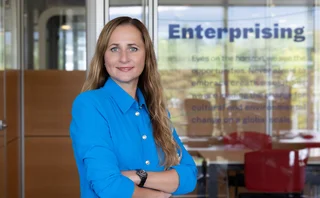
[Pictured: George Papamarkakis, North Asset Management]
"There are a few themes out there. I think the main theme has always been quite opportunistic with quite a short-term trading environment."
Timing in such volatile markets is important. In order to be able to take advantage of opportunities, the fund keeps “enough” unencumbered cash to move quickly when a chance presents itself.
The biggest risk to the fund is a decrease in volatility.
Fund facts
Fund name: MaxQ Fund
Portfolio manager: George Papamarkakis
Management company: North Asset Management
Contact information: Charlotte Hervouet, 50 Hans Crescent, London SW1X 0NA (+44 (0)20 7590 7600; ch@north-int.com; www.northasset.com)
Launch date: December 2, 2002
Assets under management: $130 million (at December 31, 2011)
Net cumulative performance since inception: 114.57% (at April 30, 2012)
Annualised return: 8.45%
Annualised volatility: 13.74%
Sharpe ratio: 0.61
Strategy: global macro
Share classes: euro, US dollar
Administrator: GlobeOp Financial Services
Auditor: BDO
Prime broker: Credit Suisse
Legal counsel: Simmons & Simmons
Domicile: Ireland
Listing: Irish Stock Exchange
Management fee: 2%
Performance fee: 20%
Minimum investment: €/$100,000
Lock-in: none
Redemption/liquidity terms: monthly with 45 days' notice
Only users who have a paid subscription or are part of a corporate subscription are able to print or copy content.
To access these options, along with all other subscription benefits, please contact info@risk.net or view our subscription options here: http://subscriptions.risk.net/subscribe
You are currently unable to print this content. Please contact info@risk.net to find out more.
You are currently unable to copy this content. Please contact info@risk.net to find out more.
Copyright Infopro Digital Limited. All rights reserved.
As outlined in our terms and conditions, https://www.infopro-digital.com/terms-and-conditions/subscriptions/ (point 2.4), printing is limited to a single copy.
If you would like to purchase additional rights please email info@risk.net
Copyright Infopro Digital Limited. All rights reserved.
You may share this content using our article tools. As outlined in our terms and conditions, https://www.infopro-digital.com/terms-and-conditions/subscriptions/ (clause 2.4), an Authorised User may only make one copy of the materials for their own personal use. You must also comply with the restrictions in clause 2.5.
If you would like to purchase additional rights please email info@risk.net
More on Awards
One to watch: ennrgy.com
Energy Risk Awards 2026: Energy tech and managed services company develops AI-driven intelligence platform with unique payment model

Innovation of the year – tech firm: MatLogica
Energy Risk Awards 2026: Fintech’s breakthrough enables firms to compute pricing and Greeks faster than traditional products can compute price alone
Base metals house of the year: Societe Generale
Energy Risk Awards 2026: Tech focus helps bank support clients through base metals market shifts
Derivatives house of the year – bank: Natixis CIB
Energy Risk Awards 2026: Bank’s physical market expansion and ETRM enhancements underpin innovative derivatives structures that address volatility
One to watch: CarbonAI
Energy Risk Awards 2026: Start-up uses AI to create dynamic, auditable carbon market intelligence

Weather house of the year: Parameter Climate
Energy Risk Awards 2026: Parameter Climate launches innovative new vehicle to connect corporate hedgers with capacity providers

Voluntary carbon markets house of the year: SCB Environmental Markets
Energy Risk Awards 2026: SCB’s robust methodologies ensure compliance with tighter standards in voluntary carbon markets
OTC platform of the year: AEGIS Markets
Energy Risk Awards 2026: Energy swap platform hits record volumes despite regulatory relief
