Coal prices rise on back of Japanese disaster and Queensland flooding
Coal prices rise as Latin America and South Africa prepare to export to Asia following the Fukushima disaster and disruptions in supplies from Australia as a result of the Queensland flooding
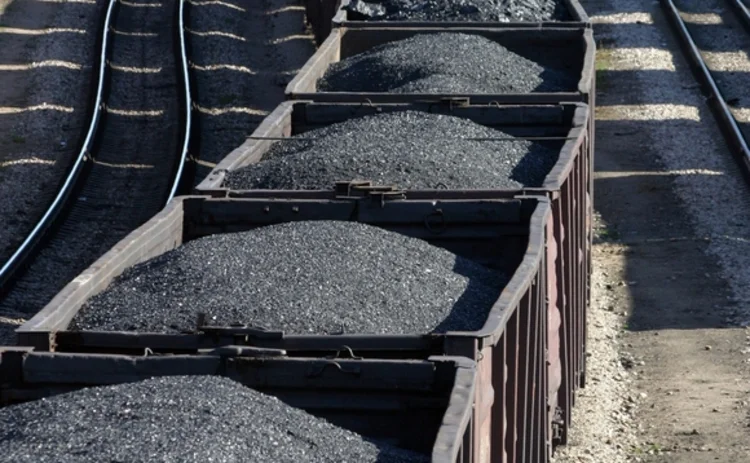
Coal prices are rising as Japan looks to find substitute energy sources amid supply and demand impacts from the country's recent earthquake and tsunami, high oil prices and the disruption of coal production in Queensland, Australia following flooding.
Estimates from shipping company Clarksons suggest expectations for coal demand in Japan have more than doubled after the second earthquake on April 7. "There is a lot of expectation for growth coming through," says Daniel Wills, senior analyst at ETF Securities in London. "One of the forecasts from an advisers at a hedge fund who trades shipping derivatives indicated they are looking at a well over 50% jump in the price of haulage using the largest bulk carriers that can pass through the Panama canal," says Wills.
In addition, Rio Tinto, the third largest mining company in the world, announced they expected Chinese demand to outpace supply, says Wills. According to a report by Deutsche Bank on April 8, the recent contract settlement for high-quality thermal coal between Xstrata and Chugoku Electric was done at a record level of $129.85 (€89.97) per tonne, up from $98 per tonne last year.
"We have seen a lot of interest coming into our coal ETF [exchange-traded fund], which is a basket of the largest global coal producers," says Wills. "The shipping market could also be an indicator of how the Japanese situation could be a large contributor to the price rise. There is an expectation that there is going to be substantially more shipping required to fill Japan's needs," he says.
"The flooding in Australia means it will take some time for the coal production [there] to return [to normal levels] and they are one of the closest providers for Japan. It won't be until second half of this year that they are able to get production levels back to what they were pre-cyclone. It really depends on timing, how fast that demand recovers," he says.
Australia's thermal coal prices rose during the past week, supported by a higher settlement for the annual Japanese thermal coal contract. Coal on the globalCOAL Newcastle index, a benchmark for Asia, closed at $123.30 per tonne on Friday 8, up from $121.13 per tonne a week earlier.
"They are turning to Latin America and South Africa. Both of those regions are considerably further away than Australia so are a more difficult proposition and you do have a knock-on effect as well because if that coal is diverted to Asia that will of course push up the prices in other regions as well, something for investors to watch," says Wills.
Richards Bay Coal Terminal (RBCT) in South Africa reported shipping 5.36 million tonnes in its March 2011 report recording the biggest rise this year, suggesting that the disaster in Japan means they are turning to the fuel.
However, this may not solve the Australia–Japan supply issue as according to one broker, Japan imports Australian coal in order to meet its carbon emissions target. "The Japanese need to import Australian coal because of the grade and quality of it and this also impacts on its carbon emissions as well. Essentially they can't buy anyone else's coal. However, the stock pile in Australia has enough for five years so can cover what Japan will need," says one London-based broker.
Ultimately, the situation in the Middle East and the spread of civil unrest to other countries suggest that oil prices could stay high for some time and increasingly the list of alternatives to coal is growing pretty thin as countries reconsider nuclear generation.
The broader reassessment of coal as part of the energy mix for emerging markets in the wake of the Japan nuclear disaster could mean that China also turn to coal. "Natural gas would be an obvious choice for China because it is not that much more expensive than coal and it has a lot lower emissions; but the problem for emerging market consumers of gas is that the infrastructure really isn't in place yet to use gas on a wide international scale," says Wills.
"China is very much set up for coal because it is a very large coal producer in its own right but the various facilities, such as regassification plants for LNG, aren't quite there yet. So if you want a near-term quick fix to growing energy demand, coal is one area you may look to given that oil is not looking attractive on a price basis," says Wills.
Only users who have a paid subscription or are part of a corporate subscription are able to print or copy content.
To access these options, along with all other subscription benefits, please contact info@risk.net or view our subscription options here: http://subscriptions.risk.net/subscribe
You are currently unable to print this content. Please contact info@risk.net to find out more.
You are currently unable to copy this content. Please contact info@risk.net to find out more.
Copyright Infopro Digital Limited. All rights reserved.
As outlined in our terms and conditions, https://www.infopro-digital.com/terms-and-conditions/subscriptions/ (point 2.4), printing is limited to a single copy.
If you would like to purchase additional rights please email info@risk.net
Copyright Infopro Digital Limited. All rights reserved.
You may share this content using our article tools. As outlined in our terms and conditions, https://www.infopro-digital.com/terms-and-conditions/subscriptions/ (clause 2.4), an Authorised User may only make one copy of the materials for their own personal use. You must also comply with the restrictions in clause 2.5.
If you would like to purchase additional rights please email info@risk.net
More on Risk management
Appetite breaches climb for top op risks
Risk Benchmarking: Low tolerance and heightened threat environment combine to test banks’ limits for cyber, resilience, third-party risk

How gatecrashers could spoil the tokenisation party
Blockchain can curb settlement risks, but that could come at the expense of new third-party risks

Op Risk Benchmarking: Banks seek a home for AI risk
Risk.net’s 2026 study sees record participation and collective unease, as banks race to incorporate AI into op risk frameworks

Contract negotiation tops tech sovereignty for banks in Asia
Regulatory pressure is rising, but industry still focused on service agreements with third parties

The SaaSpocalypse shows private markets need risk models
Investors have little idea how bad the losses in private credit are going to be

Crisis? Which crisis? How ECB stress test failed to see Strait
Banks were told to design geopolitical shock scenarios, but some focused mainly on tariffs

The race to model private market risks
BlackRock maps holdings to risk factors; competitors aim to get the best from statistical methods

G-Sib capital surcharge: how indexing and averaging alter incentives
Capital risk strategist anticipates Basel III endgame impact on US big-bank behaviour