Forward planning at M&S
As a high profile global retail chain, Marks & Spencer faces regular public scrutiny over its energy use and is well known for championing its ‘green’ image. Katie Holliday talks to Mervyn Bowden, head of energy management, about how M&S manages its energy risk and how it intends to maintain its ‘green’ image in the future
Marks & Spencer (M&S) buys approximately 750 gigawatts (GW) of electricity and 250GW of natural gas per year to supply its stores and offices in the UK. Energy is bought from a range of suppliers through flexible framework contracts.1 Npower supplies its stores and offices in England and Wales, SmartestEnergy in Scotland and Energia in the Republic of Ireland and Northern Ireland.
One of the key buying tools used by the firm is power purchase agreements (PPAs) – legal contracts between purchasers and typically independent power producers. M&S says it has pioneered PPAs and uses them to buy from small renewable energy generators, such as farmers with their own wind turbines, small-scale hydro plants and waste-to-energy conversion plants.
"These contracts enable us to buy our energy over longer terms than traditional commodity market liquidity allows, while at the same time encouraging the development of a strong smaller generation network in the UK," says Mervyn Bowden, head of energy management at M&S.
From 2009 to 2010, M&S increased the number of small-scale energy contracts it holds to 10GW, and plans to further increase this number over the next year.
M&S has an exclusive team dedicated to managing the risks associated with energy purchases. The energy contracts manager is responsible for monitoring the energy markets, administering the supplier contracts and, on advice from in-house energy brokers, recommends and executes buying decisions. The head of energy management together with the energy contracts manager formulates policy and strategy in this area. Other team members input demand forecasting for both electricity and gas. Although final buying decisions are conducted in-house, the team is assisted in its risk management and procurement by energy management consultancy firm Inenco, which M&S has partnered with for seven years.
Through its risk management policy, the company specifies the quantity of power that it needs to buy in future years, enabling it to forecast its forward operating plans and minimise unexpected price rises. The aim is to spread its risk exposure by making a number of smaller transactions rather than buying whole contracts or annual volumes at the same time.
"We base our hedging strategy against our forward operating plans so that we can cap our exposure in any particular year to a certain percentage that we feel is appropriate to the prevailing market behaviour," says Bowden.
"It is essential to have a clear view of the next three years and forward demand must be taken into account. As part of this planning, we factor in property acquisitions and disposals, and take into account the successful work we're doing on energy efficiency," says Bowden.
A crucial part of M&S's efforts to reduce its energy use and promote sustainable initiatives will be its compliance with the UK's CRC Energy Efficiency Scheme, which officially came into force in April this year. The scheme brings with it the reputational risks associated with the publishing of a CRC league table, which is set for release in October 2011. The position of each company on this league table will substantially impact their image as a ‘green' organisation.
Evidently this is a ranking that M&S has taken seriously. In preparation for the scheme, M&S has employed a manager, whose principal responsibility will be to manage the scheme and compile the large amount of data required for compliance.
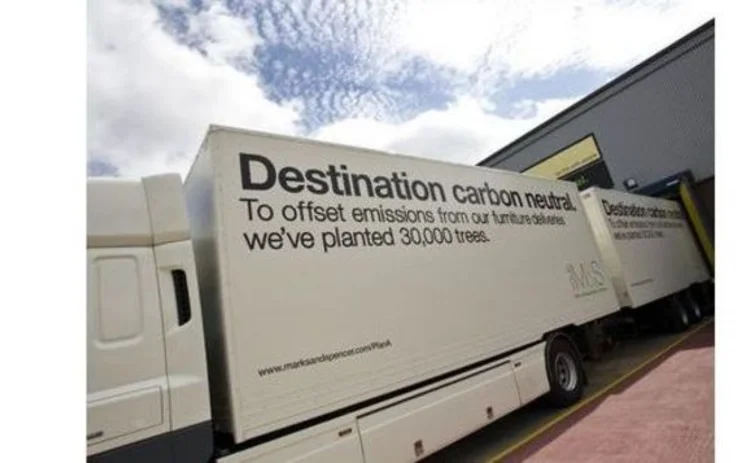
M&S has high targets in place to achieve its sustainability aims and has already reduced its energy uses by 19.4% from 2006/2007 levels at the end of the 2009-2010 financial year. Through its five year eco-plan, entitled Plan A, M&S is forecast to achieve carbon neutrality and send no waste to landfill by 2012 and become the world's most sustainable major retailer by 2015.
"Our aim is to reduce our energy use per square foot of selling footage in stores to -25% by 2012 and then -35% by 2015 compared to 2006/07 levels," says Bowden.
M&S reduces its energy use through a variety of initiatives, including upgrading to more efficient equipment, applying best practices and increased accountability. These initiatives have been supported by internal awareness campaigns across the company and by major improvements in metering energy usage. "Through launching our own automatic monitoring and targeting system, we are able to clearly see any changes in consumption at our site locations," says Bowden. "And our team is able to provide guidance on how to quickly and effectively resolve any problems that have led to the increased energy consumption.
Background: M&S
M&S sells clothing, home products and food from 600 UK-based stores and 300 global stores and has been in operation for over a century. The company has 75,000 employees worldwide and 21 million UK customers per week.
1. Flexible framework contracts are designed to spread the risk of buying large volumes of a certain commodity at a single point in the market.
Only users who have a paid subscription or are part of a corporate subscription are able to print or copy content.
To access these options, along with all other subscription benefits, please contact info@risk.net or view our subscription options here: http://subscriptions.risk.net/subscribe
You are currently unable to print this content. Please contact info@risk.net to find out more.
You are currently unable to copy this content. Please contact info@risk.net to find out more.
Copyright Infopro Digital Limited. All rights reserved.
As outlined in our terms and conditions, https://www.infopro-digital.com/terms-and-conditions/subscriptions/ (point 2.4), printing is limited to a single copy.
If you would like to purchase additional rights please email info@risk.net
Copyright Infopro Digital Limited. All rights reserved.
You may share this content using our article tools. As outlined in our terms and conditions, https://www.infopro-digital.com/terms-and-conditions/subscriptions/ (clause 2.4), an Authorised User may only make one copy of the materials for their own personal use. You must also comply with the restrictions in clause 2.5.
If you would like to purchase additional rights please email info@risk.net
More on Risk management
Appetite breaches climb for top op risks
Risk Benchmarking: Low tolerance and heightened threat environment combine to test banks’ limits for cyber, resilience, third-party risk

How gatecrashers could spoil the tokenisation party
Blockchain can curb settlement risks, but that could come at the expense of new third-party risks

Op Risk Benchmarking: Banks seek a home for AI risk
Risk.net’s 2026 study sees record participation and collective unease, as banks race to incorporate AI into op risk frameworks

Contract negotiation tops tech sovereignty for banks in Asia
Regulatory pressure is rising, but industry still focused on service agreements with third parties

The SaaSpocalypse shows private markets need risk models
Investors have little idea how bad the losses in private credit are going to be

Crisis? Which crisis? How ECB stress test failed to see Strait
Banks were told to design geopolitical shock scenarios, but some focused mainly on tariffs
The race to model private market risks
BlackRock maps holdings to risk factors; competitors aim to get the best from statistical methods

G-Sib capital surcharge: how indexing and averaging alter incentives
Capital risk strategist anticipates Basel III endgame impact on US big-bank behaviour