EFSF expansion plans fail to convince credit investors as EU leaders branded ‘indecisive’
Investors hoped European leaders would finally provide clarity on their plans to resolve the Eurozone funding crisis at summit meetings in March. But the solutions offered have done little to dispel unrest in the market

Binary-minded commentators had been heralding March as a make-or-break month for the Eurozone as the European Union provided details on facilities that would keep struggling peripheral countries solvent beyond 2013.
Optimists in the market had hoped that European leaders would hammer out details of how both the European Financial Stability Fund (EFSF) and its 2013 successor, the European Stability Mechanism (ESM), would be administered to countries in need of aid to meet their schedule of sovereign redemption payments.
The outcome was a very European patchwork job. The terms of the ESM were set out with clarity, although perhaps not with enough flexibility; but a decision over the funding of the EFSF – which unquestionably is of more pressing need – was postponed until late June. The mixed outcome reflected both the reluctance of national leaders to pour more money into a fund that was expected to be bailing out Portugal in the weeks ahead (and Portugal did indeed request a bailout in April), and the hope of those same leaders that the ESM will never be needed – or, at least, not on their watch.
Both funds are important. The EFSF is expected to bear the brunt, together with the IMF, of bailout packages in the near term to stem the ongoing sovereign debt crisis in Europe. The ESM’s role is meant to be little more than an emergency backstop in case the recovery of the Eurozone’s economy, and therefore of its debt dynamics, fails to improve after mid-2013.
Heads of state met in Brussels on March 11 to discuss the structures of the EFSF and ESM. In their post-summit report, EU leaders praised Greece’s structural reform programme as well as Ireland’s new fiscal framework. It also took the step of lowering the average interest rate on Greece’s bailout package by 100 basis points to 4.2% and increasing the maturity of Greece’s loans from three to 7.5 years.
The ‘amend and extend’ package dealt out to Greece was agreed on the basis that the country had already taken significant steps to redress its fiscal imbalance. But the Irish package remained unchanged, which some commentators claimed was because Ireland had refused to raise its 12.5% corporate tax rate. The conference report itself omitted to explain the lack of any softening of terms for Ireland, but comments made by Nicolas Sarkozy, the French president, on March 12 indicated what discussions had focused on.
“We’re not asking Ireland to put up their corporate taxes to the European average, but to make some effort," Sarkozy said in Brussels, according to Bloomberg. "You can’t ask others to contribute for you, when you won’t make an effort on your tax receipts.”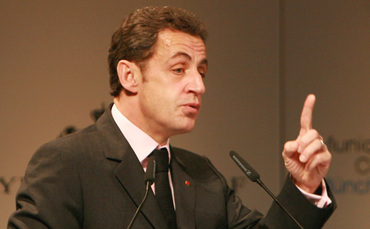
Onwards and upwards: French president Nicolas Sarkozy would like to see Ireland raise its 12.5% corporate tax rate
Less than two weeks later, on March 21, a meeting of European finance ministers came up with a structure for the ESM, and the following weekend, heads of state from Eurozone countries accepted the gist of what they had proposed.
In order to prevent problems of the same magnitude in the future, the package included a commitment to restore the 1997 Growth and Stability Pact – a treaty agreed by the then 17 members of the EU to ensure sound public finances by stipulating maximum debt and deficit levels. Although pushed hardest by the largest member states, it was those same states, notably France and Germany, which were the first to breach the terms of the treaty, whereby the fiscal deficit was to remain at or below 3% and the debt-to-GDP ratio was capped at 60%.
The agreement in late March 2011 saw the 1997 pact reinvigorated, with a commitment to bring national deficits to below 3% of GDP within a specific timeframe. Under the new deal, fiscal policies would receive closer scrutiny and enforcement measures would be more consistently applied. One obvious target of harmonisation policies was Ireland’s 12.5% corporate tax rate.
“Developing a common corporate tax base could be a revenue-neutral way forward to ensure consistency among national tax systems while respecting national tax strategies and to contribute to fiscal sustainability and the competitiveness of European business,” the report said.
Only users who have a paid subscription or are part of a corporate subscription are able to print or copy content.
To access these options, along with all other subscription benefits, please contact info@risk.net or view our subscription options here: http://subscriptions.risk.net/subscribe
You are currently unable to print this content. Please contact info@risk.net to find out more.
You are currently unable to copy this content. Please contact info@risk.net to find out more.
Copyright Infopro Digital Limited. All rights reserved.
As outlined in our terms and conditions, https://www.infopro-digital.com/terms-and-conditions/subscriptions/ (point 2.4), printing is limited to a single copy.
If you would like to purchase additional rights please email info@risk.net
Copyright Infopro Digital Limited. All rights reserved.
You may share this content using our article tools. As outlined in our terms and conditions, https://www.infopro-digital.com/terms-and-conditions/subscriptions/ (clause 2.4), an Authorised User may only make one copy of the materials for their own personal use. You must also comply with the restrictions in clause 2.5.
If you would like to purchase additional rights please email info@risk.net
More on Structured products
A guide to home equity investments: the untapped real estate asset class
This report covers the investment opportunity in untapped home equity and the growth of HEIs, and outlines why the current macroeconomic environment presents a unique inflection point for credit-oriented investors to invest in HEIs

Podcast: Claudio Albanese on how bad models survive
Darwin’s theory of natural selection could help quants detect flawed models and strategies

Range accruals under spotlight as Taiwan prepares for FRTB
Taiwanese banks review viability of products offering options on long-dated rates

Structured products gain favour among Chinese enterprises
The Chinese government’s flagship national strategy for the advancement of regional connectivity – the Belt and Road Initiative – continues to encourage the outward expansion of Chinese state-owned enterprises (SOEs). Here, Guotai Junan International…

Structured notes – Transforming risk into opportunities
Global markets have experienced a period of extreme volatility in response to acute concerns over the economic impact of the Covid‑19 pandemic. Numerix explores what this means for traders, issuers, risk managers and investors as the structured products…

Structured products – Transforming risk into opportunities
The structured product market is one of the most dynamic and complex of all, offering a multitude of benefits to investors. But increased regulation, intense competition and heightened volatility have become the new normal in financial markets, creating…

Increased adoption and innovation are driving the structured products market
To help better understand the challenges and opportunities a range of firms face when operating in this business, the current trends and future of structured products, and how the digital evolution is impacting the market, Numerix’s Ilja Faerman, senior…

Structured products – The ART of risk transfer
Exploring the risk thrown up by autocallables has created a new family of structured products, offering diversification to investors while allowing their manufacturers room to extend their portfolios, writes Manvir Nijhar, co-head of equities and equity…