

Artradis collapse a failure of judgement, not risk management, says co-founder Diggle
Artradis was one of Asia’s most successful hedge funds until it hit difficulties in 2009 and 2010 that resulted in losses of $700 million and culminated in its closure in late February. But the fund’s co-founder says error of judgement and a lack of hedging, linked with exchange-traded options premium decay, rather than poor risk management, caused the failure of the fund.
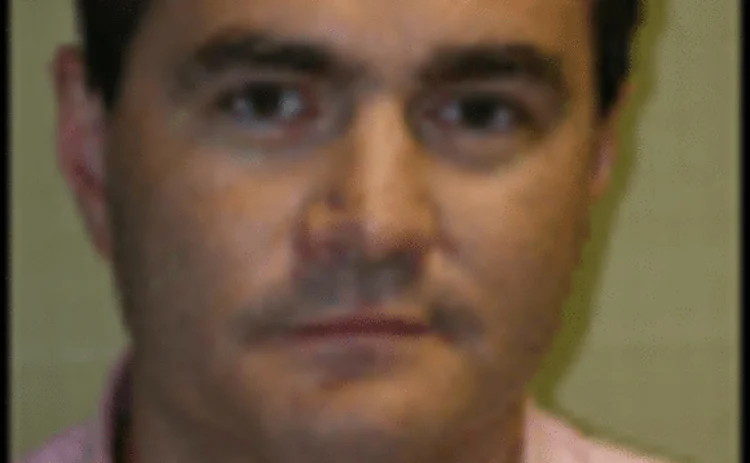
Stephen Diggle, co-founder of Artradis, the Singapore-based hedge fund that closed with losses of $700 million in February, refuses to blame risk management shortcomings for the downfall of the hedge fund. But he admits his judgement could have been better. "We bought lots of an asset that was not performing - from a trading point of view we should have stopped earlier. It's not a risk management failure," he says. "Our job was to be long volatility. Our judgement was poor but after making a lot of money it is not surprising that we had confidence in the strategy."
Artradis, founded in 2002 by Diggle and partner Richard Magides, made a fortune for investors in 2007 and 2008. "We set up the Barracuda fund in May 2002 and started with $4.5 million under management and by September 2008 we had $4.5 billion under management," says Diggle. He stresses that the partners have not fallen out but will pursue different interests moving forward, while he personally is readying the launch of a new volatility fund for May.
"After two phenomenal years in 2007-08, the fund made $2.7 billion and then, things being what they were, people wanted their money back."
By 2010 Diggle says Artradis had a much smaller fund and, by the end of the year, the owners decided to “call it a day". "We were stuck with the classic issue of the long volatility shop that was buying options and experiencing little volatility. Volatility remained expensive," he adds. On February 28, its two main funds, the Barracuda fund and AB2 fund ceased trading.
Diggle says overconfidence may have proven more of an issue, saying Artradis had made several big bets that came good during 2007 and 2008. For example, the fund had bought sizeable volumes of credit default swaps on Lehman Brothers to protect against credit losses should the US investment bank go bankrupt. "Lots of people thought this was a waste of money," he recalls. However, when Lehman Brothers filed for bankruptcy protection on September 15, 2008, Artradis made large profits from its positions. It also made large profits on single stock variance swaps referencing underlyings in Japan, Korea and Hong Kong. These instruments effectively disappeared from the market between 2009 and 2010, as banks incurred vast losses from their exposures. This resulted in index options being the main liquid contracts still available to trade.
Moving forwards, traders grew confident their views on the equity markets - which they expected to decline – would again prove correct. But this did not prove to be the case. And Diggle says the fund could have hedged better around its rate of options premium decay and tried to mitigate acceleration of ‘theta', which quantifies the rate of decline in the value of an option due to the passage of time.
"The gap between realised volatility in Asian markets and the price you had to pay in implied volatility in an environment with fewer suppliers was unprecedentedly high and they demanded higher prices," he recalls. "So every month our short-dated index options didn't realise much volatility and decayed at a rapid rate but this was the mandate of the fund. We also had a negative view of the markets which encouraged us to buy more puts, and when you do that in a hostile price environment with an incorrect market directional view you will lose money."
Diggle says that one of the problems traders had to contend with after the crisis in 2008 was the huge shortage of longer dated options in the market, making the cost curve of volatility highly upwards sloping and making longer dated options significantly more expensive and less liquid than shorter dated options. Diggle believed he had spotted value in the cheaper, shorter dated options - which were readily available on exchange - especially as Artradis wanted to stay away from OTC contracts. The downside, however, was that these options "decay at a faster rate and you have to keep renewing them", which became "unacceptably expensive", he says. They decay was faster as the contracts were shorter in duration.
For example, Artradis was exposed to Korean options, which have large amounts of liquidity, as retail customers also trade them. "By end of 2007, 50-day volatility topped at 73 on an annualised basis and people were paying even more on an implied basis. But by summer 2009, when we were getting back in, 50-day historical volatility had fallen to 22 but we still had to pay 30 to get involved, which is a negative gap of eight vega points… by the summer of 2010 it had fallen further to 10," says Diggle.
He says that during an 18-month period the only really profitable month was May 2010.
"In an environment where you can't make money, you have to deviate from your mandate, get off the pitch or stay smaller," he says.
To mitigate these past mistakes, Diggle's new funds vehicle Vulpes Investment Management has already hired a chief risk officer (CRO), Bert Verdicchio, formerly of Rabobank in Australia. "One of the reasons we want a CRO on board is so that someone can stand outside the thing to control how much we burn in premium and help us be more targeted in what we spend our money on."
Only users who have a paid subscription or are part of a corporate subscription are able to print or copy content.
To access these options, along with all other subscription benefits, please contact info@risk.net or view our subscription options here: http://subscriptions.risk.net/subscribe
You are currently unable to print this content. Please contact info@risk.net to find out more.
You are currently unable to copy this content. Please contact info@risk.net to find out more.
Copyright Infopro Digital Limited. All rights reserved.
As outlined in our terms and conditions, https://www.infopro-digital.com/terms-and-conditions/subscriptions/ (point 2.4), printing is limited to a single copy.
If you would like to purchase additional rights please email info@risk.net
Copyright Infopro Digital Limited. All rights reserved.
You may share this content using our article tools. As outlined in our terms and conditions, https://www.infopro-digital.com/terms-and-conditions/subscriptions/ (clause 2.4), an Authorised User may only make one copy of the materials for their own personal use. You must also comply with the restrictions in clause 2.5.
If you would like to purchase additional rights please email info@risk.net
More on Hedge funds
JP Morgan warns hedge funds to expect intraday margin calls
US bank may demand variation margin ‘up to seven’ times a day after Archegos default

Alternative markets give edge to Florin Court strategy
By concentrating on exotic and alternative markets, Florin Court Capital Fund has sidestepped overcrowding and correlation to the main trend following commodity trading advisers, offering investors a diversified alternative to the standard systemic macro…

Global macro views combine with quantitative models to produce consistent returns
The team behind River and Mercantile Group’s global macro strategy team operates under two key principles: that macro is the most important aspect of any investment decision and that decision-making should incorporate both systematic and discretionary…
On the offensive – Seeking a new edge, buy-side invests in portfolio and risk analytics
A fast-moving, headstrong hedge fund – hit by rare losses after a black swan event touched on an overweight country exposure – ponders adding fresh quantitative expertise. Much to traders’ chagrin, the chief investment officer and chief operating officer…

Esma backtracks on account segregation
Status quo protected for rehypothecation of collateral in tri-party, securities lending and prime brokerage

Redemptions focused within strategies suffering losses in 2016
Redemptions focused within strategies suffering losses in 2016
Hedge fund redemptions a dismal end to a bad year
Managed futures funds saw big inflows in 2016, but left investors disappointed

Larger funds are net losers as outflows continue
Managed futures funds have seen biggest redemptions for three years