Starting from scratch
Zahid Molla, head of risk management, Afghanistan International Bank, talks to Alexander Campbell
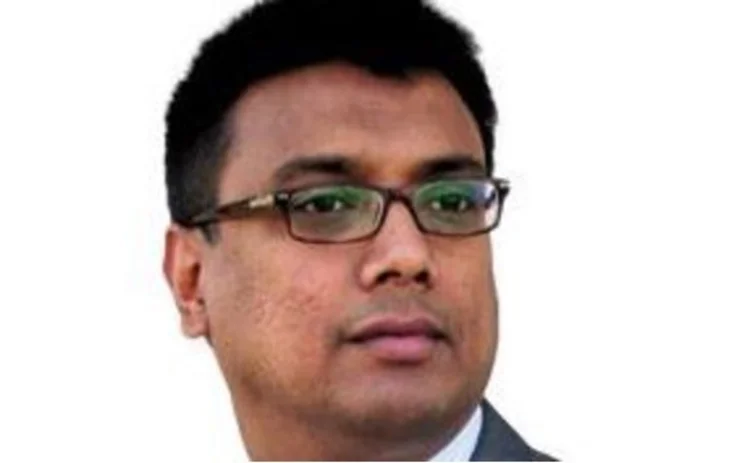
A decade ago, the national treasury of Afghanistan consisted of two large tin trunks full of banknotes, which were kept in Kabul, beside the bed of the country's ruler, Taliban leader Mullah Mohammed Omar. Today, Omar and the Taliban are gone from the city, and Afghanistan has developed a more conventional approach to finance. But banking in Afghanistan still involves a wider range of problems than would be the case in, say, Basel - not least because of the security situation.
Zahid Molla started work last month in Kabul as head of risk management at the Afghanistan International Bank (AIB), Afghanistan's first private-sector commercial bank. He identifies getting the right personnel as one of the most important problems. "Getting new people in will not be easy, for sure. There are a lot of consultants. Initially, when the bank started, it got all its know-how from ING," he says.
However, this will become more difficult as the bank expands. "Because of the security situation - which is not that bad, but because of the way people perceive it - it is not easy to get people from outside," he says. "The Afghans learn very fast, especially the younger generation. But there is that lack of experience, which is a major obstacle. You have people who are willing to learn, but it's not easy to get the people who could train them."
AIB faces other challenges. Afghanistan is effectively a dual-currency economy - the afghani circulates increasingly widely, but many large transactions are still conducted in US dollars. Molla thinks this is likely to prove temporary as afghanis come into general use: "I think it's for reasons of confidence, and because of the uncertainty in the region. Once you have more political stability and the security situation improves, people will become more confident."
The Taliban prohibition on paying or charging interest drove most established Afghan banks into hibernation, leading the population to depend on informal mechanisms such as local moneylenders and the hawwala system of money transfer, and this remains an attractive alternative to conventional banks, notes a recent International Monetary Fund (IMF) paper (Development of the Commercial Banking System in Afghanistan, April 2009).
Afghan banks lack the database of customer and credit information on which more established banks rely. But at the AIB's current scale, more active due diligence - before and after the loan is approved - can take the place of metrics such as credit ratings, Molla says. "From a bank's standpoint, when you are involved in any project there needs to be constant monitoring. You can't just take your hands off a deal. You have to constantly make sure the money is going through the project."
The bank's limited customer base and short history means it hasn't had much experience of loan defaults yet. Domestically owned banks tend to be more willing to lend to local borrowers than international banks such as AIB, in part because of their ability to use "extra-judicial, non-traditional contract enforcement mechanisms" to ensure repayment, the IMF found. But the lack of an impartial justice system is harming foreign investor confidence, Molla says.
Expanding the depositor base will mean improving that confidence. Afghanistan remains desperately poor, and the experience of the past 30 years means many Afghans prefer to keep their savings secure and accessible, in well-hidden cash. But there are changes afoot that could help Afghans trust their banks. The central bank's proposal for an Afghan Depository Insurance Corporation is one. "When you establish such institutions, they normally bring more stringent compliance requirements, so I think that it will bring more confidence to the industry," Molla says.
Alexander Campbell
Zahid Molla
2009: head of risk management, Afghanistan International Bank
2005-08: head of operational risk and business continuity, National Commercial Bank, Riyadh
2004-05: principal, OpRisk Advisory Europe
2003: senior manager, group operational risk, Lloyds TSB.
Only users who have a paid subscription or are part of a corporate subscription are able to print or copy content.
To access these options, along with all other subscription benefits, please contact info@risk.net or view our subscription options here: http://subscriptions.risk.net/subscribe
You are currently unable to print this content. Please contact info@risk.net to find out more.
You are currently unable to copy this content. Please contact info@risk.net to find out more.
Copyright Infopro Digital Limited. All rights reserved.
As outlined in our terms and conditions, https://www.infopro-digital.com/terms-and-conditions/subscriptions/ (point 2.4), printing is limited to a single copy.
If you would like to purchase additional rights please email info@risk.net
Copyright Infopro Digital Limited. All rights reserved.
You may share this content using our article tools. As outlined in our terms and conditions, https://www.infopro-digital.com/terms-and-conditions/subscriptions/ (clause 2.4), an Authorised User may only make one copy of the materials for their own personal use. You must also comply with the restrictions in clause 2.5.
If you would like to purchase additional rights please email info@risk.net
More on Risk management
Climate Risk Benchmarking: explore the data
View interactive charts from Risk.net’s 43-bank study, covering climate governance, physical and transition risks, stress-testing, technology, and regulation

‘The models are not bloody wrong’: a storm in climate risk
Risk.net’s latest benchmarking exercise shows banks confronting decades-long exposures, while grappling with political headwinds, limited resources and data gaps

ISITC’s Paul Fullam on the ‘anxiety’ over T+1 in Europe
Trade processing chair blames budget constraints, testing and unease over operational risk ahead of settlement move

Cyber insurance premiums dropped unexpectedly in 2025
Competition among carriers drives down premiums, despite increasing frequency and severity of attacks

Op risk data: Kaiser will helm half-billion-dollar payout for faking illness
Also: Loan collusion clobbers South Korean banks; AML fails at Saxo Bank and Santander. Data by ORX News

Market doesn’t share FSB concerns over basis trade
Industry warns tougher haircut regulation could restrict market capacity as debt issuance rises

CGB repo clearing is coming to Hong Kong … but not yet
Market wants at least five years to build infrastructure before regulators consider mandate

Rethinking model validation for GenAI governance
A US model risk leader outlines how banks can recalibrate existing supervisory standards