
Sympathy for the Dimon
A lack of confidence is hobbling bank stocks – and the implications go beyond valuations

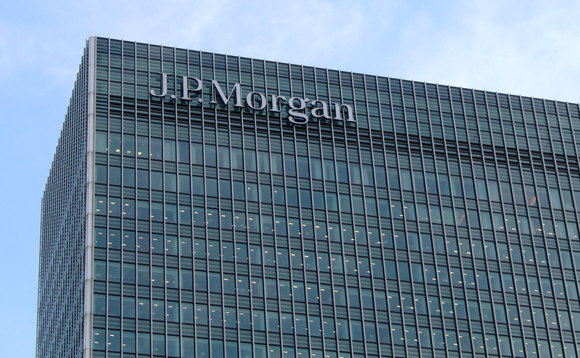
Poor Jamie Dimon. No, wait – hear me out. You have to feel for the guy. A little bit, at least. Over the course of 2015, JP Morgan delivered a 10.3% return on equity (ROE), according to Bloomberg, on the back of a record $24.4 billion in net income. Only UBS and Wells Fargo, among other big European and US banks, managed to post a double-digit ROE.
But as soon as 2016 arrived, the bank's stock started falling. By February 11, it had dropped 19.7% – one of the victims of a sector-wide sell-off that raised concerns about Deutsche Bank's solvency and sparked talk of a new systemic crisis.
There are many ways to explain a falling stock price, of course – particularly for a bank, and particularly during a period of macroeconomic uncertainty. Equity analysts sometimes point at regulation: the new environment, with multiple rules that are still in flight, has "robbed investors of any confidence in these stocks", says one. "I think the volatility has a lot to do with regulatory risk," says another.
At first blush, that feels sort of plausible, but it's worth taking it a bit further. What is it about regulation that might worry investors? It could be that it's harder to forecast future earnings, and without that visibility, valuations will be depressed and share prices more vulnerable to bad news.
Again, if that's the case, you'd need an impossibly cold heart not to feel for Dimon - his bank's ROE has been above 8% for the past six years, and earnings per share have increased steadily since 2008, with a single backward step in 2013. Surely, that deserves a bit more belief? In his letter to shareholders last year, the JP Morgan chief executive said regulatory uncertainty made it "understandable that people would pay less for our earnings than they otherwise might pay."
This isn't just about one bank's cruelly suppressed price/earnings ratio, though. The bigger worry is that fragile stocks, where the upside is capped by a lack of conviction, could end up in a terminal nosedive. Regulators argue this should not be possible - banks are less risky and more robust than at any time in recent history - so the downside should be floored as well. As Keynes had it, though: "Markets can remain irrational longer than you can remain solvent."
Ultimately, all of this probably has more to do with interest rates, inflation and economic growth than it does with the calibration of the leverage ratio, or plans to rein in the use of capital models. But whatever the cause, the lesson is the same: regulators need banks to be both strong and successful, and a world in which they are not receiving recognition for their success – even if only relative success – is a dangerous one.
Only users who have a paid subscription or are part of a corporate subscription are able to print or copy content.
To access these options, along with all other subscription benefits, please contact info@risk.net or view our subscription options here: http://subscriptions.risk.net/subscribe
You are currently unable to print this content. Please contact info@risk.net to find out more.
You are currently unable to copy this content. Please contact info@risk.net to find out more.
Copyright Infopro Digital Limited. All rights reserved.
As outlined in our terms and conditions, https://www.infopro-digital.com/terms-and-conditions/subscriptions/ (point 2.4), printing is limited to a single copy.
If you would like to purchase additional rights please email info@risk.net
Copyright Infopro Digital Limited. All rights reserved.
You may share this content using our article tools. As outlined in our terms and conditions, https://www.infopro-digital.com/terms-and-conditions/subscriptions/ (clause 2.4), an Authorised User may only make one copy of the materials for their own personal use. You must also comply with the restrictions in clause 2.5.
If you would like to purchase additional rights please email info@risk.net
More on Risk management
BIS’s Hernández de Cos on AI, non-bank risk and tokenisation
General manager talks about how the BIS is navigating a complex global environment

For enterprise risk, influence runs deeper than any veto
Risk Benchmarking study finds formal veto rights concentrated among the largest lenders, but used only as a last resort

Intraday pricing: fixed income’s next frontier
With firms looking to price fixed income securities on an intraday basis, specialist pricing providers such as LSEG help address cost, complexity and time-to-market challenges

Tech and data fragmentation irks enterprise risk managers
Risk Benchmarking: Often at the mercy of decisions made by other parts of the bank, ERM heads gripe at disparate systems, poor UX and reporting gaps

At bigger banks, enterprise risk owns scenario frameworks
Risk Benchmarking research finds ERM teams tasked with providing effective challenge on scenario construction across risk silos

Asian firms waiting on exemptions from UST clearing mandate
Hoping for relief on extraterritoriality, 51% of Apac firms have yet to start compliance programmes
HSBC’s Orion sees cash leg challenge to tokenised bonds
Tradeweb and others agree more work needed before atomic settlement is achieved

Month-long power glitch hits key Apac trade surveillance tool
Nasdaq’s alert functions were restored, but users say testing and calibration tools still disrupted